It may have been a strictly virtual affair this year for the Doha Film Institute’s industry incubator but at the end of the week, projects from all corners of the world had found their wings and are ready to be viewed by the world come Cannes, Locarno or Venice — and beyond.
I’m generally weary of anything that moves online because I cherish the human connection. I also believe that our world would be in a much better state if we all gave up some of the digital for real, in person, human interaction. Not to mention that our leaders did better in the days of the Enigma code breaker than they do today with their El Capitan supercomputers and AI. But that’s just me. Or is it?
Thankfully, the leadership at Doha Film Institute believe in the power of Zoom in dire times and they organized a well thought-out series of online meetings and screenings to make up for the lack of planes landing at Hamad International Airport, due to the US/Israel/Iran war. It was a generous and courageous decision, as I’ve come to expect from DFI and their extended family of directors, mentors and cinematic facilitators.
As DFI CEO Fatma Hassan Al Remaihi, who is also the Director of Qumra, said in her welcoming statements to the filmmakers and members of the industry attending, “As long as we are able to offer our support, we at the Doha Film Institute will. We don’t accept that your dreams and projects should stop,” due to the extenuating circumstances. “Being here with you today is clear proof that we are fighting for a better and brighter future for all,” she added, and “find ourselves caught between extremists on both sides.” But, unlike those who believe they have the power to impose their agenda on the Region, Al Remaihi added, “we are also extremists — we are extreme in our humanity and principles, in our passion and our shared beliefs.” Amen I say to that!
Hanaa Issa, Chief Strategy & Programmes Officer and Qumra Deputy Director at DFI fought back tears as a Lebanese in Qatar, doubly hit by the current developments. “I hope you are all safe and well, wherever you are joining us from today,” she said, considering the projects which hail from Tunisia, Libya, Sudan, Iran, Palestine, Algeria, Chile, Morocco, Cameroon and Lebanon, to name just a few countries.
“We had to move this Qumra edition online and obviously this decision was not taken lightly,” Issa added, “but even if the format has changed, I wanted to assure you, just like Fatma also assured you, that our commitment to you has not changed at all — on the contrary, it has strenghtened our resolve to support you in every way that is available to us.”
And that commitment stands strong, from the way the grants are assigned to the timely manner in which they are paid out, as the filmmakers agree. Now onto some of this year’s participating projects.
The reclaiming of the desert by those to whom it truly belongs, in a film that show us the vastness and impenetrability of the place, not in the way Bertolucci did in The Sheltering Sky or how Oliver Laxe tried it in Sirât, or even George Miller’s attempt in Mad Max Furiosa but rather by a true Algerian born auteur with a silent connection to the Sahara’s vastness and beauty.
An everyday hero bringing water to the people of his village who finds himself reinvented as an amateur sleuth attempting to uncover a who-dunnit in a dream-filled world. A film at times reminiscent of De Sica’s Umberto D. but also containing hints of Elia Suleiman’s masterful work, with a little Jacques Tati thrown in.
Modern day horsemen and warriors who appear painted on screen as if they leapt off a Caravaggio painting in modern day Morocco, and show us the tradition of the riders of what tourists know as the Fantasia, in a film that becomes a mix of magical realism and hidden gems bound to bring some unexpected fame to its dashing leading men.
An eco-thriller from Chile, featuring a magical young woman with a special skill who decides to defy her beloved father’s orders and ends up uncovering a mystery in her arid village in the process, offering both a cinematic ode to its country of origin’s impenetrable landscape and a word of warning to our greedy humanity.
Journalists who put themselves at risk every day in this unstable and chaotic world landscape, in a haunting documentary where we find out just how dangerous being on the ground in conflicts areas proves for some in our profession.
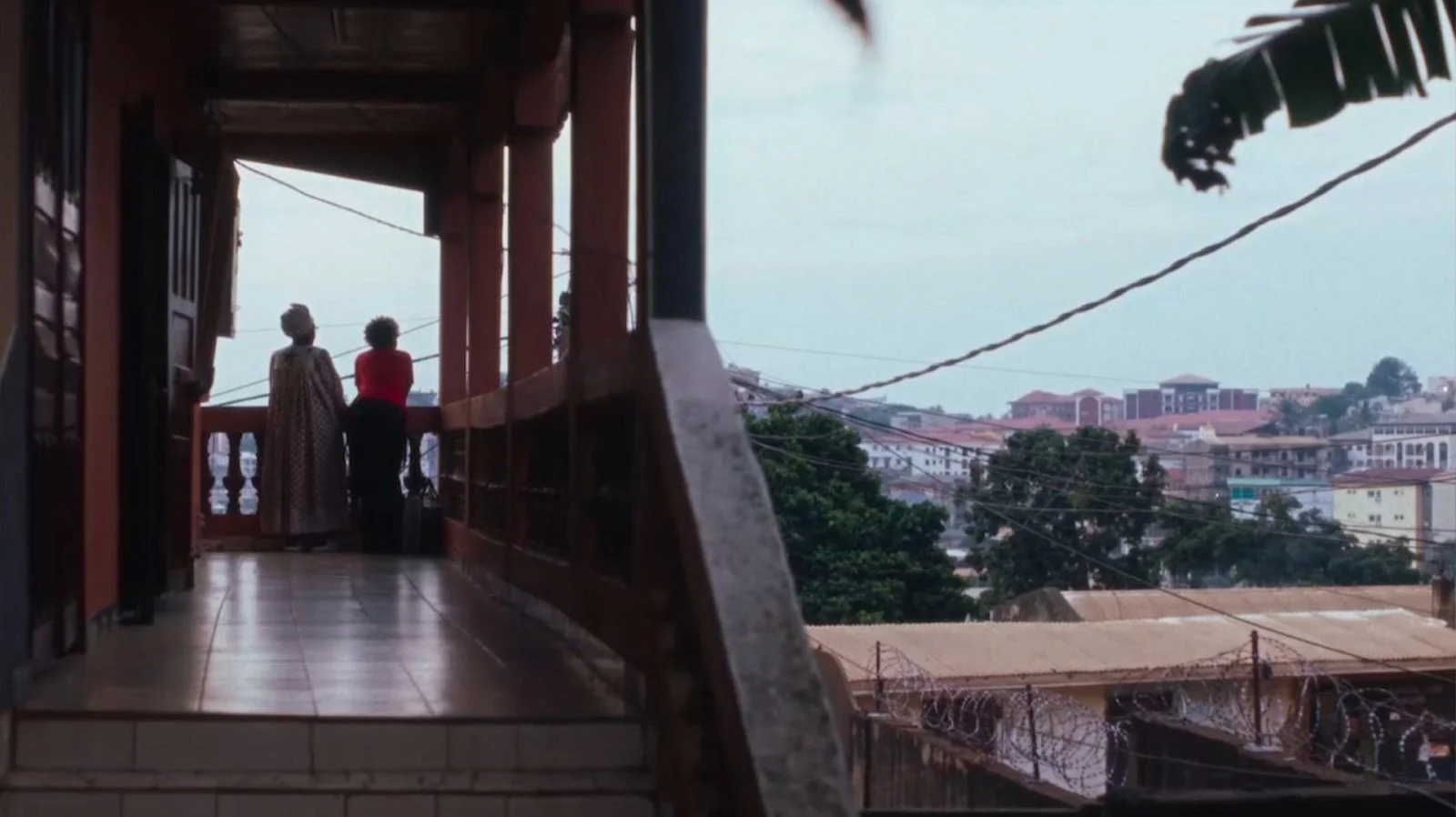
An ode from a Cameroonian son to his mother, a woman relentless in her pursuit of maintaining her great standing in her community, whose work and life take an unexpected turn when she lets her guard down and connects with her much younger neighbor.
A documentary about a man in Venezuela who is the last remaining human on earth to speak his language, and who decides to return to his village, inspired by the turbulent dreams of his grandmother, creating a thoughtful essay for the audience on the power of keeping extinct traditions alive.
And finally, a woman’s journey inside her Yazidi community, to film a mother and daughter as one readies to leave this world, and the other finds the strength to remain in her village and carry on.
These are just some of the film projects which were screened for industry insiders and mentored by coaches and filmmakers in the art of unveiling their masterpieces to the world. There were also series and shorts and a VR project for the first time, created by The Wanted 18 filmmaker and Palestinian artist Amer Shomali. So much work, all done through Zoom meetings and screenings on Festival Scope, to achieve a common cause, near and dear to all of us who work with film and love watching a good one: To make great cinema.
During a short, online of course, interview session with a couple of the filmmakers this past week, it was fascinating to hear about the thought process of Venezuelan born filmmaker Jeissy Trompiz Albornoz, whose documentary in production The Language of Water tackles how our cultural uniqueness can become a treasure which we must learn to share to keep it alive. “We wanted to focus on the loneliness of the last people [to speak a language] but also we wanted to push the cinematic border between fiction and documentary,” Albornoz said. I asked him what it was like to do this Qumra online and whether the distance and time limits actually focused the sessions more for him.
“At the beginning it was frustrating,” Albornoz admitted, “we were so happy to join everyone for Qumra and in Doha, but the DFI team has been doing a great job! Keeping this positive energy despite the circumstances, protecting the space [for cinema] and trying not to lose the energy.”
When I asked the same question of Hamad Al Hajri, a Qatari filmmaker who brought to Qumra 2026 his picture locked documentary When the News Breaks You, about journalists being targeted in conflict zones, he answered “we all know that human communication is the most important [thing] for all of us,” and added that although the situation is already quiet and safe in Doha these days, he felt confident in the DFI team and their decision. He called the event a “success.”
As a mentor first and a journalist second, I felt a renewed sense of cinematic wonder after this year’s Qumra, the kind I always feel after the industry incubator has somehow re-energized my film loving muscles. It is an art that needs all our love these days, the art of independent world cinema and as long as there are dedicated individuals like those who devoted their time and energy to this year’s Qumra projects, we might just turn out to be OK after all.
In the darkness of a cinema, slouched gently into an armchair and watching a great film, that is, we may find our own peace.
To discover all the titles, check out the DFI Qumra website and click on each title. It’s a world of wonder out there!
Top image courtesy of the DFI, used with permission.