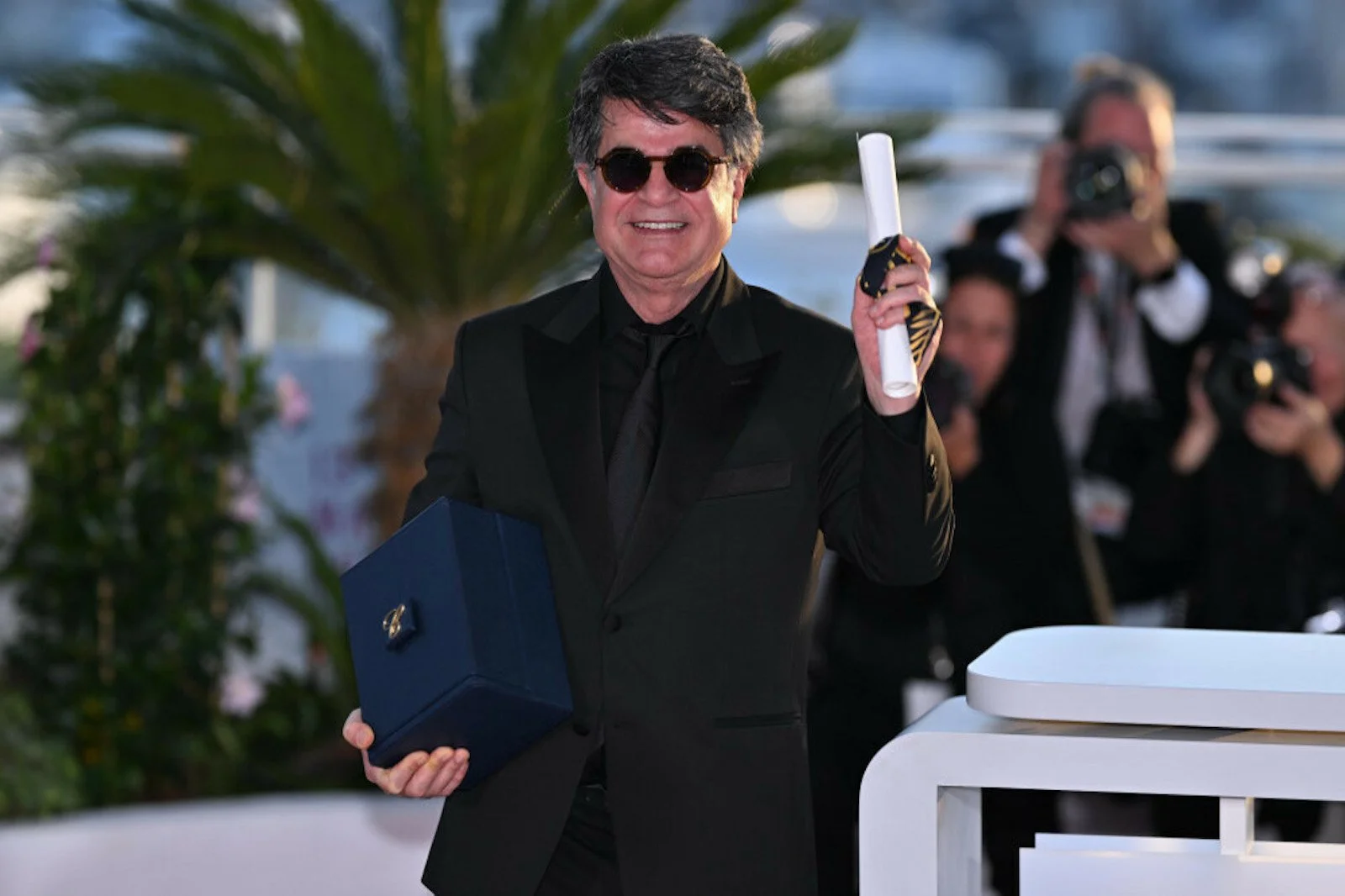
At a festival where everyone was told to avoid political statements, the juries made their views loud and clear by choosing films to award with their activists caps on.
Once Upon a Time in Gaza by Tarzan and Arab, I’m Glad You’re Dead Now by Tawfeek Barhom — both projects by Palestinian helmers — and a Camera d’Or, as well as the People’s Choice Award in the Quinzaine section for Hasan Hadi’s history-making Iraqi film The President’s Cake. Those are political choices in today’s world, where everything is about origin and intention, shouted to the seven winds of social media.
Plus, bestowing a Palme d’Or to Jafar Panahi’s It Was Just an Accident is also a well-intentioned but obvious jab at a government that has tried to limit the prolific filmmaker’s work but also is featured indirectly in his latest, most personal and perhaps some would argue, most political film to date. In it, he follows five characters who believe they have identified their prison torturer. This comes from a man who was himself incarcerated, and experienced solitary confinement as well as psychological tortures by an anonymous voice he heard while blindfolded.
In his acceptance speech, Panahi said: “I think it’s the moment to ask everyone, all the Iranians with opinions different from others, in Iran and throughout the world … I’d like to ask them one thing: Put all the problems and differences aside. The most important thing is surely our country and the freedom of our country.” Now, that’s who I’d like to see as a political leader, wouldn’t you?
This was the sixth win in a row for North American distributors Neon, which purchased the Panahi title during the Festival de Cannes. It follows last year’s Cannes top prize winner Anora, Justine Triet’s 2023 title Anatomy of a Fall, 2022’s Triangle of Sadness, 2021’s Titane and 2019’s Parasite. Anora and Parasite also won Best Picture at the Oscars, so there you have it.
The day of the awards, Cannes experienced a blackout. A high-voltage line fell on Saturday morning, probably the result of sabotage and caused the town and surrounding areas to go black. This was just hours after a fire at an electrical substation in Tanneron had caused the authorities to shut off power to the city. The cause and perpetrators are being sought as I write this, but the Palais des Festivals kicked on an independent generator and the last day’s screenings plus the ceremony later that evening went on without a hitch.
Also awarded were Joachim Trier’s Sentimental Value, which won the Grand Prix, and jointly, the Moroccan-set Sirat by Oliver Laxe and Sound of Falling by German helmer Mascha Schilinski. All were critics’ favorites for a top win, going into the awards ceremony. Best Director went to Kleber Mendonça Filho for The Secret Agent and the film also won an award for its leading man, Wagner Moura, who won Best Actor. Nadia Melitti won Best Actress for her tour de force as Fatima in The Little Sister by Hafzia Herzi .
Speaking of critics, the Fipresci juries, made up of members of the International Federation of Film Critics, awarded The Secret Agent their Fipresci Prize in the Official Selection – Competition category, and Urchin by Harris Dickinson with the Un Certain Regard prize, for a film which they described as “a powerful first feature that works as a complex character study of a homeless man struggling with addiction. We dive deeply into a cycle of self-destruction portrayed with sincerity, authenticity and genuine empathy.”
For Mendonça Filho’s work, they wrote in their statement: “We chose a film that has a novelistic, epic generosity; a film that allows for digression, diversion, humor and character to evoke a time and place and a rich, strange and deeply troubling story of corruption and oppression. A film that makes its own rules, that is personal yet universal, that takes its time and immerses you in a world – the world of military-ruled Brazil in 1977 and the world of good people in bad times.”
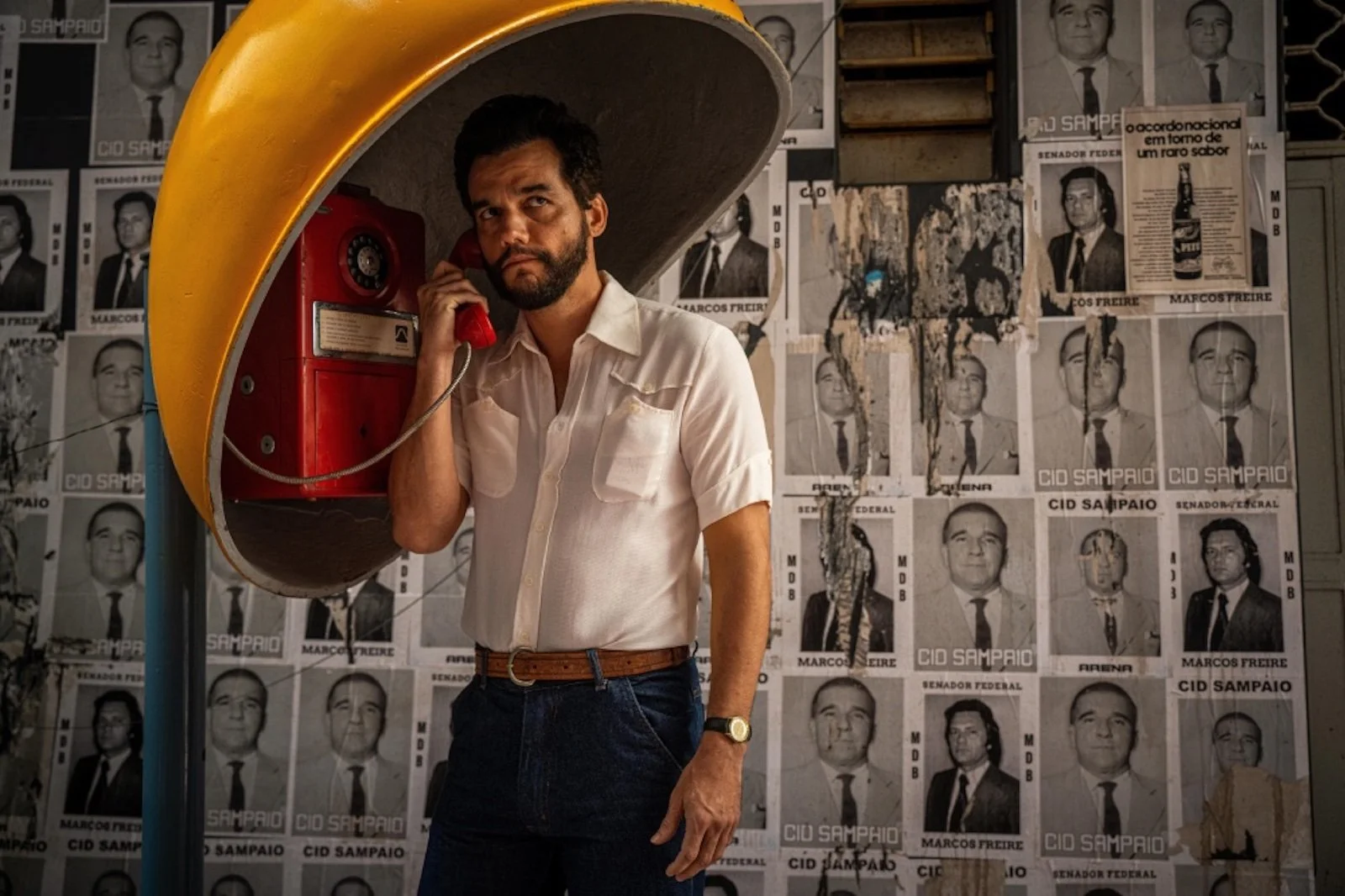
Calling Kleber Mendonça Filho: A photo of Best Actor winner Wagner Moura in ‘The Secret Agent’, © Victor Juca
A day before the Competition awards ceremony, Tarzan and Arab Nasser, who hail from Gaza but live abroad these days, were awarded the Best Director’s award in Un Certain Regard, and received a long standing ovation when they collected it on stage. Once Upon a Time in Gaza is a period piece of sorts, as any film that takes place before the tragic events of October 7th is these days. Gaza no longer looks anything like it looked before 2023, so this portrait of two young men resorting to drug peddling to get by on the Gaza Strip in 2007 is a vintage postcard to a place that, although already challenging at the time, has become downright impossible for human survival.
The brothers related a phone call from their Mom in Gaza: “You have to go, tell them to stop the genocide,” she told them, and they, in turn, gifted the prize as a “present to every single Palestinian.” Once again, what a brilliant way to use a win for political means. Kudos to the brothers and for the festival to have programmed it. As well as the UCR jury, headed by British writer-director Molly Manning Walker, who won the top prize in Un Certain Regard two years ago, for recognizing the twins work.
My fave films were also recognized, including The Mysterious Gaze of the Flamingo which won the coveted top Un Certain Regard Prize! Woohoo, I yelled, as I read it, because this gem by Diego Céspedes is truly wondrous. I even had an argument with a fellow journalist a few days ago, because he called the film “woke” and that to me, for any work of art, is denigratory. The portrait of a trans community in the north of Chile in 1982, just as AIDS began to rear its ugly head, is both heartwarmingly and magnificent and I kept wanting to call it “The Magnificent Gaze of the Flamingo” so there you have it. And the political angle here is about how much we have learned from that lesson, when at times we were told by our leaders and the media that people could pass the virus simply by touching each other. How far we have come, and yet how much further we still have to go, as the Covid epidemic showed us.
Another of my favorites is Frank Dillane, whose turn as a homeless guy in Urchin won him Best Actor in UCR. In actor Harris Dickison’s first film, Dillane plays a man who, after making yet another mistake, tries to turn his life around and bangs his head, figuratively, against a system that is not in his favor. The film became for me a kind of measure of all other films in Cannes, and few really stood up to it, if I’m being honest.
One of those projects that did, and I knew it since April when I mentored the team as part of the Doha Film Institute’s Qumra, is The President’s Cake by Hasan Hadi, produced by Leah Chen Baker. A historic project, as the first Iraqi film to screen in the Festival de Cannes, the film follows the adventures of nine-year old Lamia, as she is selected in her class to bake a cake in honor of Saddam Hussein. This is Iraq in the 1990’s and the “President” slash dictator requires one from every class to celebrate his birthday. But this is also the time of international sanctions and inner corruption and the task is a huge burden on the pint-sized protagonist as she must enlist the help of her friend and classmate Saeed to source all the ingredients. The film is a jewel and it was wonderful to witness its world premiere at the festival, courtesy of its lovely producer.
Find below the full list of winners, courtesy of the Festival
Feature Films
Palme d'or
UN SIMPLE ACCIDENT
Jafar Panahi
Grand Prix
AFFEKSJONSVERDI (SENTIMENTAL VALUE)
Joachim Trier
Joint Jury Prize
SIRÂT
Oliver Laxe
SOUND OF FALLING
Mascha Schilinski
Best Director
KLEBER MENDONÇA FILHO
for O AGENTE SECRETO (THE SECRET AGENT)
Best Screenplay
JEAN-PIERRE DARDENNE & LUC DARDENNE
for JEUNES MÈRES
Best Performance by an Actress
NADIA MELLITI
in LA PETITE DERNIÈRE directed by HAFSIA HERZI
Best Performance by an Actor
WAGNER MOURA
in O AGENTE SECRETO (THE SECRET AGENT) directed by Kleber Mendonça Filho
Special Award
RESURRECTION
Bi Gan
Short Films
Palme d'or
I’M GLAD YOU’RE DEAD NOW
Tawfeek Barhom
Special Mention
ALI
Adnan Al Rajeev
Un Certain Regard
Un Certain Regard Prize
LA MISTERIOSA MIRADA DEL FLAMENCO (THE MYSTERIOUS GAZE OF THE FLAMINGO)
Diego Céspedes
Jury Prize
UN POETA (A POET)
Simón Mesa Soto
Best Director Prize
ARAB & TARZAN NASSER
for ONCE UPON A TIME IN GAZA
Best Screenplay
HARRY LIGHTON
for PILLION
Best Performance by an Actress
CLEO DIÁRA
in O RISO E A FACA (I ONLY REST IN THE STORM) directed by Pedro Pinho
Best Performance by an Actor
FRANK DILLANE
in URCHIN directed by Harris Dickinson
Caméra d'or
THE PRESIDENT’S CAKE
Hassan Hadi
Directors’ Fortnight
Special Mention
MY FATHER’S SHADOW
Akinola Davies Jr
Un Certain Regard
La Cinef
First Prize
FIRST SUMMER
directed by Heo Gayoung
KAFA, South Korea
Second Prize
12 MOMENTS BEFORE THE FLAG-RAISING CEREMONY
directed by Qu Zhizheng
Beijing Film Academy, China
Joint Third Prize
GINGER BOY
directed by Miki Tanaka
ENBU Seminar, Japan
WINTER IN MARCH
directed by Natalia Mirzoyan
Estonian Academy of Arts, Estonia
The Higher Technical Commission for Sound and Images
The 2025 jury of the CST Award for Best Young Female Technician is proud to present this year’s prize to Éponine Momenceau, director of photography for the film Connemara, directed by Alex Lutz, for the delicacy and subtlety of the cinematographic work that supports the film’s narrative and direction.
The 2025 jury of the CST Artist-Technician Award honors Ruben Impens, Director of Photography, and Stéphane Thiébaut, Sound Mixer, for the power of their creativity in both image and sound on the film Alpha, directed by Julia Ducournau.