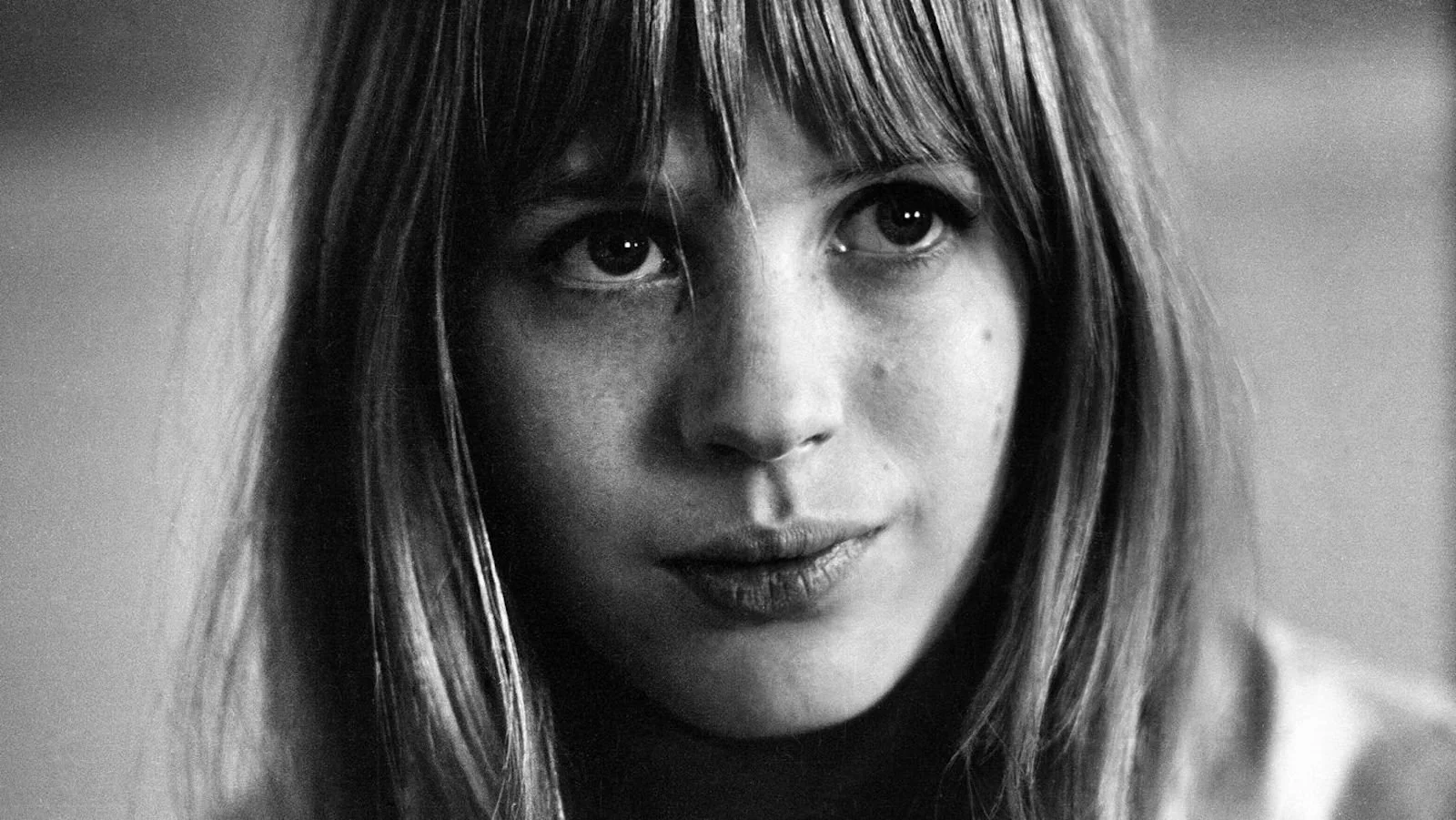
Two wondrous filmmakers, two outstanding actors and one musical legend come together to recount an icon and set the record straight. In more ways than one.
It always baffles me that women legends, from Joan d’Arc to Frida Kahlo, often have to be belittled in history before they are fully appreciated. It’s seldom the case with male figures but it is almost always what happens with the women.
So, when I read about an upcoming film which was to world premiere in Venice this year, which would tackle head on the iconic 1960s/70s (and beyond!) singer Marianne Faithfull, I knew I needed to watch it. Never mind that Broken English, titled after one of her songs, is helmed by two incredibly inventive filmmakers — off screen filmmaking and artist couple Iain Forsyth and Jane Pollard — or that the film also features Tilda Swinton and George MacKay accompanying Faithfull on this journey, in her last filmed interactions, and musical performance, before passing away earlier this year. Or even that the film vowed to set the viewer straight on the legend that is Faithful, often referred to as “Mick Jagger’s girlfriend” including by yours truly, and very mistakenly.
Broken English turned out to be one of my very few select favorites in Venice this year, and London audiences will soon be able to watch it at the BFI London Film Festival.

Filmmaker Iain Forsyth and Jane Pollard, photo by Paul Heartfield
Through the inventive use of an imaginary ‘Ministry of Not Forgetting’, headed by Swinton and led by MacKay, Faithfull finally got to tell her story, and in the process, makes our own women’s history — her-story — alright again.
It is never too late for that…
While the film is way too fascinating to be called a traditional, talking-head documentary, when asked about this new hybrid genre they seem to have invented, Pollard admitted “I love the way they describe it here — non-fiction,” continuing, “documentary comes with a lot of baggage, doesn’t it, as if it’s going to be somehow journalistic and truth seeking — and it’s not that we’re not seeking truth, just not by exposé.” I spoke to the filmmakers and MacKay in Venice, as the water in the pool of the villa where the junket was held reflected in our faces, almost beckoning to us.
In the Venice International Film Festival line up, the film was screened out of competition, in the non-fiction section, which held quite a few of my favorites this year, including one documentary about Kim Novak experience on Hitchcock’s Vertigo and Sofia Coppola’s kindhearted homage to her BFF, designer Marc Jacobs.
“It’s the curse of the moment when you start to put things in boxes and pigeonhole things — and say, that’s a documentary, that’s a fiction drama,” Forsyth added, “you begin to impose an expectation.” In the sense that documentaries have certain rules and ethics and responsibilities, and non-fiction could free them from those restrictions. Pollard and Forsyth definitely need that freedom to tell their magnificent stories.
Another film screening in Venice this year, the Silver Lion award winning The Voice of Hind Rajab, while called a narrative also takes wide liberties with a real, harrowing story, by masterfully turning it into fiction. Although the real voice of Palestinian child victim/martyr Hind Rajab accompanies the viewer all along that dramatic journey, the actors on the other end of the line are all living in a narrative world.
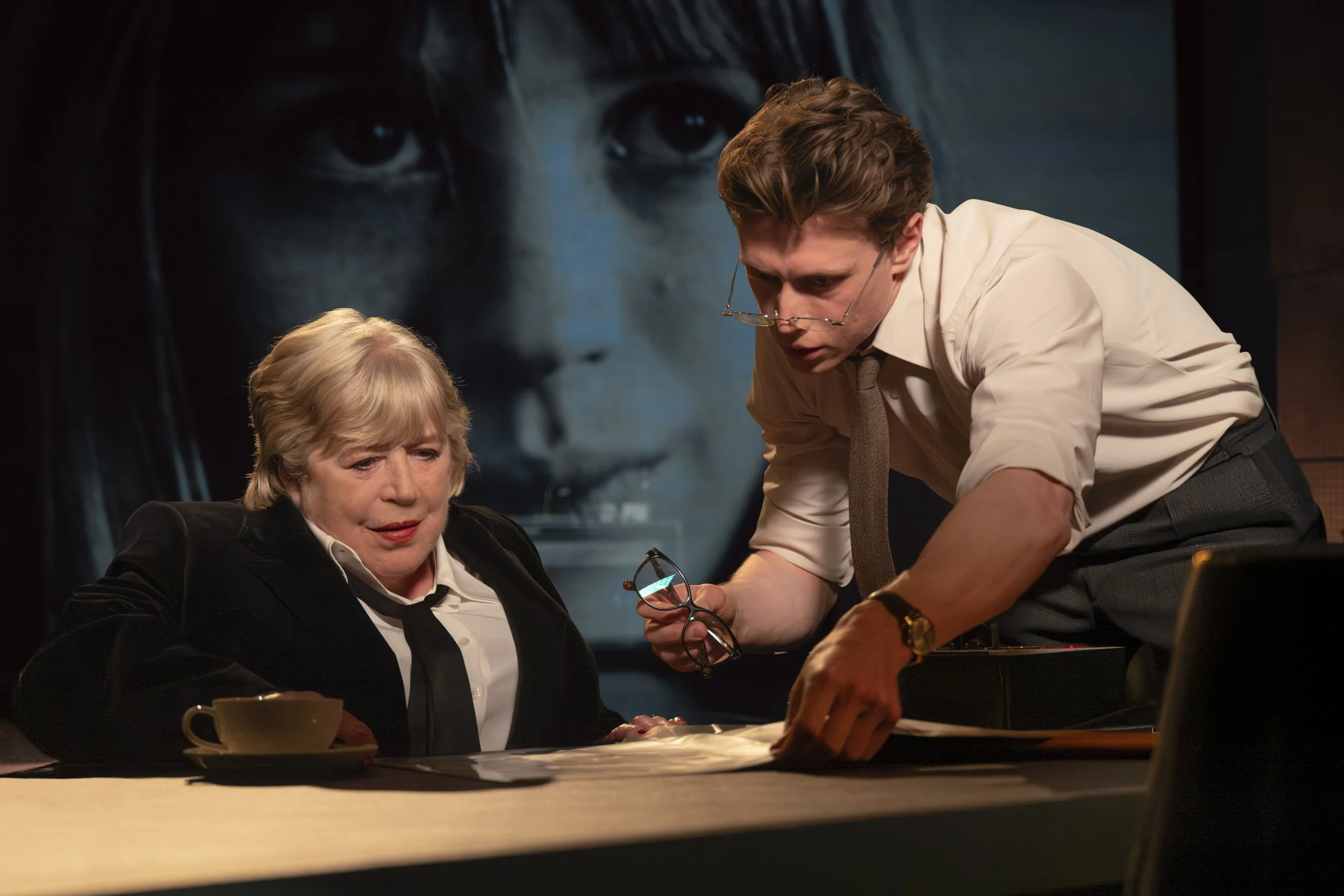
Marianne Faithful and George MacKay in a still from ‘Broken English’
With their past work, Pollard and Forsyth have established themselves as co-creators of a world I’d love to inhabit. In their 2014 “rockumentary” 20,000 Days on Earth, they allowed us, the audience, to follow a fictitious 24 hours in the life of musician and international cultural icon Nick Cave. Incidentally, Cave is also present in their hippie trippy 2024 performance film The Extraordinary Miss Flower, featuring Icelandic singer/songwriter Emiliana Torrini’s musical interpretation of love letters sent to Geraldine Flower — and only discovered, by her daughter, after her death. And Cave shows up again in Broken English, to close the film in musical style, alongside Faithfull.
Before starting on this journey, the duo admitted they knew “what we didn’t want it to be,” meaning their films, but seemed less sure themselves of what their work, starting with 20,000 Days on Earth, would turn out to be. Although Pollard admitted that others told them, “oh no, you knew exactly what the films would be!”
Forsyth reflected that perhaps, in the early days, what they may have lacked was the language, to tell these magical stories. To anyone who might have been a skeptic (although I find it incomprehensible is you are!) Broken English proves that not only they do possess the language, in all its intricacies and beauty, but also have an instinct for creating spellbinding cinema.
“It’s a difficult way to make films,” Forsyth conceded, “because to convince people to give you the money to make a film, they want to know what film you’re gonna make — and I think the way we make films is we know the emotional resonance we want the film to have, but I can’t honestly tell you what the final constituent parts of it will be.” It’s challenging, he concluded, “but it certainly worth rising to the challenge.”
“Her legacy needs recalibrating,” Pollard declared, “so there is a drive with this, a purpose to this,” one undeniable reason this film needed to be made, and requires to be watched.
Artists at heart, Forsyth admitted that their “approach to making these sorts of films is similar to painting a portrait,” which is how the duo steer clear of sensationalizing their subjects and perpetuating the (wrong) myths about them. “We are not trying to draw a biographical timeline of Marianne from cradle to grave,” and to that Pollard added “nor are we paparazzi trying to catch you on your doorstep — I’ve seen multiple films about Marianne that have deliberately used moment where she’s a bit angry — we’re all a bit f***ing angry! But that tells us nothing of the artist and her reason of creating.”
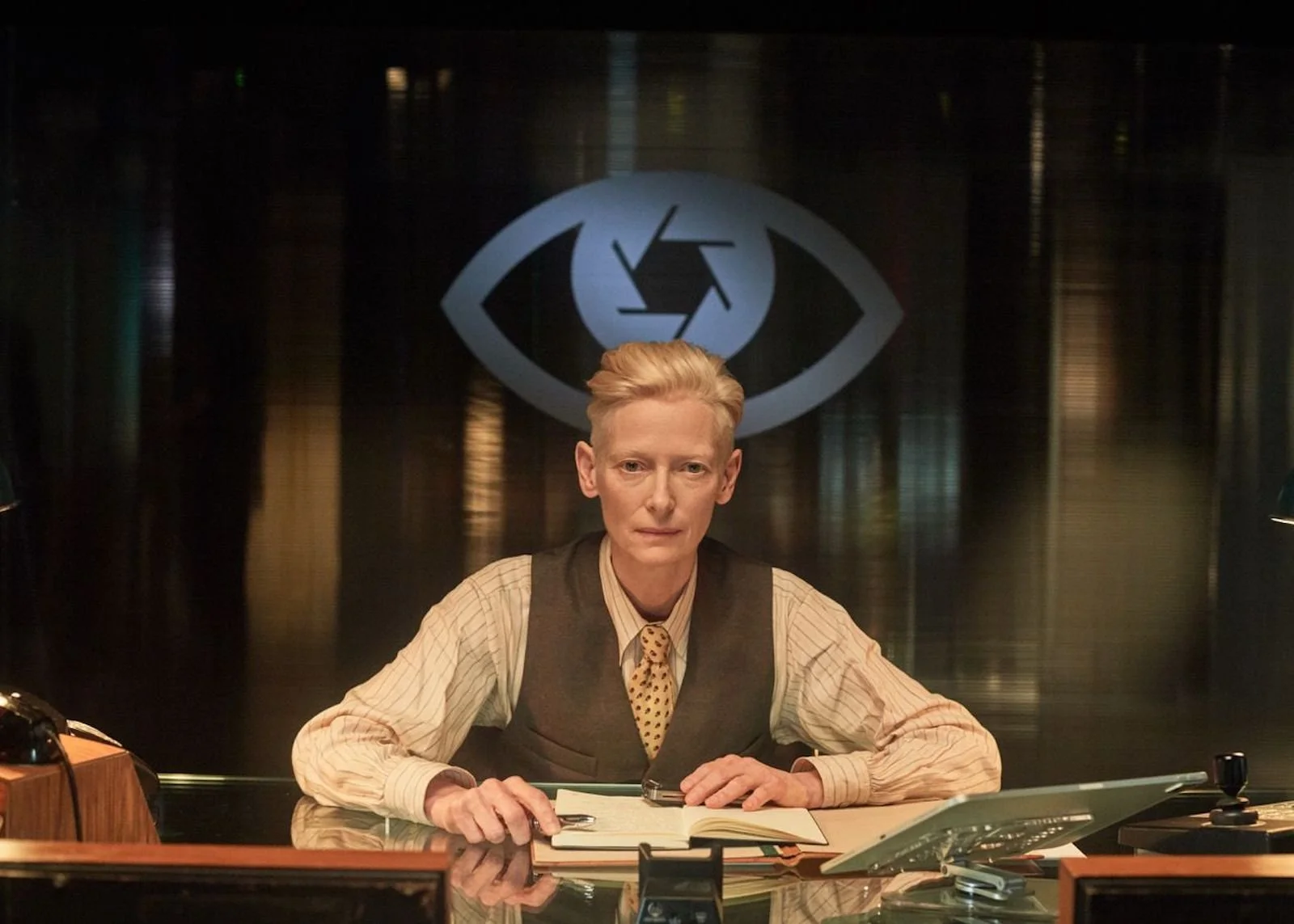
Tilda Swinton in a still from ‘Broken English’, photo by © Amelia Troubridge
When I asked MacKay what he thought when he was approached about making a film like this, he answered, “I’ve worked with Iain and Jane a few times, so I was there — immediately.” MacKay collaborated with the duo on “a TV thing, then an installation piece for Sheffield DocFest where I did two monologues and then a portraiture thing, and I admire them so much as artists.” Perhaps the actor laid out the best description of Broken English, when he said this was totally different yet equivalent, in a way, to the Nick Cave film, in terms of it being “a conceptual, non-fiction film about a musical legend.”
To MacKay, a child of the 1990’s, Marianne Faithfull wasn’t known, even though he knew “a couple of songs without knowing it was Marianne singing.” And once Pollard and Forsyth asked him to be a part of the film, he delved head first into the research. And extensive that research turned out to be, as MacKay sits with Faithful throughout the film and has to be present while she explains her life, through photos and recordings and newspaper and TV headlines. If he hadn’t been prepared, MacKay would not have been able to conduct the fascinating interviews, which unfold organically in Broken English. And make the film a must-watch on every level.
“She was really kind to me,” MacKay gushed about Faithfull, “she was really giving and maybe part of that is up to Iain and Jane.” He admitted the singer had a reputation of being “quite strong, not suffering fools easily and something about it being an artistic project, she probably dug that — more than a talking heads thing with this young guy.” MacKay is more than “this young guy,” he has proven his acting worth repeatedly, since coming onto our radar as a child actor in 2003 in P. J. Hogan’s Peter Pan. On the day of our junket, he is dressed head to toe in Gucci, including an off-white undershirt with the name of the brand embroidered on the neckline. He looks every bit a movie star.
Some final thoughts? Personally, I came away from the documentary loving Faithfull’s rockstar vibe, her undeniable coolness and appreciating her artistic legacy more. I now have ‘As Tears Go By’ and ‘Sister Morphine’ on my Spotify list, on repeat.
So, I wanted to know what remains the greatest challenge for Pollard and Forsyth then, or at least what proved that for this latest film? “Financing it… the usual,” Forsyth chimed back, shrugging his shoulders.
While this may not be a Marvel film, or even require a tenth of any superhero movies budget, it certainly showcased a heroine worth fighting for — for me. Marianne Faithfull, you are forever a Rockstar, in every aspect of that word. And may films like these continue to be made, by any means necessary.
Photos courtesy of La Biennale di Venezia, used with permission.