And this documentary proves one to be watched, if you find yourself in NYC starting July 18th and LA from July 25th.
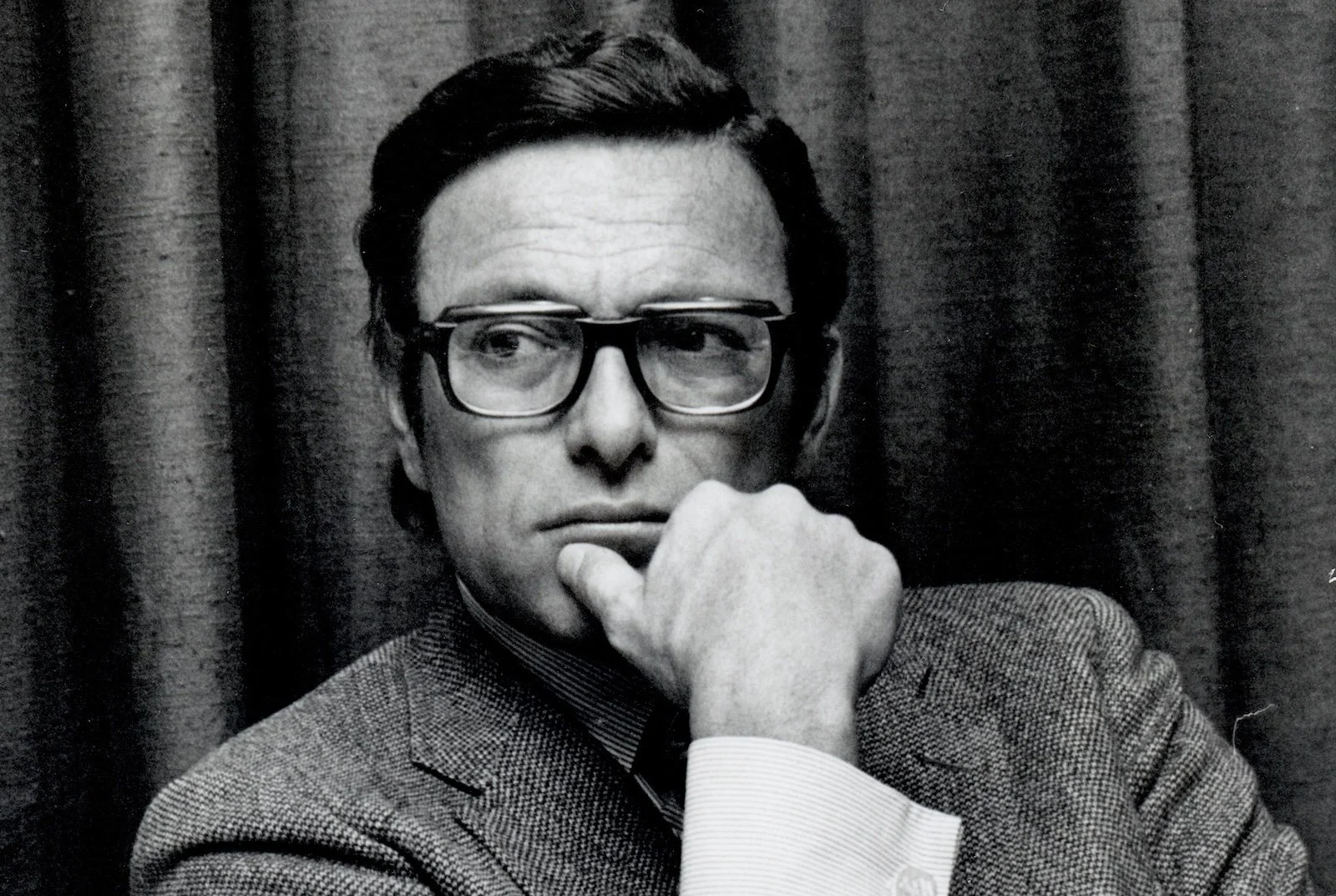
See the man photographed above? He’s not a movie star, rather a shrewd businessman who, instead of fighting against villains at the movies, fought the American system of taxation every step of the way. And his filmmaker son, the brilliant Justin Schein, who made the 2009 award-winning doc No Impact Man and was DoP on the Obama’s Higher Ground Productions Netflix doc Crip Camp among others, made a film about him. So perhaps Harvey Schein is a movie star after all, an iconoclastic one at that.
The result of this “collaboration” between father and son is a personal yet communally crucial documentary that, as an audience member, will fill you with joy, angst, laugher, tears, fear, amazement, worry, and a great desire to hug your dad, no matter what that relationship was like in your own life, or even if he’s still around.
American passport holders like me know that America loves its taxes. But unlike many other countries in the world, where income taxes collected go on to fund a myriad of services from healthcare to education, Americans seldom see the rewards of their taxation. The US is a superpower, but not when it comes to our health and school systems. In those areas, it’s worse than a third world country.
This is perhaps the reason why so many wealthy Americans don’t like paying up. They use private schools for their children and are treated by specialized healthcare professionals and therefore, paying taxes simply feels like an extra burden to them. I have to admit that when it comes to the subject of the dreaded estate tax, which is what Schein’s film focuses on, the topic makes me break out in a cold sweat.
So watching Death & Taxes proved fascinating.
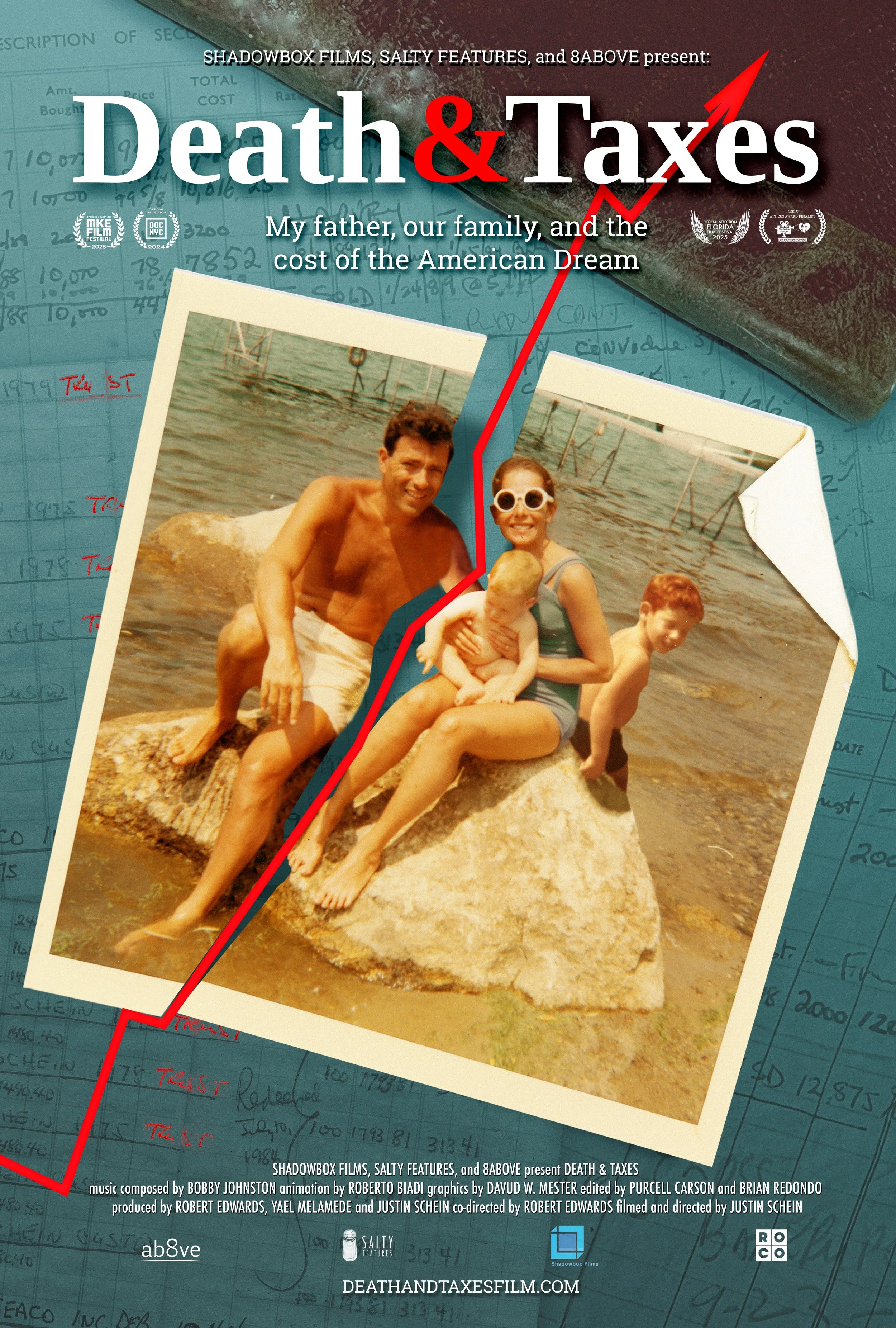
Schein’s father, Harvey Schein, rose from poverty in Depression-era Brooklyn to great financial success as one of America’s top CEOs of the 1970s at Sony. Hailing from an immigrant Jewish family, he lived what we call “The American Dream” and put away a considerable amount of wealth as a result. The idea to be taxed once, when he was alive and while earning his salary, then again at death, when the nest egg would be passed on to his heirs, seemed irrational to him. And perhaps it is. However, Schein’s son Justin and critics would argue that money collected from the estates of the rich help pay for services like Medicare and food stamps in America and therefore, the Government should tax away.
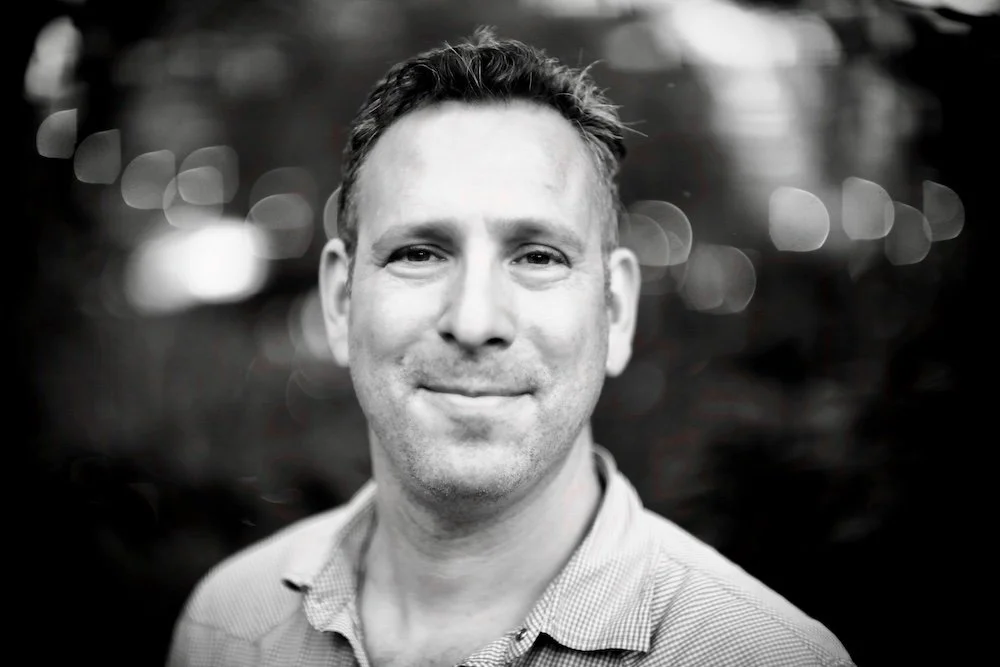
I got the opportunity to chat with Justin Schein via Zoom, on a hot day across the globe, from my current London hometown to his home in NYC. We started by talking about global warming — “that was my first film” the filmmaker said mentioning No Impact Man — and 9/11 in NYC, which he covered upclose for one of his earliest works America Rebuilds: A Year at Ground Zero. I reminisced a bit about this feeling of community during the days that followed the tragic events and Schein confirmed 9/11 was an “opportunity that was lost in some ways, for people to feel part of something,” talking about the feeling we all felt, a desire to help one another in those lost days. “You know this idea now that it's every man for himself, and that Trump can proudly say that avoiding taxes makes him smarter,” Schein went on to say “it’s a shame, because it really is having a very negative effect on our democracy.”
That moment, in 2016 when Trump boasted during his debate with Hillary Clinton that not paying taxes made him smart, is there for all to watch on Death & Taxes. The film draws its name from a quote attributed to another American president, Benjamin Franklin, which goes “in this world nothing can be said to be certain, except death and taxes.”
Aided by public figures like Grover Norquist, president of Americans for Tax Reform (ATR), a taxpayer advocacy group, NY Times columnist Paul Krugman, along with James Bandler, a Pulitzer Prize winning reporter at ProPublica and Felicia Wong, the president and CEO of the Roosevelt Institute, but also his own family like mom Joy and Justin’s brother Mark Schein, the filmmaker weaves a tale of money, family and just how far a man will go to protect his assets. Will Harvey Schein win in the end? Well, remembering the Franklin-attributed quote above, there are only two certainties and you’ll have to watch the film for the rest.
Perhaps the greatest aspect of Death & Taxes is the film’s ability to morph from a technical piece about a man and his fight against the IRS, Schein’s basic premise, to a loving portrait of an imperfect father, which many of us can identify with having had in our own lives. But also a story about a woman who fell in love, gave up her aspirations to take care of her husband and children and then reconnected with her inner self and her desires later in life. This character, who slowly emerges in Schein’s film is his mother Joy, a dancer who fell in love early with the charismatic Harvey and then, out of her own self-preservation, decided to rent an apartment in NYC and pick up teaching dance. All the while remaining the rock that kept the Schein family together. Well, almost…
I asked Justin about this change happening right before our eyes. “As is the case in a lot of documentaries, certainly for me, the film you start making is not the film that you end up with,” he said candidly. “The core footage of my parents from the 90s and the early 2000s was a film that I started making about them and their relationship,” he explained further, “but then I realized, as a son, you know, my family needed peace and resolution, and a film needs drama, and that is at odds.” So he put that film aside and “it wasn't until like 2017 when the Trump tax plan was being devised and there was a real possibility that the estate tax, which was something that had been on my mind for years, might actually go away that I thought about making a film about it.” And that’s when the seed of Death & Taxes as we are able to watch it was born.
The film deals with a certain section of Americans, say white, male and middle class, who were able to take advantage of the GI Bill and go to college, a way for the Government to thank these men for their service in WWII. Many of those men went on to become the rich entrepreneurs that kind of help, which came at the right time of their lives, allowed them to be. If you were Black, though, or a woman, things were not so easy, and the GI Bill didn’t seem to apply to you in 1950s America and the trickle down effect of that inequality is still being felt today. Actually, today more than ever.
Justin’s own feelings about this inequality are explored through the film and he admitted “there's a lot of contradiction, you know, [between] this desire to hold on to what you have, acknowledging that you might have more than you need and know that you're protecting it,” meaning that he now, with a family and two teenage sons, understands what his father was fighting for.

Harvey and Joy Schein, photo courtesy of the Schein family archives
Money is always a taboo subject and Justin conceded for his family too. “There's always like competing forces,” he said, continuing “I mean, my my brother, who really holds my father in very high regard, as do I but my brother was much more conventional, a lawyer and in business, he wanted to celebrate my dad and you know, my mom, who's an artist, just wanted to support me, and so I tried to keep them in the loop,” by showing them various cuts of the film. Ultimately, Justin admitted “it was taboo, but, you know, it's really a testament to how they care about me and appreciate my work,” that the film is out there with their blessing. And, Justin added “I just had a screening where they [mom Joy and brother Mark] both spoke, which was great.”
I asked Justin if he ever feels as if he’s becoming his dad more and more, since we all seem to turn into our parents when we get older. “I think that I made a conscious decision that, growing up and seeing him so angry and eventually generally not happy, I decided that I didn't want to be that way.” Yet, Justin went on to add on our chat, that “dad was very straightforward about his feelings for better or for worse,” even if “there were times when he could have benefited from some more tact.”
And is there hope for the American Dream, according to Justin Schein? "Clearly this concept has been flawed from the beginning,” he chimed in right away, then added “I think it was John Steinbeck who made a comment about how there's no poor people in America, just people waiting to be rich.” That means that “everybody believes that they can do it [get rich] which is partly why people are so against the estate tax, because they think, oh, maybe one day I'll have 15 million doller, but I think that because it's so fundamental, it transcends partisanship, and I think that if we can articulate that damage that this kind of wealth gap and wealth hoarding is doing, I think people will get it and so I think it's always evolving, and it's always a work in process.”
He then added “but, I mean, is it dead? It's definitely changed.”
Death & Taxes will screen from July 18th at the IFC Center in NYC and from July 25th at Laemmle Theaters in LA.