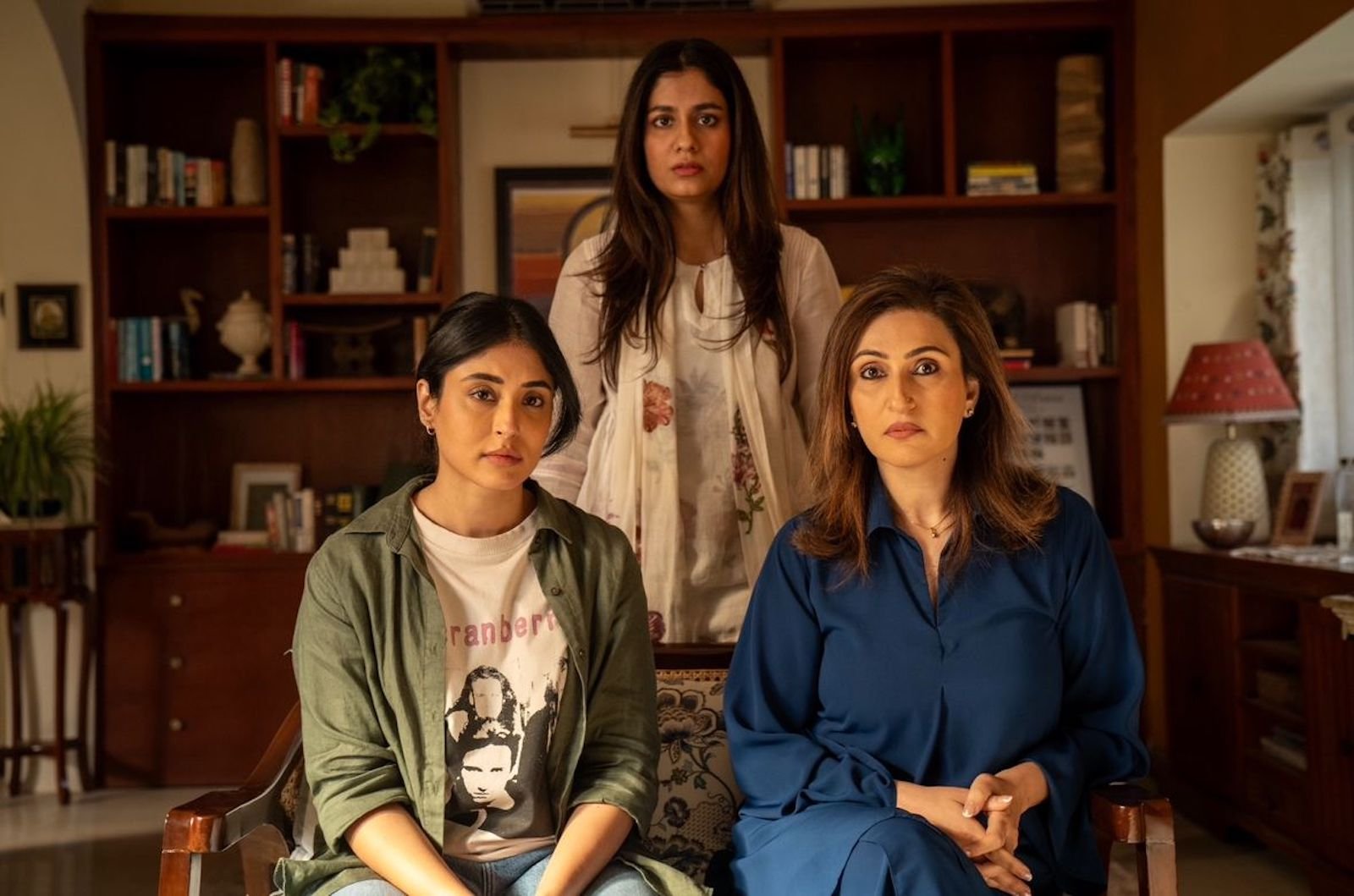
In short, the film not only passes the Bechdel test with flying colors, and showcases a cast of extraordinary actresses playing members of one fabulous family, but it should also be credited with creating a new kind of “Rizvi test”, one which can be used for showing Muslim women characters which finally break down all stereotypes created so far in movies.
Years ago, when I lived in NYC, I came across Indian journalist turned filmmaker Anusha Rizvi’s cool debut feature Peepli Live. The satirical black comedy had just world premiered at the 2010 Sundance Film Festival, was produced by Aamir Khan Productions and became India’s Oscar entry for the 83rd Academy Awards Best Foreign Film category.
That film mixed the tragedies of then modern India, the unfortunate mixture of the country’s growth as it failed to trickle down to the poorer classes and the farmers and the attempt by one farmer to provide for his family, at the cost of his own skin. It was such a brilliant script, mixed with an extraordinary performance by Nawazuddin Siddiqui, who by the way broke out internationally thanks to Rizvi’s film, and supported by stellar turns by Naseeruddin Shah, Raghubir Yadav and Aamir Bashir, all well known names of the indie Hindi film industry. The film stayed with me and I still can remember iconic scenes from it, like I watched it yesterday.
Fast forward fifteen years, and Rizvi has done it again. With her finger firmly planted on the pulse of contemporary India, she has written and directed a film which at its heart is about what it must means to be young, Indian and Muslim. And the result is a film that, although feels and plays light and pleasantly, doesn’t paint a pretty picture of what it feels like to be a non-Hindu Desi in India.
The story of The Great Shamsuddin Family takes place over a single day, in a Delhi apartment owned by the young Bani (played by TV actress Kritika Kamra). As Bani tries to complete a writing deadline, the whole family descend upon her, each with their own problem, each seeking her strength and wisdom. But also a kind of shelter within the calm, cool and well furnished apartment where Bani has made a home for herself. She is the practical one in the Shamsuddin family, that is apparent almost immediately, and as such she is seeking a way out of this perilous country that India has become for the “non-conformists”. Her writing deadline has to do with a position abroad she has applied for.
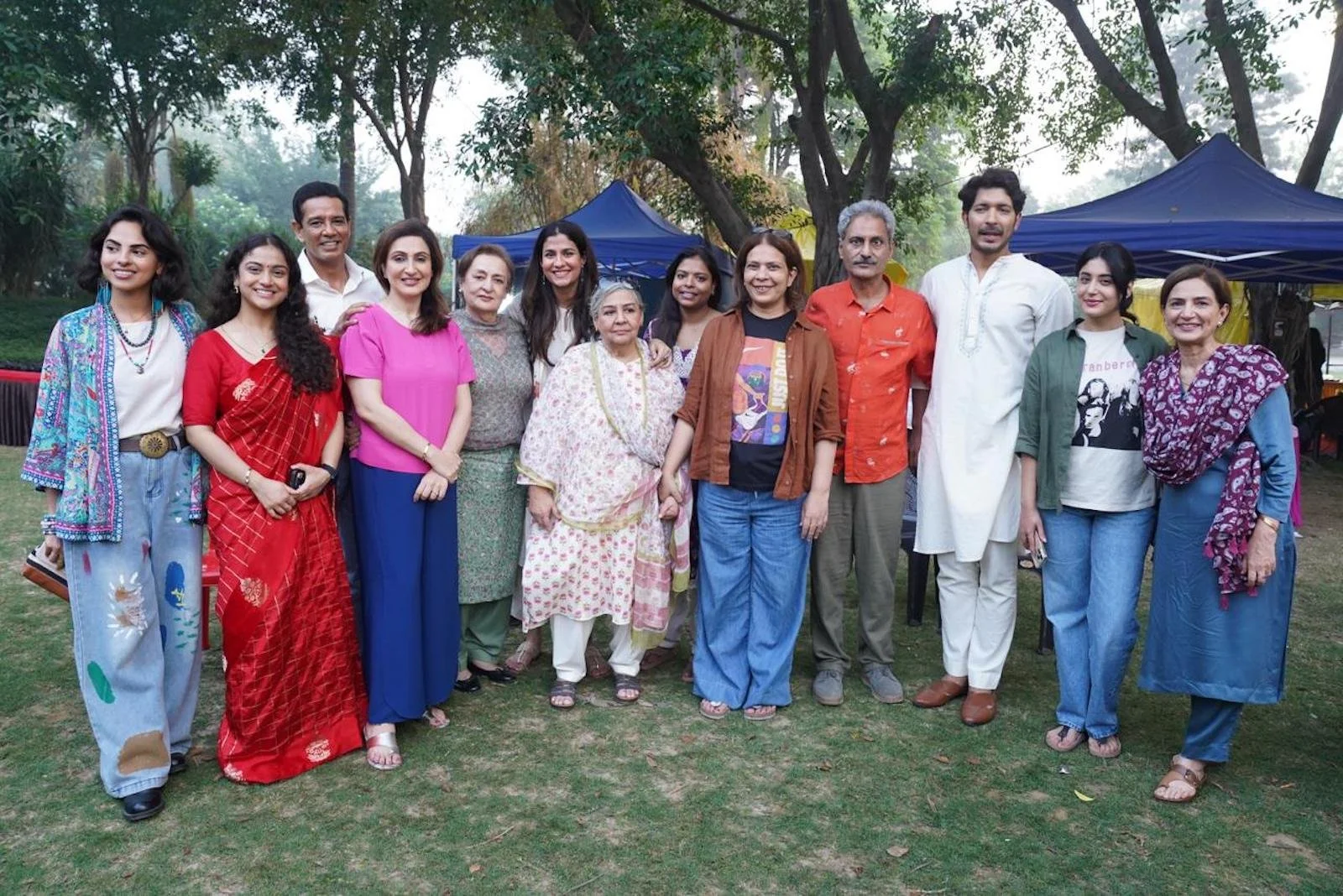
On the set, with Anusha Rizvi, wearing a brown shirt, opened over a graphic t, and Mahmood Farooqi to the right in the photo, wearing an orange shirt
It is subtle, the threat of danger for a Muslims in Rizvi’s film, but it’s there, at almost every turn. And we never need to forget it for too long, before a character brings it up. Or an event on social media reminds the family of where they are. And who they are.
First on the list of arrivals to her relatively quiet oasis of an apartment is Bani’s cousin Iram (Shreya Dhanwanthary) who shows up with a money issue. She has “borrowed” ₹25 lakh — the equivalent of around 28,000 US dollars — from her mom’s account to invest it with a new boyfriend and now has only cash from her ex-husband’s alimony payment to put back into the bank. Problem is, her mom’s bank is rebranding, merging with another bank, and is shut for the day.
Soon Bani and Iram are joined by the wise Humaira (Juhi Babbar) who sees an incident on social media which involves a violent clash between two communities of differing beliefs, and thinks she recognizes the car of her husband, who hasn’t been answering the phone for the past couple of hours. Then along come Bani’s mother, Asiya (Dolly Ahluwalia), with her feisty sister Akko (Farida Jalall), but also Bani’s professor friend, the know-it-all Amitav (an older, wiser, but still good looking and wonderfully funny Purab Kohli), and his very young protege, Latika (Joyeeta Dutta), who is or isn’t his girlfriend. The elder sisters are there to pick up Asiya’s passport because they have suddenly decided to go on an Umrah pilgrimage to Mecca. I am not listing the arrivals in order of appearance as there is a constant succession of door-bell rings, but somewhere in there, Bani’s cousin Zoheb (Nishank Verma) also crash-lands with his Hindu bride to be Pallavi (Anusha Banerjee) to announce their impending wedding, adding panic and upping the ante, or rather the Aunties I should say here, on this already chaotic day.
It is only when Pallavi turns out to be a doctor that emotions are appeased and the Aunties are reassured that the marriage could work after all… I mean, everyone needs a doctor in the family!
All the while this sort of farce is going on, Rizvi is carefully taking us through the contradictions of contemporary Hindu-centric India, where the gloriously breathtaking ancient Humayun tomb — of the Mughal, read: Muslim Emperor Humayun — sits looming in the background of Bani’s apartment in all its glory, reminding everyone where the core of Desi culture came from.
The room the film takes place in, almost in its entirety, never feels small nor does Rizvi’s sharp dialogue ever sound stagey, as it very easily could. She, as a filmmaker, never talks down to us the audience and the only regret I have is that the film is not planned for release in the US or the UK anytime soon. It’s playing in India on JioHotStar, the streaming platform.
At one point, I found myself tearing up, as Bani admits to her sister she is tired of being the strong one in the family, and she too craves someone to take care of her, to help her in solving her problems. That one line proves that, no matter where you come from, as a woman the internal issues are the same. And we can all understand each other, Muslim, Hindu, Jewish or otherwise.
The Great Shamsuddin Family is a film that packs such a great punch, wrapped in its comedic (at first sight) approach, that I am thankful to have been able to watch it. And I will carry it with me in its images and message just as have done with Peepli Live all these years.
The film is produced by Rizvi’s co-producer in life and in film Mahmood Farooqi, along with Ashok Jain, Ajit Andhare and fellow filmmaker Leena Yadav. It is shot beautifully by Debashis Remy Dalai, edited perfectly by Kornark Saxena, with production design courtesy of N. Madhusudan and costumes by Shuchi Love Bhatia. The score of the film, which adds an extra layer of familiarity to the plot, is composed by Simran Hora.
Images courtesy of Anusha Rizvi, used with permission.