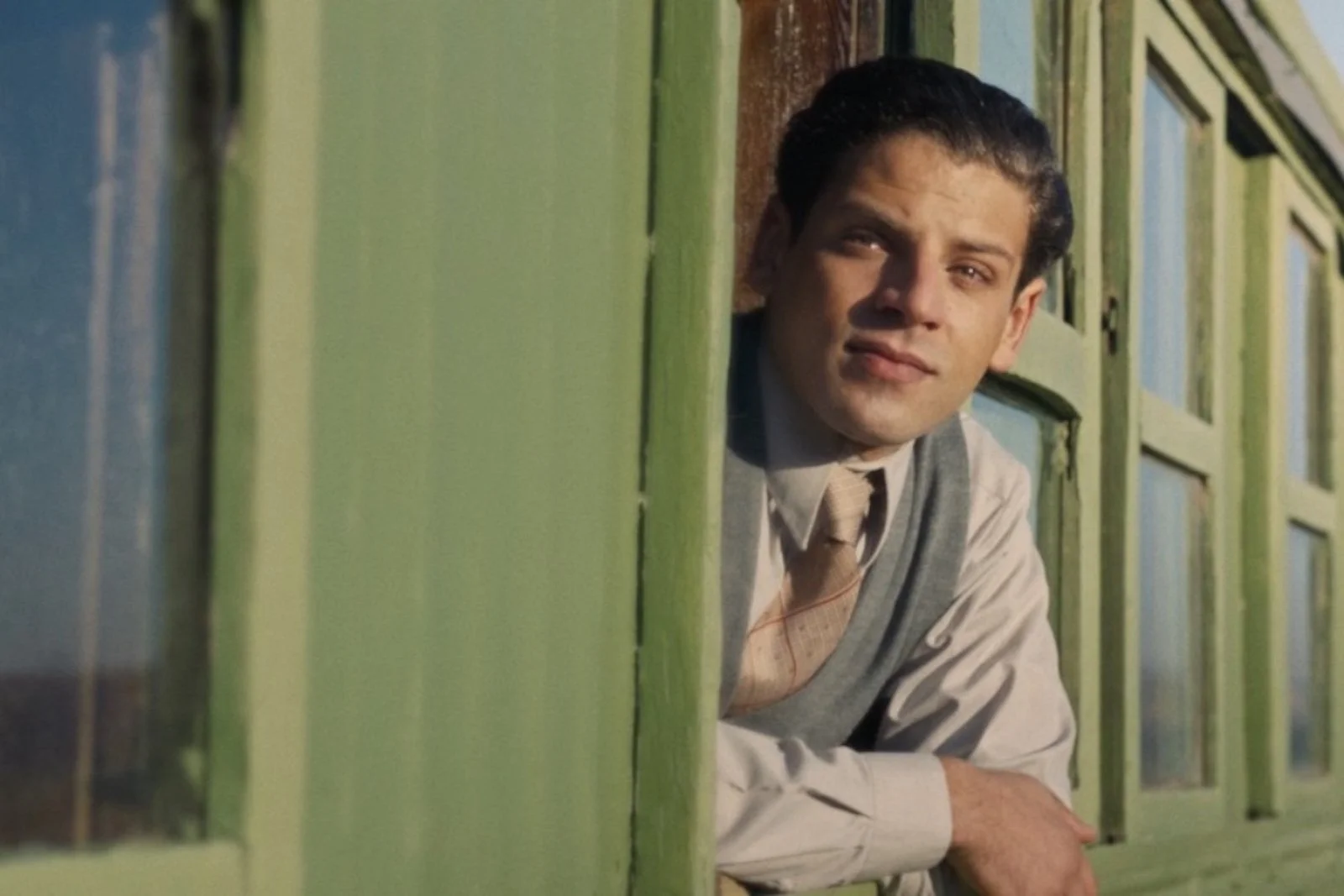
With a recently announced initiative titled “Talking Palestine 36” and a screening in Gaza — the film’s official Palestinian premiere — to show the film to the people to whom it belongs, Annemarie Jacir is making sure her Palestinian Oscar submission doesn’t go unnoticed.
A couple of weeks ago I moderated two Q&As for Palestine 36 and it was a magical affair. From the way voters reacted to the moving, absolutely true story, to the presence in the audience, at a public screening, of the niece of one of the men a British character is based on, I felt like crying tears of joy at every step. Actually, at the screening inside the beautiful Mayfair Curzon cinema, one Lebanese hijabi woman in the audience broke down in tears as she tried to ask the filmmaker a question.
That’s probably because Palestine 36 has it all. It’s well written, well shot and beautifully acted, by an ensemble cast of Anglo Arab actors, stars and superstars, that seems like a wish list of talents Jacir put together in her wildest dreams.
Yet the film has gotten this far without a Hollywood personality coming on board as Executive Producer, the case with the other two titles which have been shortlisted as well, all dealing with Palestinian stories. To those who may not know, what a starry EP does is help the film be watched, encouraged as audiences and voters are to be nudged by names they know. Brad Pitt, Mark Ruffalo, those names carry heft and so people watch the films they have signed on as EPs on.
But Jacir has gone a different route. She has been relying on word of mouth, which also managed to keep Palestine 36 in cinemas in the UK for 8 weeks straight! In case you were wondering, that’s quite an achievement, even for a Hollywood film these days and when we’re talking indie, Arab cinema, it is really nothing short of a miracle.
A couple of weeks ago, Watermelon Pictures, the company which is distributing the film in the US, launched alongside with Philistine Films — Ossama Bawardi’s Palestine-based production company with Jacir — a series of encounters called “Talking Palestine 36” which will feature, you guessed it, conversations around the story and Jacir’s movie.
Watermelon Pictures is the American film production and distribution company founded in 2024 by Badie and Hamza Ali, with Alana Hadid serving as the company’s creative director.
The campaign will feature Mark Ruffalo, Susan Sarandon, Riz Ahmed, Diego Luna, Ava Duvernay, Julie Delpy, Mira Nair and Ramy Youssef, along with activists and audiences in a collection of talks inspired by and in support of Palestine 36 — Palestine’s official shortlisted submission to the 98th Academy Awards from acclaimed writer/director Jacir.
The “Talking Palestine 36” series will feature conversations, panels, and special appearances with these artists who are known for their commitment to human rights and social equity and whose participation underscores the global artistic community’s growing support for Palestinian cinema and its role in shaping cross-cultural understanding. BTW, the conversations with Diego Luna, Julie Delpy, and Mira Nair have already taken place in the past month.
Each installment in the series will spotlight a different facet of the film from creative expression under constraint to the global role of cinema in documenting the lived experience of Palestinians all while examining the roots of Palestinian resistance against occupation.
Palestine 36 tells the story of the Arab revolts of 1936-39 against British colonial rule in Palestine and stars Saleh Bakri, Hiam Abbass, Jeremy Irons, Yasmine Al Massri, Liam Cunningham, Yafa Bakri, Billy Howle, Robert Aramayo and rising names from across Palestine and the diaspora. Among these rising names is star-in-the-making, Palestinian born Karim Daoud Anaya, who was named an Arab Star of Tomorrow by UK trade publication Screen recently. Proudly, I helped to curate that list and find Daoud Anaya both handsome and super talented. I dare to say that I think I know how audiences felt when they watched Omar Sharif on screen for the first time in Lawrence of Arabia, when I watch him act in Jacir’s film.
On Monday, December 22nd, the film also held its Palestinian premiere in Gaza, at a displacement camp and thanks to a partnership with the Gaza International Festival for Women’s Cinema and the Gaza Soup Kitchen. I’ve included a reel from the filmmakers, and more reels from them can be found on the film’s Instagram account.
Palestine 36 first launched at TIFF in September and has earned critical acclaim with reviews, currently sitting at 100% on Rotten Tomatoes.
More importantly perhaps, the film has resonated with audiences globally, winning the Grand Prix at the Tokyo International Film Festival, the Audience Award at the São Paulo International Film Festival and the Arab Film Festival in San Francisco, as well as the Special Jury Prize at the Asian World Film Festival. “Talking Palestine 36” builds on this momentum by creating an ongoing public platform for dialogue around the film, the filmmaking process, and the broader cultural and human context from which it emerges.
“We created this series to open space for deeper, nuanced conversation about Palestine and its history,” said Palestine 36 producer Ossama Bawardi. “Palestine 36 is not just a film – it is a cultural moment. These talks aim to broaden that moment into a sustained dialogue.”
“Talking Palestine 36” will roll out across multiple cities with in-person conversations and online, ensuring global accessibility. The series will continue throughout the film’s global theatrical release, with additional guests and event dates to be announced.
All images courtesy of Philistine Films, used with permission.