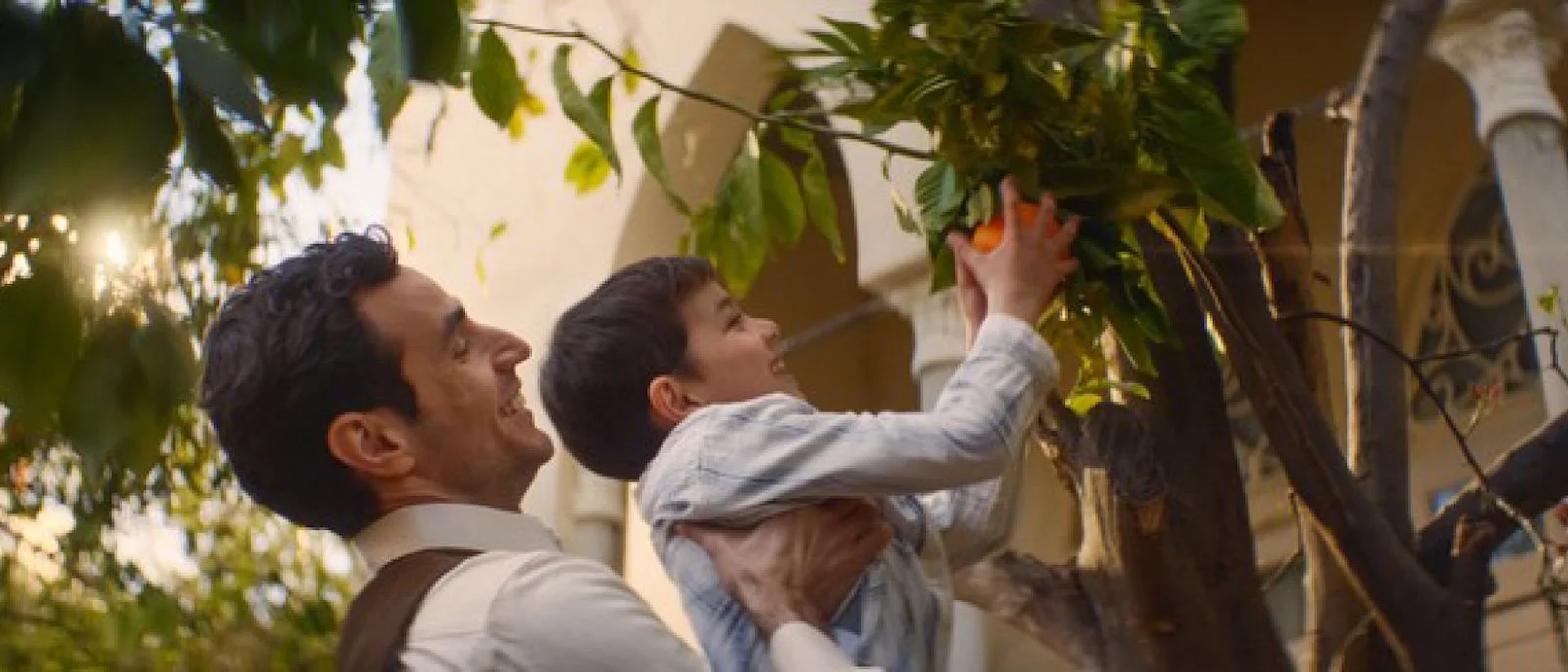
The latest film by Palestinian-American helmer and actress Cherien Dabis is an ode to a land she’s never really known, having grown up in the diaspora, to which more and more Palestinians belong each day.
There are many great things to love in All That’s Left of You. The leading one is watching Palestinian superstar Saleh Bakri in a role that brings out all his smoldering tenderness and courageous acting choices. The other is also watching his late father, the great Mohammad Bakri alongside him, acting as his father Sharif in the film, a role inhabited by another Bakri offspring, Adam Bakri, in its younger incarnation. It’s also wondrous to finally watch Adam B. on the big screen again, as his career seems to have derailed from the surefire upwards trajectory it had been on after playing the leading role in Hany Abu-Assad’s Oscar nominated 2013 film Omar.
The Bakri clan, as they are known to Arab cinema insiders, are the royalty of Palestinian cinema, a sort of untouchable, unobtainable force to be reckoned with, both for their on-screen choices but also their off-screen personas. To have three of them in your film is a surefire way to touch hearts and awe us, the audience. And Dabis manages that with her soulful, longing gaze, of a Palestine and Palestinians seen from the distance of a woman who never lived in the promised land. But still belongs to it wholeheartedly.
The story begins with an incident involving a young boy, who gets swept up in a protest in the Occupied West Bank. We later learn he is the grandchild of Sharif, a Palestinian man, husband and father who used to own a beautiful house and a thriving orange orchard in Jaffa, before being forced out, and imprisoned for a time, by the Zionist paramilitaries. Between those two scenes, of the boy at the protest and of a content, at first, and thriving Palestinian family pre-occupation, is a short cut to Dabis herself — albeit with age-altering makeup — playing Noor’s (the boy’s) mother Hanan. “You don’t know very much about us. It’s OK, I’m not here to blame you,” she says speaking to the audience breaking the fourth wall, “I’m here to tell you who is my son. But for you to understand, I must tell you what happened to his grandfather.” Well, some of us know and those of us who have ventured to watch the film, perhaps more than others, which is why we are here to witness it.
We then follow the family’s odyssey through several generations and transformations, as Adam B. turns into Mohammad B. playing the older Sharif, and Saleh B. comes on as his son Salim, whom we also watch grow up before our eyes. We see Dabis transform before our eyes as well, although I have a bit of trouble with her aging process, as she does so outwardly but perhaps not so much inwardly. But that’s just me.
The film suffers from a syndrome that many Arab titles possess and that’s a desire to teach the audience something we definitely don’t know. In the case of this writer, that process feels like a moot point as I’ve followed the plight of the Palestinian people for decades. There is also a strange desire to make things more terrible than they already are in Palestinian dramas, when the truth and the actions/non-actions by the Arab and European governments that should be coming to their aid is bad enough.
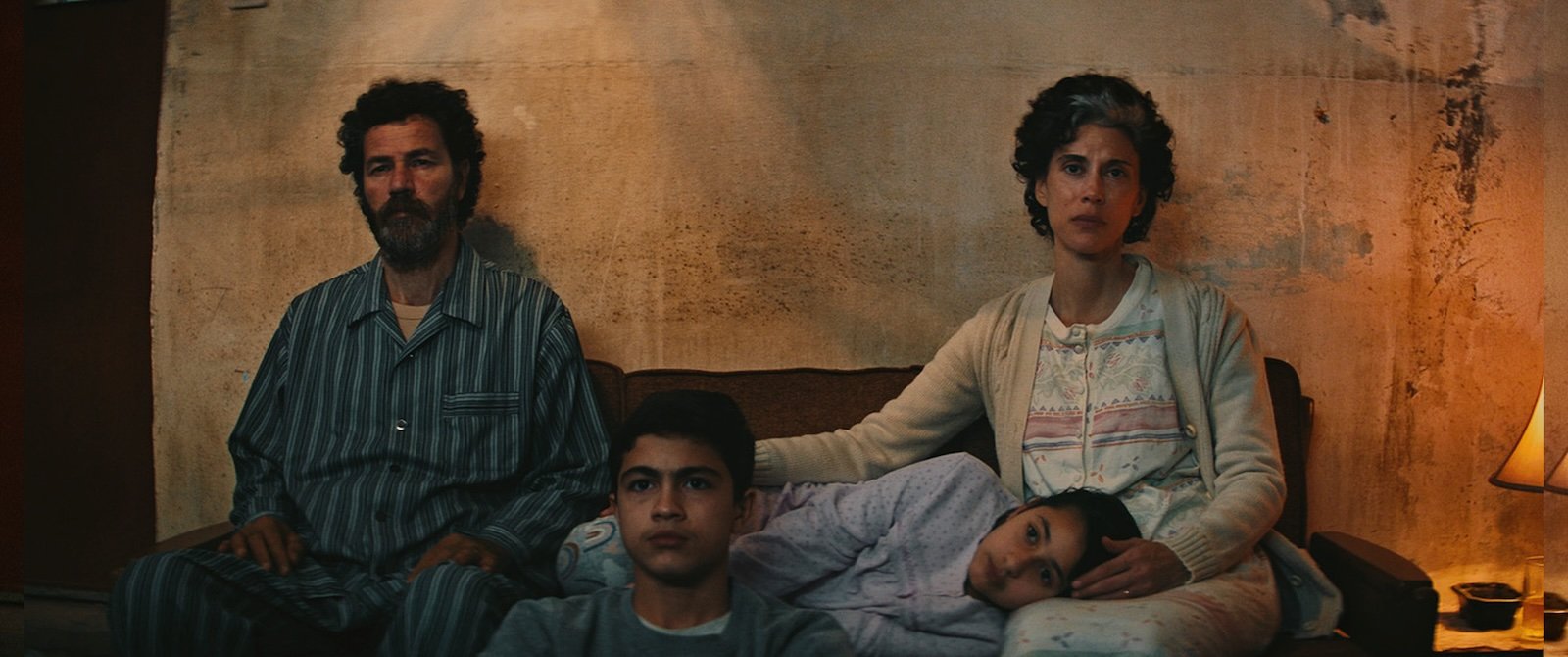
But the ultimate issue of the film is not something that Dabis is guilty of, at least not herself alone. It’s the fault of festival programmers and those film industry insiders, the gate-keepers if you will, of Arab cinema — and perhaps all world cinema. To them, a film from the Region needs melodrama, a sort of tugging at the heartstrings which some of the best Arab films never touch, happy to exist in a different part of our body. But those films are usually helmed by male directors who are allowed a lot more leeway and permitted to throw the whole genre upside down. If a woman director, an Arab woman director, does that, she is at best ignored, at worst disregarded and her film ends up forgotten. So somewhere in the great story it was trying to tell, All That’s Left of You turns into a kind of soap opera to fulfill what it took for the film to make it in front of a audience, and a well meaning film with an important message lost its intention in order to please westerners. Sound familiar? It’s the plight of “the Other” the world over.
Cherin Dabis’ Oscar-shortlisted film (it is the Jordanian entry and sees Mark Ruffalo and Javier Bardem as Executive Producers on the project) is still a work of the seventh art worth watching, despite its shortcomings. But what I mean to say with the above statement, my own very personal opinion of course, is it could have been a masterpiece.
In the UK, All That’s Left of You is a T A P E Collective release and opens in cinemas on February 6th, 2026. In the US, it is currently in theaters and is a Watermelon Pictures release.