When people say, or write, things like “what has become of America?” pointing to our current leadership and our contemporary USA, I always think, we’ve been there all along — because America was built on slavery, and the kind of human/civil rights abuses that never let up.
I’ve said it before and I’ll repeat myself gladly: it’s a great luxury to be able to follow a filmmaker’s career since almost the very beginning. That’s been the case with Jeremy Xido for me. I met him in Dubai in 2013 where he was promoting his spellbinding documentary Death Metal Angola and interviewed him later for his performance piece The Angola Project. And I interviewed him again last year when he was juggling different projects. Throughout the years we have stayed in touch and several publications later, a romance and child for Jeremy but also several moves across continents for me, I have continued to admire and support his work. It is difficult not to.
It turns out that Xido has been through hell and back, during these last 12 years. As have I, but my odyssey won’t be talked about here. It’s ongoing and not particularly entertaining, trust me.
Xido’s, on the other hand, is recounted in a personal, beautiful, deep, raw and powerful documentary titled Sons of Detroit, a film the American born filmmaker, who now calls Spain home, needed to make, to stay alive. Because, after suffering a heart attack while on stage in Berlin performing, Xido knew he needed to come to terms with his childhood and return to Detroit, twenty years later. And he needed to uncover what it’s like to be living the American dream at the cost of other people’s American nightmare.
For those of us who are white, living in the US, it turns out, is a joyride. We have home loans approved, applications accepted and when we find a job, it’s usually ours to keep for years and years — helping us to climb the corporate ladder. But for those who are Black, it’s a whole different story, and the good ol’ USA is not a land of dreams. When you also factor in growing up in Detroit, a city which on July 18, 2013 filed for bankruptcy — a whole city went bankrupts, if you can wrap your head around that! — but also went through the 1967 Riots (AKA the Detroit Uprising), walking while Black becomes a true nightmare. These days we talk about the gentrification and renaissance of Detroit but for those who lived through the racism and institutional repression of an entire demographic of Americans, that rebirth comes too little, too late.
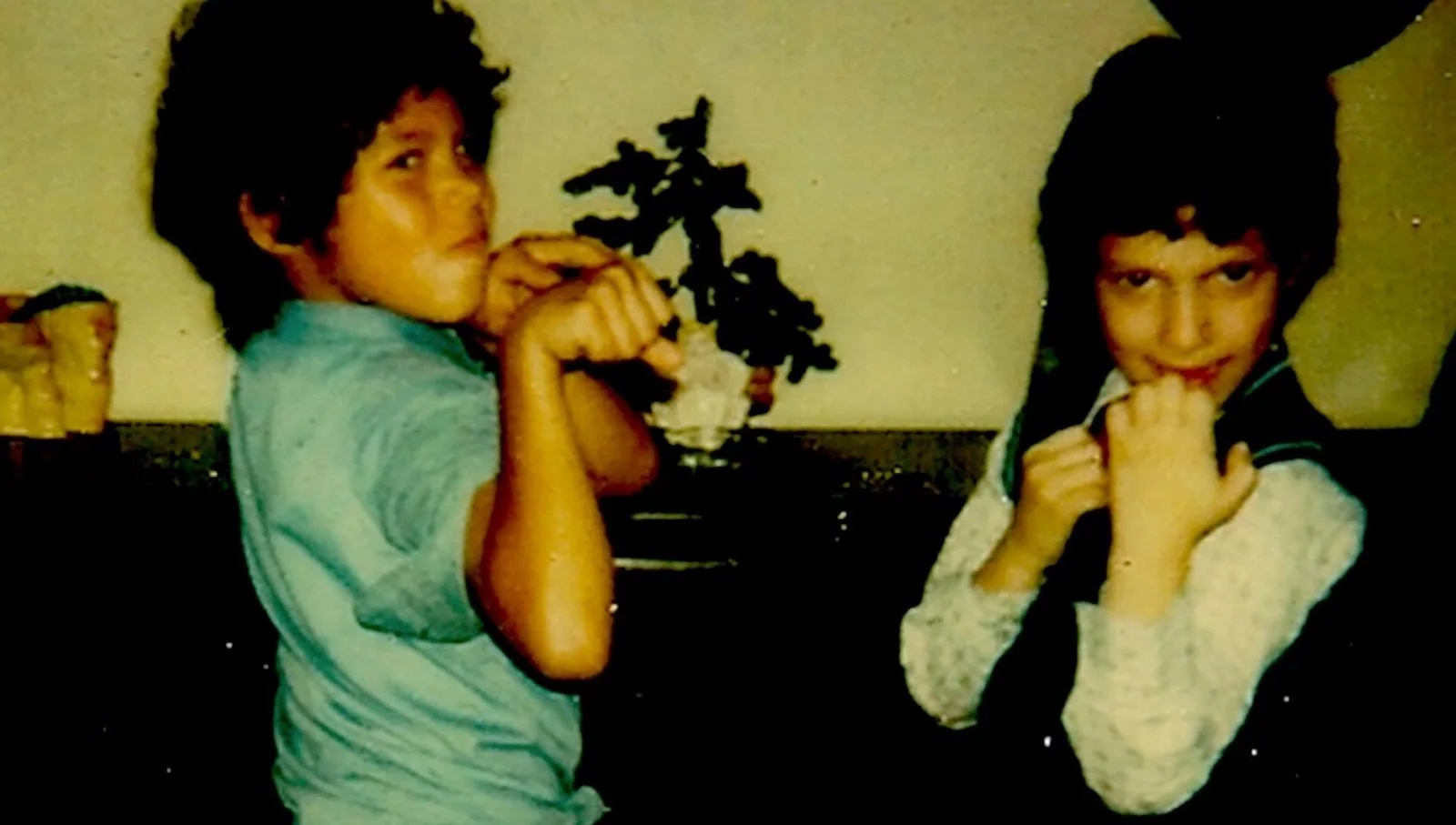
Xido, the son of Marxist parents, with both Presbyterian and Jewish roots, grew up surrounded by love. That love didn’t always come from his late parents, but rather from his Black neighbors, including his “cousin” and best friend, Boo, who spent 20 years in prison. Boo’s destiny was carved from childhood, and the result of racist policies by the US government and the municipality of Detroit, which conspired to take away privileges from Black homeowners in favor of the whites.
For those of us who believe we are incapable of racism, Sons of Detroit points a finger, perhaps a powerful middle finger I’d add. At the root of Xido’s film is exactly that, the idea that even for him, white privilege counted and made him a little too self righteous in his retelling of his personal story, which involved in the narrative his beloved Black neighbors. It’s an interesting idea that Xido raises, that being silent or speaking up possessing the wrong information is just as bad as attacking out of prejudice. In an era when all of us talk at each other and no longer with one another, this idea of listening, without judgment or ego is revolutionary. Xido has made, once again, a revolutionary film. Mark my words.
When asked what made him decide to make Sons of Detroit, which was ten plus years in the making for Xido, the filmmaker said: “To be honest, I fell into it face-first. From page to stage to screen was like scraping off layers of my own skin... not pretty at all. I set out to do one thing, and the world around me had radically different plans.”
The storytelling unfolds calmly and organically, narrated by Xido’s unmistakable twang. Just as Boo is a son of Detroit, so is Jermany — as the matriarch of his Black family used to call him. Those two hold equal rights in the film, with Boo and his extended family finally able to tell their side of the story, and set Xido and his parents straight. It’s a fascinating moment in the film when that happens, in the kitchen of his family’s house, Xido himself asking his dad what makes him different from other white folks. And his dad’s scrambling for an answer is a powerful cinematic moment.
Ultimately, a film is only as good as its entertaining value, although Xido asks just a little bit more of his audience:
“I want Sons of Detroit to be a vehicle to help us do better. To help us question our assumptions. And if we are lucky, to create a space for honest and hard conversations that lead to something new. That would be cool.”
I think so too. Very, very cool.
Sons of Detroit world premiered at this year’s DOC NYC.