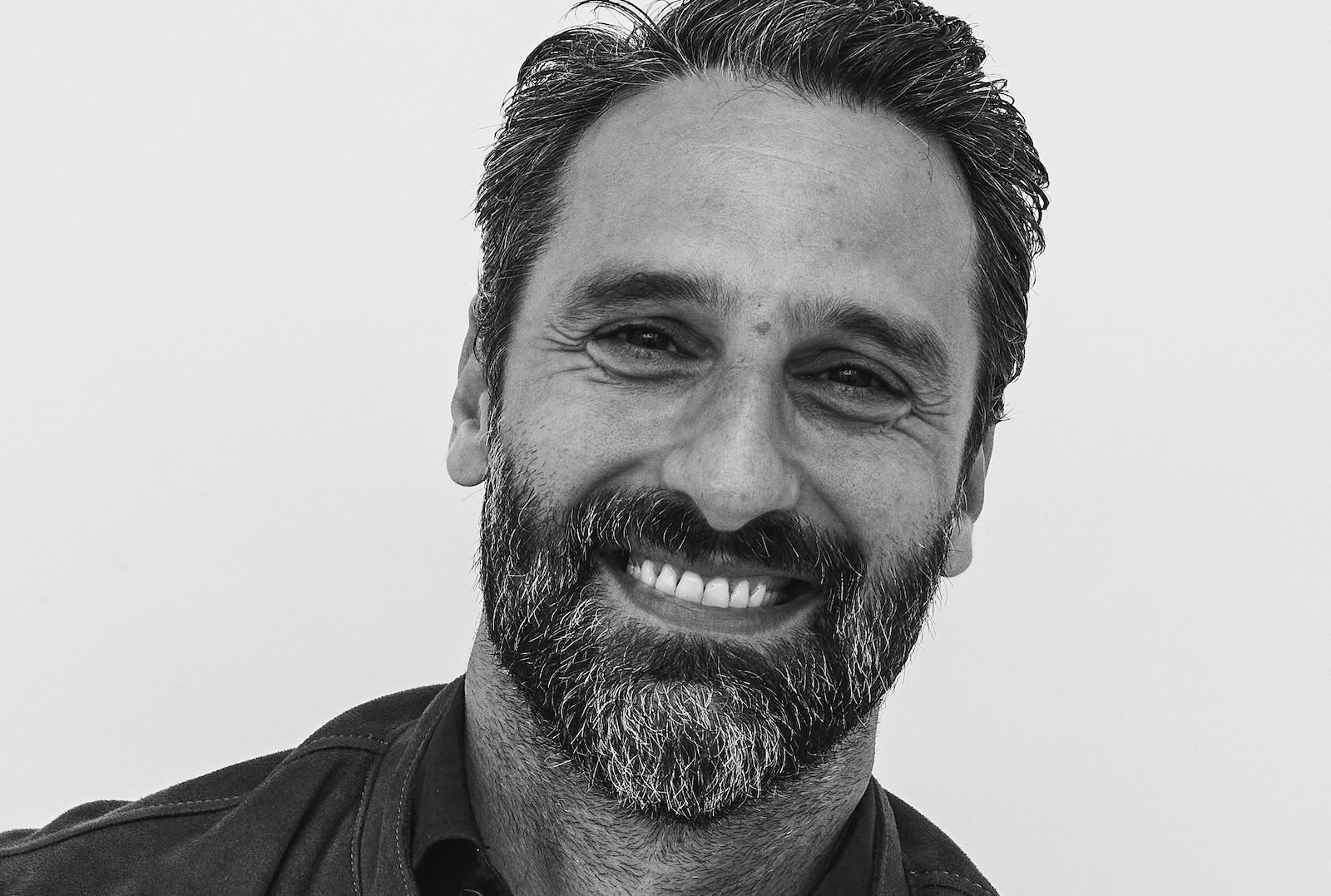
A throwback to the 1981 film starring and directed by Alan Alda, Tina Fey’s series, now on Netflix, features a stellar cast — but none are as memorable as Italian actor, playwright and director Marco Calvani in the role of Claude.
From the moment Claude, played by Marco Calvani, appears on the screen, the small screen that is as Tina Fey’s The Four Seasons is available to stream on Netflix, he makes a bit impact. He’s cute, funny and bigger than life, even though Calvani’s Claude has to compete with the acting chops of superhuman force of nature Colman Domingo, who plays his husband Danny. The duo immediately form a couple that make you go “ah, yes, I get it” while watching, and that’s up to the great writing in the show, but also, or rather primarily due to Calvani’s and Domingo’s undeniable charm, chemistry and charisma. If I was asked to have dinner with any of the couples of the show, I’d choose Claude and Danny, without hesitation. More on imaginary dinner dates later in the interview…
The Four Seasons is told in eight episodes, with eight more to come, since it was announced back in May that the show has been renewed by Netflix for a second season. The series tells the story, based on and inspired by the original 1981 film, of three couples who spend holidays and vacations together during the four seasons of the year, and navigate different stages in their relationships as love ends, but also begins and is reestablished for some, and all.
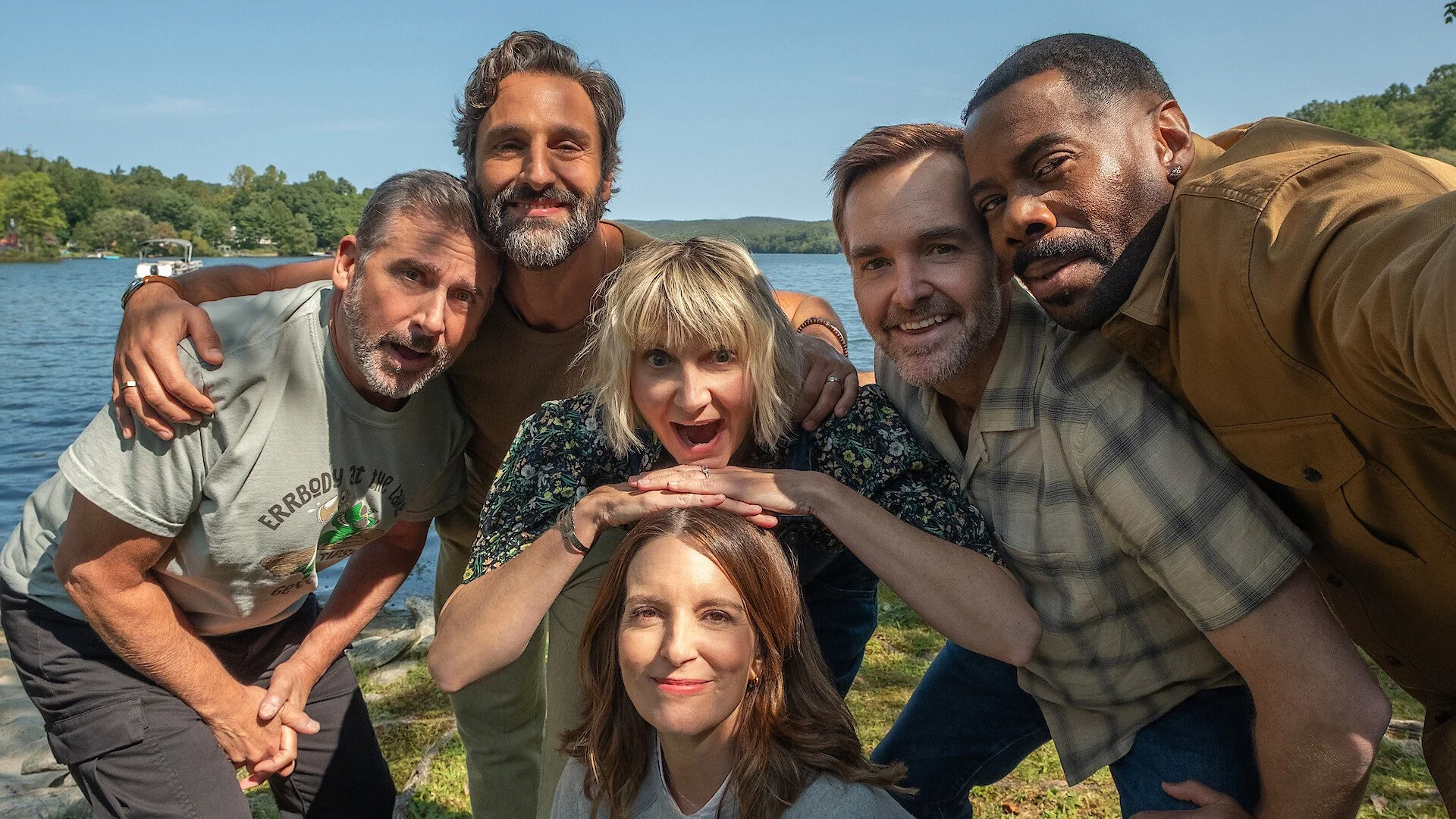
The cast of ‘The Four Seasons’, photo courtesy of Netflix
For Calvani, a fellow Tuscan native and established playwright and director with a film currently making the festival rounds and getting tons of attention titled High Tide, acting hadn’t been on the table for quite a while. When he received a phone call from Colman Domingo, a friend, “it was late May 2024 and he asked me if I was still an actor,” Calvani told me when I interviewed him recently. The actor admitted he wasn’t interested, “I wasn’t promoting myself as an actor anymore, and I know probably a lot of actors who are out of a job right now hate hearing this, but I was perfectly content for nearly 15 years with my writing and directing jobs.” So spontaneously, Calvani said “no.” But Domingo, not one to take no for an answer, asked him to put himself on tape anyway, and he did. The rest, as they say, is history.
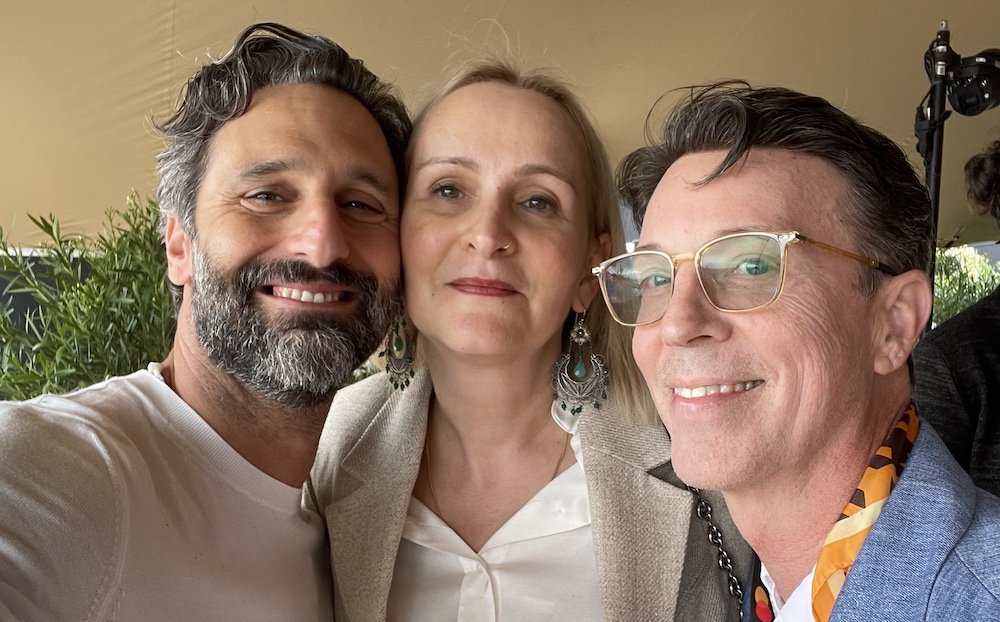
During an afternoon get together held by Netflix in Cannes, I noticed Calvani at the further end of the room, or the beachfront (this was on La Croisette) and had to say hello. The result was a great selfie, where he also generously asked to include a fellow journalist I’d never met before, and the chance to interview him. What I could never expect was the kind of interview one can only dream about getting, where the subject opens himself up completely and allows you into their world and heart. And what a lovely heart that proved to be.
Here is my interview with Marco Calvani, where the actor-slash-filmmaker-slash-playwright talks in depth about his crafts, what he brought to the immigrant character of Claude as someone who understood his struggle to have a place at the table and what five people, dead or alive, he’d like to have dinner with. The answer to that one will definitely surprise you!
You’re both an actor and a playwright, but you’re also a filmmaker. How do you juggle each of those talents?
I’ve been a playwright all my life, I started as an actor when I was a teenager and then I started writing plays in my early twenties, because theater felt more accessible. And it was my first love. And every story that came to me immediately I could see only on a stage. It was easier for me to put people together, find the money and just put something up — and that’s how I created my company.
And then, after I moved to New York, I turned a short play into a film and that’s when the filmmaking chapter of my life began. But to be completely honest, actually filmmaking was my first love. Being a child, at home, everybody watching TV, I ate a lot of TV, I ate a lot of TV shows, I ate a lot of films and that was my first interaction with storytelling.
Now that I’m in between both, it’s not really a juggle. When a story comes to you, especially for me, it tells me the way it wants to be told and I actually see a huge benefit that I can now see a story also for the big screen, and not just for the stage.
What do you find to be the high point of each art form?
It’s a bit banal to say it probably but playwriting is really built on words and I love words so much. I love listening to people talking, I love writing dialogue. That to me is the highest form of playwriting when the words dictate the world you’re trying to depict — the story, the characters, the themes, the people. With filmmaking, to the words I can now add the visuals, imagery, and I expanded my way of even thinking! Think about it, I had to start writing plays in English but usually I was writing in Italian and I had my translator. And it was a lot of effort to try and translate all into English. And with films actually now I can rely on the image, on the visuals and the editing and it’s quite liberating for me.

And what do you struggle with, as an actor, and as a filmmaker?
It’s funny because what I love about being a filmmaker, the helmer of a project, is what I lack in acting. I’m an actor’s director and I pride myself in putting the acting first. I believe you can have the most amazing story, the most amazing script, the most amazing cinematography, but if you don’t have the performance you don’t have an emotional journey to take the audience on. That said because as an artist I was born as an actor, started as one then with The Four Seasons I suddenly became an actor again, for me the biggest struggle was being constantly left in a place of doubt.
Being an actor you are vulnerable, because you pour yourself into something so much, with your whole self, your whole body, voice mind soul heart and you don’t know what they are going to use, you don’t know if you gave everything they meant for you to give or if you gave everything you were planning on giving and you’re not in front of the monitor. So this lack of control is what makes the work of an actor beautiful but at the same time, for me being also a filmmaker it was like kind of a huge struggle initially. Then you learn how to let go. Which also happens as a director because at the end of it, you have to let go and move on to the next project.
Where do you find your inspiration when writing?
I mean, look out the window or read the news, the world is so full of tragedies and people who are struggling. I just find inspiration in my own life and the lives of others. I pay a lot of attention to what happens in the world and in my communities, in the people I love, in myself. I read, not just the news but books and that’s it. I’m actually constantly writing. I have seven screenplays in my mind that are waiting to be written right now. I don’t even know if in my entire life I’ll have time to write them all! I’m constantly inspired even if sometimes I have writer’s block.
And how did you build the character of Claude, who seems very different from you in real life?
Initially when I was reading the script, the episodes, it just felt like the character was always behind everyone else. And I didn’t understand, I wasn’t sure if he was written as a dumb person, or very superficial. And then of course it was neither of those things. It was only when I decided to play him very flamboyant — because it’s written to be very theatrical and very over the top exuberant and when I added the flamboyance to him, I understood also his deepest concerns and his struggles as a human being in this group, particularly. Where we meet him, you know, he’s an immigrant, he’s the only non-American in the group, he doesn’t have a job, his life is completely devoted to his husband and it’s true love, true passion between them.
“... The fact that [Claude] is also an immigrant, there is something about that which puts you in a place, where you have to always earn your place at the table, earn the trust and you have to show that you deserve to be there.”
And the fact that he’s also an immigrant, there is something about that which puts you in a place, where you have to always earn your place at the table, earn the trust and you have to show that you deserve to be there. It is something I know myself as an immigrant and it’s not something that is explored in the script of The Four Seasons, but it’s something that made me feel closer to Claude and made me understand why he’s so caring, even too much at times. I guess, he’s very different from me in real life, the way he speaks and he moves, he’s more irrational, I’m more rational, but at the same time there are some elements that I was able to recognize in me and pour into the character and I’m very proud of that.
And what was it like to work with Colman Domingo, who appears to be such a force of nature, and who plays your husband Danny in the series?
He is a force of nature! Of course I owe him a lot, for bringing me into The Four Seasons to begin with. He was such wonderful company on set, he was such a great scene partner, he’s a great friend, he loves the craft so much. And he has such a generous heart and eye for everyone on set. It was also amazing not just to be his husband on the series but also to be directed by him, he directed episode 7 and it was such a beautiful experience! Being directed by an actor is always amazing and now I understand my actors when they adore being directed by me. Because we have the same language. To go back to Colman Domingo, I learned so much, he acted like my mentor, because it wasn’t easy for me. The cast in this series, they are giants! They are icons of comedy, and amazing professionals and I, like Claude, I didn’t feel I had the right to be there initially. It felt very weird. And so I relied on Colman a lot.
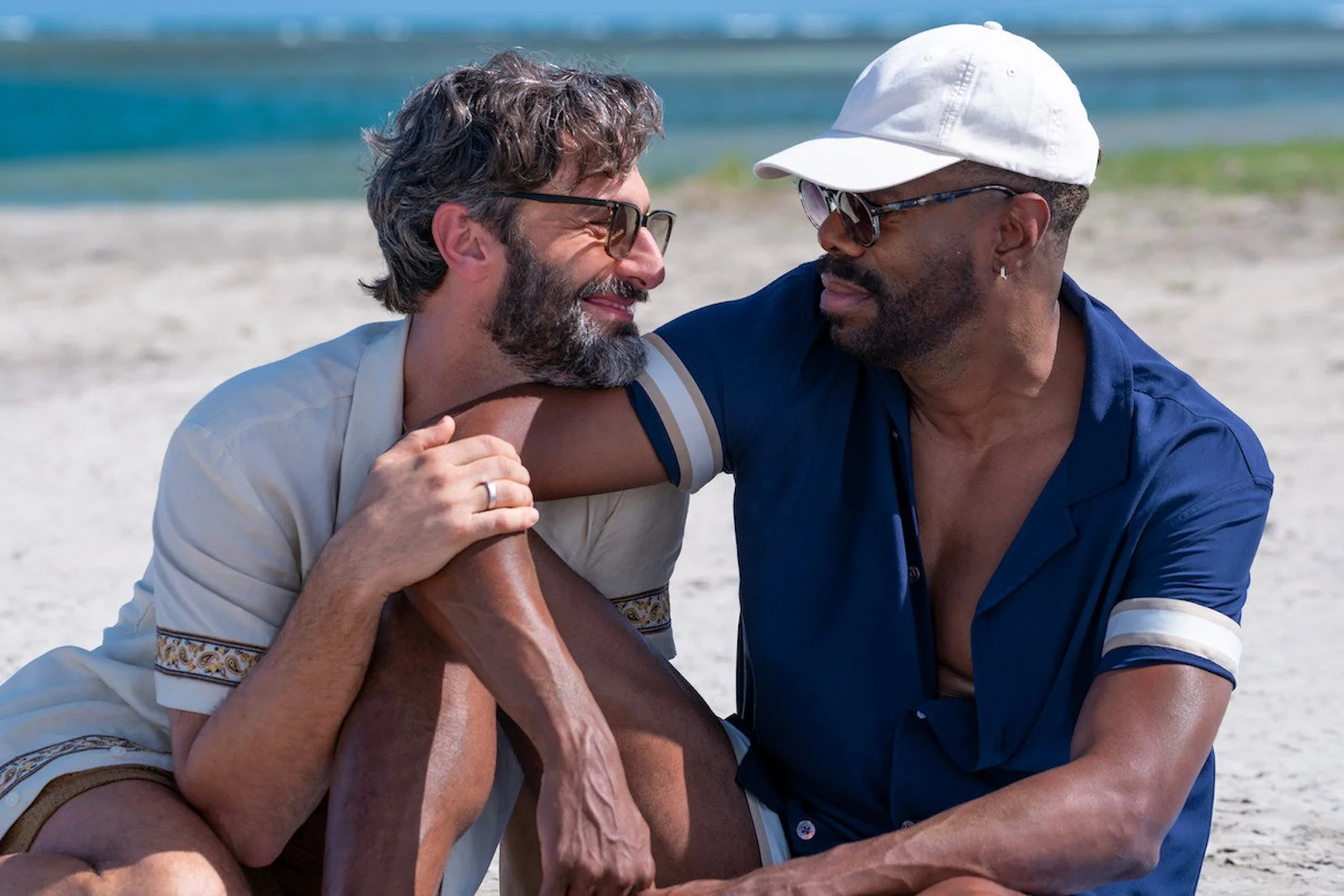
Marco Calvani and Colman Domingo as Claude and Danny in ‘The Four Seasons’ photo © Francesco Roman, courtesy of Netflix
And to go back to your other question about Claude, I think this feeling really anchored my performance in truth. This feeling of trying to be worthy of this place that I’d just earned among these people I think that anchored the character in honesty, and hopefully my performance as well.
During the festival in Cannes, the announcement came of the renewal of the series. What are you looking forward to most about shooting “the next four seasons” and is there something that you dread?
(Calvani laughs) I guess we are all dreading to be the Steve Carell of the situation in season 2. Turning The Four Seasons into a White Lotus kind of thing, where one character dies every season, in episode 7. This is what I dread the most, but I don’t know honestly. But I think it’s quite exciting to be free of the playbook of the original Alan Alda film. Now the writers, and then us, we are all free to explore with the characters, with the story, so this is something I am really looking forward to. To reunite with the group and to dive deeper into the characters. I’m dying to see the script and to discover where we are going to go, geographically in the show. Are we going to Italy maybe to see Claude’s family? That would be exciting. But most importantly, I’m truly looking forward to reunite with the group and dive deeper into the dynamic of the group. There is so much there to explore. We became friends, it has been such a nice opportunity as a human being and as an actor.
And now a wildcard question. You can have dinner with five people, alive or from the past, who would you choose? And why?
Let me think.. Federico Fellini, I love him! I could swim in all his movies, they taught me so much about cinema and the possibilities of cinema. Right now as we speak, I raised my eyes and there, above my desk is Giulietta Masina, his wife and muse, in La Strada. I would love to have dinner with him and ask him a lot of questions. At the same table I would put Samuel Beckett because, you know, as a playwright I love his work so much. And right now, with everything that is going on in our current world, I keep thinking about one of his most memorable lines “I can’t go on, I’ll go on.” Beckett has been an inspiration for me, my plays have always been kind of cryptic too, I like to play with time and space a lot. With Fellini and Beckett I would want to know all about their writing habit, but also their food habits.
At the same table I would put Madonna, (laughs) because I grew up with her being a star for my older siblings. I was three years old and singing ‘Lucky Star’ and I grew up watching her career unfolding and became an artist and a man, and I feel like the soundtrack of my life could be Madonna’s music. I don’t know if she is my Diva, my rockstar, but I would definitely love to have dinner with her and meet her.
“I mean, can you imagine the dinner? Jesus, Fellini, Greta Thurnberg, Madonna and Samuel Beckett? Oh my God, and me, what am I doing there!! ”
I would also like to invite Greta Thurnberg at the table, she’s a badass and quite an inspiration for us all right now. To know that someone so young is so motivated by compassion and humanity in this world gives me hope. I would her to be invited at the table.
And I would also like to bring Jesus, how’s that! Jesus because he was such a cool dude, they made a whole religion out of him. I’m not into church that much although I was raised Catholic, but I feel Jesus was a cool man and he was a real democrat. He was someone who believed in loving the other person as much as loving himself, or maybe more. He was someone who believed we exist only in relation to one another and he really put that into action. So I feel that I’m constantly inspired by his amazing guy who lived more than 2,000 years ago and I would love to have dinner with him. Laughs out loud.
I mean, can you imagine the dinner? Jesus, Fellini, Greta Thurnberg, Madonna and Samuel Beckett? Oh my God, and me, what am I doing there!!
Top image of Marco Calvani © Josh Telles, other images by Netflix, all used with permission.