Back in 1999, at the Festival de Cannes, Bruno Dumont presented 'Humanity' ('L'humanité') a film that caused an uproar among critics, who initially mocked it. The film then went on to win three of the top awards from the Competition jury headed by David Cronenberg.
So, in case you were wondering, Dumont seems to always manage the last laugh.
Fast forward almost two decades and Dumont is getting quite a lot of laughs indeed, this time from audiences at the Locarno Festival watching the world premiere of the latest installment of the TV series the French filmmaker started for ARTE in 2014. The original series was titled 'Li'l Quinquin', now his characters are all four years older and the second season is called 'CoinCoin and the Extra-Humans'.
A mix of inspirations, from the comedy of Peter Sellers, to the stark look shot in Northern France that Dumont fans are accustomed to, I'll admit to becoming an addict of this second series. So much so that I'm now researching how to watch the first season -- which was only released cinematically in the US.
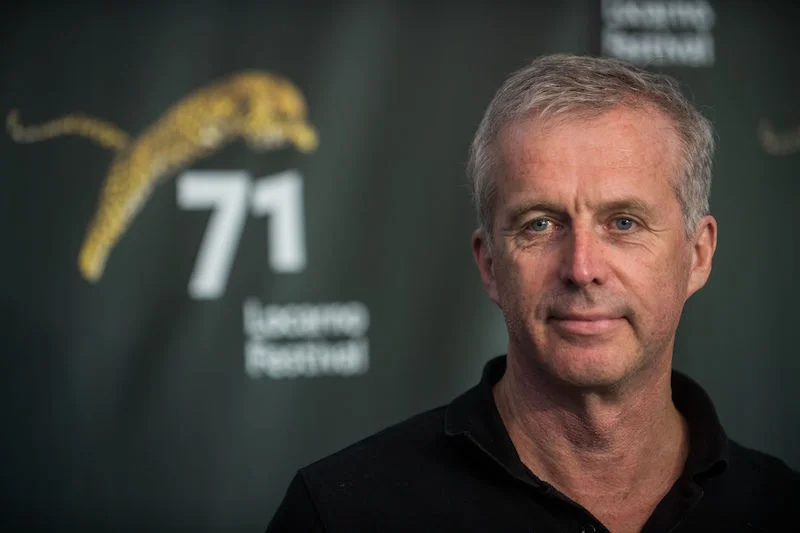
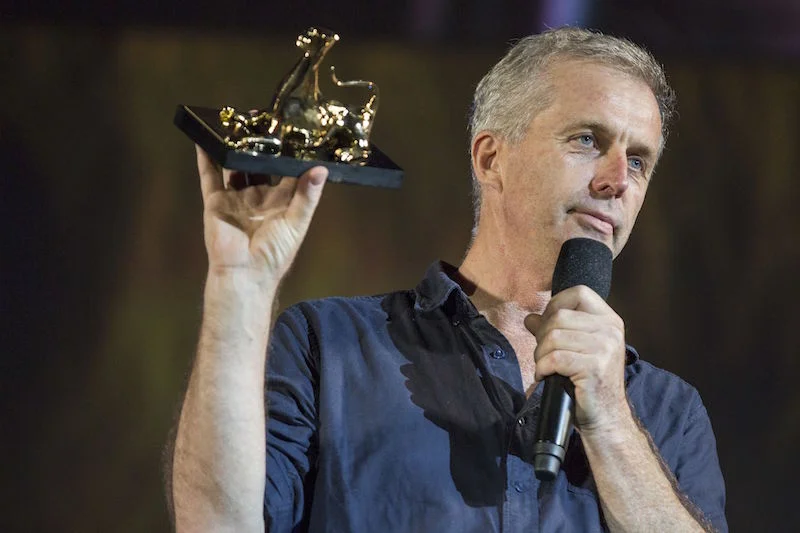
Dumont was on double duty while in Swiss town, also this year's recipient of the Pardo d'Onore Manor, the honorary award by the Locarno Festival to a career that has been always on the filmmaker's terms and devoid of compromise. His belief in the power of cinema is a mission I admire deeply and so sitting down with the blue-eyed, intense and dignified filmmaker was a highlight of this year's festival for me.
What was the spark of the idea for 'CoinCoin'?
Bruno Dumont: Season one 'Quinquin' was an order given by ARTE, they wanted to commission that. They said “how about a series then” and I was a bit hesitant at first. I said well, I make films. I don’t do TV series, which is absurd -- I see now. So I took that rather lightly and I tried to do something I’d never done before and tried to be funny.
For me it was a bit of an experimental idea because I said to myself, come on lets go and have a new experience. And so I tried to turn this tragedy into a comedy. I put in my usual cinematic world, a dramatic story but the way the actors actually played the roles is totally and deliberately extravagant and I realized that might be funny.
What is your relationship with comedy?
Dumont: When I did 'Camille Claudel' with Juliette Binoche it was a tragedy and there was some kind of failing in the story. It became super funny and I understood that comedy was always around in the constellation of the tragedy, that’s a discovery I made. It’s the actual co-existence between the two. If you lower the tragedy then you enter the world of comedy. If you lower comedy then you enter the tragedy.
When you diminish evil you enter good and there is a mystical connection in all the opposites. I think it’s chemistry and biology, you laugh because it’s us. It’s not because we’re intelligent, it’s neurological. It’s very interesting.
What were your influences, your comic heroes?
Dumont: All the primitive slapstick comedy. I love primitive cinema, the beginning of movies.
Lauren and Hardy?
Dumont: That’s not the beginning, it’s later on.
Buster Keaton?
Dumont: Before that. I watched films by Griffith…
The use of non-professional actors in your films, is that a reference to Italian neorealism?
Dumont: All directors have worked with non-professionals. Rossellini, Pasolini, I haven’t invented anything. In my first film they were a mix of professionals and non. Why? I think because it’s chemical, an actor has to belong to the place where you shoot him because he has to have an innate feeling for the place. Similarly, I film a landscape because I feel like actually filming people from that landscape because I need the connection. That’s how I have always been working.
I don’t work with movie stars. When I work with Juliette Binoche, I work with a person as a non-professional. Whether they are a professional or not is irrelevant.
What is the line between good humor and bad humor for you?
Dumont: The line is the viewer. When I laugh, I hope that people are going to join me but there is always someone who won’t laugh. I play with conventions, so I’m on the borderline and I take risks. The character might say appalling things, some viewers might accept that and others might not. My work is not to say, “oh, be careful”.
One has to work with sincerity. Cinema is there to make cinema -- it’s not reality.
Do you think that today’s political correctness can kill good humor?
Dumont: Maybe yes, there is a risk indeed. But you have to give people a release. You must give society the means to release that energy, that’s why we do sports. This is spiritual sports and the art has to fulfill that role. Bombs have to be set in films, not in real life. If someone plants a bomb in life that’s because some sort of film error has been made. Art has a function to actually release that pent-up violence.
The problem today is that we’ve given cinema a purely entertaining aspect -- which is bad. Cinema actually makes people dumb whereas it should be there to wake them up. It can wake them up by entertaining them, entertainment is not boring to watch. But the industry actually got a foothold in cinema to exploit the public, the audience. Current commercial cinema is utterly stupid, in my view.
People used to go watch Bergman’s films, so people can be open to that sensitivity. For me that’s a very serious matter.
Do you think that it takes courage to be a filmmaker like you? Do you consider yourself a brave man?
Dumont: No. It’s too strong a word "courage". I believe in what I do but there are human situations that are more serious and require real courage — dramatic situations and political situations. I’m not at war. You have to be determined, stubborn about it. I make films because I believe in the power of cinema. I don’t make them to earn money. I live with it but it’s not my primary purpose. I make films with a lot of public funds so I have a role. I don’t make films for myself.
With that money comes a responsibility so I try to make films that have meaning, that are not totally stupid and that say things about human nature. That’s it. That’s the political responsibility of the artist.