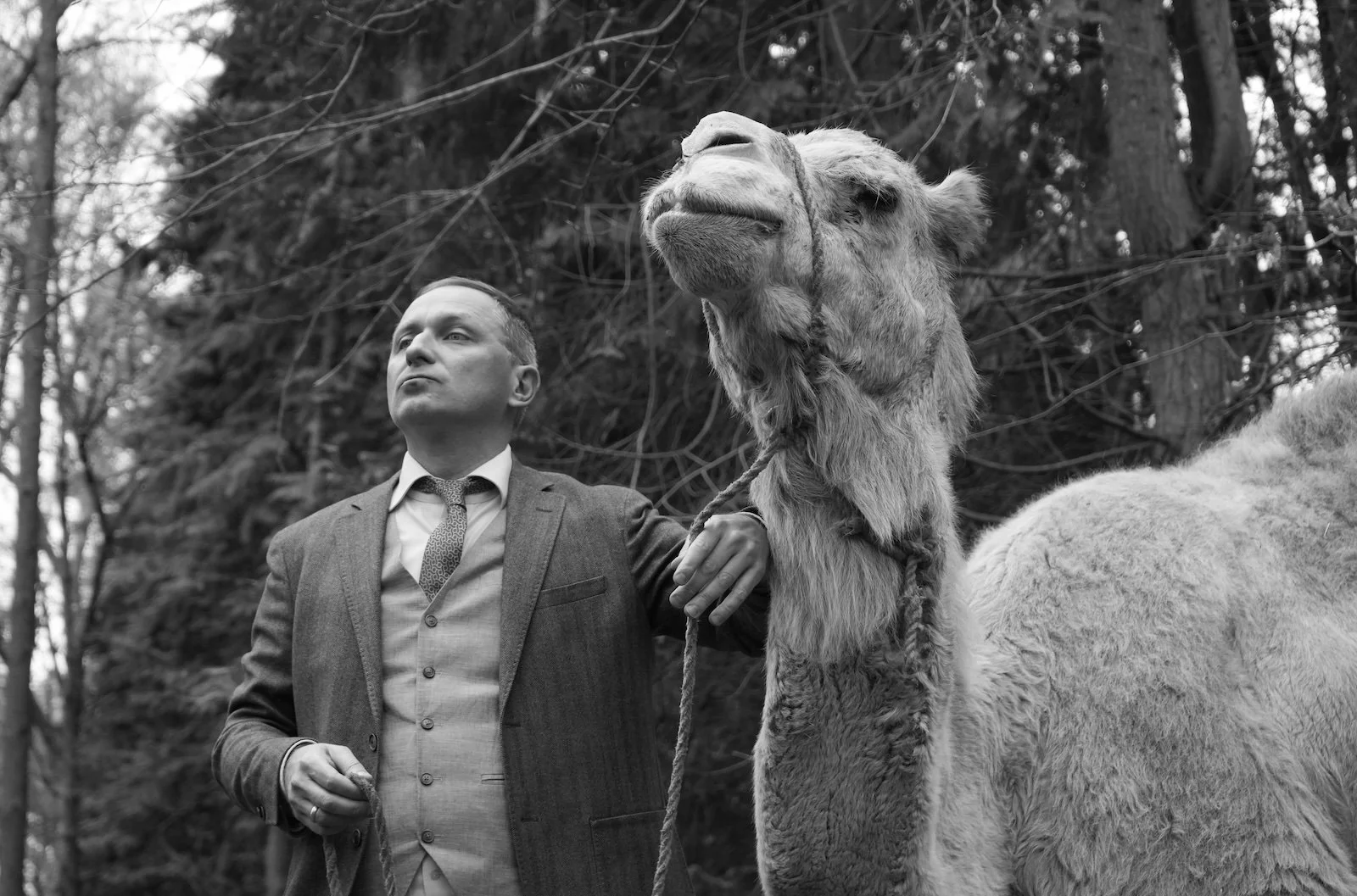
Inspired by the eminent film historian Vlada Petrić, who was also the filmmaker’s cinema professor, the film celebrates the centenary of the “dream film” in cinema and its years of flowering during the silent film period — and will be part of a weekend program, from the 17th to the 19th of April selected by Fox, of essential films on the theme of dreams in silent cinema.
I have often wondered what makes me do what I do. I mean, when I describe my profession to others it is often phrased something like this: “I watch films for a living but don’t make a living from watching films.” Yet, time and time again, in the darkness of a screening room, or a theater, nestled within the plushness of an armchair and gazing up at the silver screen, despite its financial shortcomings, I dream a dream. And that dream is what filmmakers have dreamt before me and then written down, filmed and edited and then, once ready to show the world, have invited me and others to dream along with it, and with them.
In his latest documentary, South African born filmmaker Gerald Fox pays homage to his film professor, the inspirational Vlada Petrić, born in the former Yugoslavia in the late 20’s. Petrić, after entering the inaugural class of the Academy of Theatre, Film, Radio and Television in Belgrade in 1947, became Professor of Film History at the Academy in 1960 and in 1965 received a fellowship to study Soviet cine at VGIK in Moscow. In 1973 at New York University, he became the first person to receive a doctorate in the field of cinema studies in the United States, focusing on Soviet cinema. He was also named the Henry Luce Chair of Cinema at Harvard University in 1972 and in 1979 co-founded the Harvard Film Archive. An impressive pedigree.
It was while at Harvard that Fox encountered Petrić, admitting that in this personal essay of a film about the inception of the “dream film” the filmmaker “wanted to create a unique cinematic vision to reveal through the Professor’s eyes the untold story of the development of oneiric cinema in the silent avant-garde eta: using voice-over from Petrić’s essay Film and Dreams (1978) and the copious writings of the film directors and artists (particularly Jean Epstein, Luis Bunuel and René Clair) over the newly devised sequences featuring simulated “images” of an actor playing Petrić on his own dreamlike journey I hope to take the audience seamlessly on an oneiric voyage through these groundbreaking films and their uniquely cinematic devices.”
To play his beloved film studies Professor, Fox enlists the help of Serbian actor Goran Kostic and what a magical decision that turns out to be. With a bit of a Count Dracula accent, Kostic holds the audience’s hand during this spellbinding cinematic journey.
As the Kinaesthesia begins to lull us into a sense of cinematic dreaming, the teachings of Petrić help us to undertake this movement, born even before the talkies. Exploring scenes from French Impressionism (such as Abel Gance’s stunning 1929 epic Napoléon, which was recently remastered and screened in Cannes in 2024, the work of Jean Renoir, German Expressionism such as Fritz Lang’s Metropolis, one of the most influential films ever, given ode to by several filmmakers including Hitchcock and Carol Reed, the Soviet montage, such as is present in Sergei Eisenstein’s Battleship Potemkin, the Avant-garde of Luis Buñuel and Salvador Dalí, along with Kiev-born American woman helmer Maya Deren, and the popular silent comedy of Charlie Chaplin and Buster Keaton, Petrić illustrates his theory that these early innovators used all the available devices of cinema to produce sequences that activated the sensory-motor centers in the brain producing Kinaesthesia, which the dictionary tells us is the sensation of movement – just as in dreaming itself.
Fox’s film is a must-watch, on the big screen of course. Thankfully it will world premiere at the BFI Southbank on the 17th of April and will also release nationwide on that day, to coincide with the centenary of the first “dream film” which incidentally is Menilmontant by Paris-based, Russian Jewish emigree Dmitry Kirsanoff.
Accompanied by the perfect music, composed by Alan Snelling, and also starring the captivating Ana Cilas as the Vanishing Lady in the film, Kinaesthesia will also be accompanied by a series of films, all screening on the weekend of April 17th to the 19th of April, selected by Gerald Fox, which feature in the documentary, including Kurutta Ichipeiji’s A Page of Madness (Japan, 1926), Jean Epstein’s The Fall of the House of Usher (France, 1928) and Lang’s Metropolis (Germany, 1926). The complete BFI program information can be found here.
For more info on the film and to see where it will be screening near you, check out the distributor’s, Tull Stories, website.
All images used with permission.