
And with a new upcoming international film festival announced for November 2025, the cultural organization plans to prove to the world what many of us already knew.
I’ve long been a supporter of the Doha Film Institute, or DFI as it’s known to cinema insiders. They’ve been doing their thing, slow and steady for years, no flashy press releases before the facts, no throwing money at the wind — just good old fashioned hard work, strategic planning and constant, unfaltering help for the filmmakers they support. As one of their mentors myself, helping filmmakers with upcoming projects deal with the media, I’ve seen what DFI can do.
In Cannes this year, there are nine DFI-supported projects participating, one in the main Competition too. They include Chie Hayakawa’s Renoir, but also Promised Sky by Erige Sehiri, Once Upon a Time in Gaza by Tarzan and Arab Nasser, The President’s Cake by Hasan Hadi and Sleepless City by Guillermo García López — all screening in different section, including Un Certain Regard, Directors’ Fortnight and Critics’ Week. Apart from perhaps the BFI, there aren’t any other cinematic organization which can boast so many titles in Cannes.
Back in November of 2024, I found myself at Ajyal, DFI’s annual youth film festival in Doha. It’s an event I’ve tried to support throughout the years, as I believe training young audiences to love both arthouse cinema as well as blockbusters is the way to ensure a future of varied landscapes, cinematically, around the world. As the only international writer for a trade publication on the ground in Qatar, I was the sole journalist to break the news for Screen International of a new Doha Film Festival, announced during the opening ceremony by Fatma Hassan Alremaihi, Chief Executive Officer of Doha Film Institute and Festival Director.
Once again, though, DFI have done things right. They officially announced, to the rest of the world the upcoming Doha Film Festival during this year’s Cannes Film Festival, also marking the 15th anniversary of the Doha Film Institute, which was first announced in Cannes in 2010 by DFI Chair H.E Sheikha Al Mayassa.
Running from November 20-28, 2025, the festival, DFF, will also feature industry sessions, community screenings with a special program for youth — to keep the momentum created by Ajyal — and a range of engaging events, promising to transform Doha into a vital global meeting point for filmmakers, thought leaders, artists and audiences passionate about thought provoking cinema. Personally, I can’t wait.
As any great festival, the Doha Film Festival will also have competition sections, including one for International Feature Films, with a top prize of US $75,000; an International Short Competition with a top prize of US $20,000; a Made in Qatar Competition, also for shorts, with a top prize of US $15,000; and, incorporating the youth film festival format into the new festival, an Ajyal Competition, considered by a jury of Gen Zers, and awarding a prize of US $35,000 to a feature and US $12,000 to a short. Talking to filmmakers at the Doha Film reception on the Carlton Beach, I got a good sense of how important the cash prizes are for a festival and all welcomed the new addition to this cinematic landscape with enthusiasm. Me too!
I sat down with the wonderful DFI team in Cannes, which included Alremaihi along with Palestinian filmmaker and DFI Artistic Advisor Elia Suleiman and Hanaa Issa, Director of Film Funding & Programmes / Strategy & Development, Qumra Deputy Director at Doha Film Institute, to ask them about the festival and their unrelenting commitment to world cinema.
When I’ve mentioned the new Doha Film Festival, the reactions have been interesting. Most people, unfamiliar with DFI, have said something like “oh now they’re going to do things big!” And I’ve had to set them straight — that DFI have been going things big, yet quietly, all along. They haven’t been flashy. So I asked the team about it.
Elia Suleiman called it a “very interesting” point and admitted that “it’s true,” adding “I feel the same thing, like people come expecting this.” Alremaihi jumped in, saying that “it’s a shame because maybe some festivals have given this reputation of what film festivals should be,” which is also augmented by what Suleiman said is “people’s pre-conceived notions of what a festival might look like.”
In fact, while Ajyal has never claimed to be more than a youth festival with a smaller, niche reach, DFI’s annual industry incubator Qumra has created ripples that have turned into cinematic tsunamis, and year after year there are at least half a dozen DFI supported projects in every major A-list festival line up. “Except that people continue to say about Qumra that it’s a festival,” Suleiman added, “they say ‘are you going to the Qumra festival’ like no one is contented with the term ‘Qumra’ alone.” Qumra is an Arabic word that means ‘camera’ by the way.
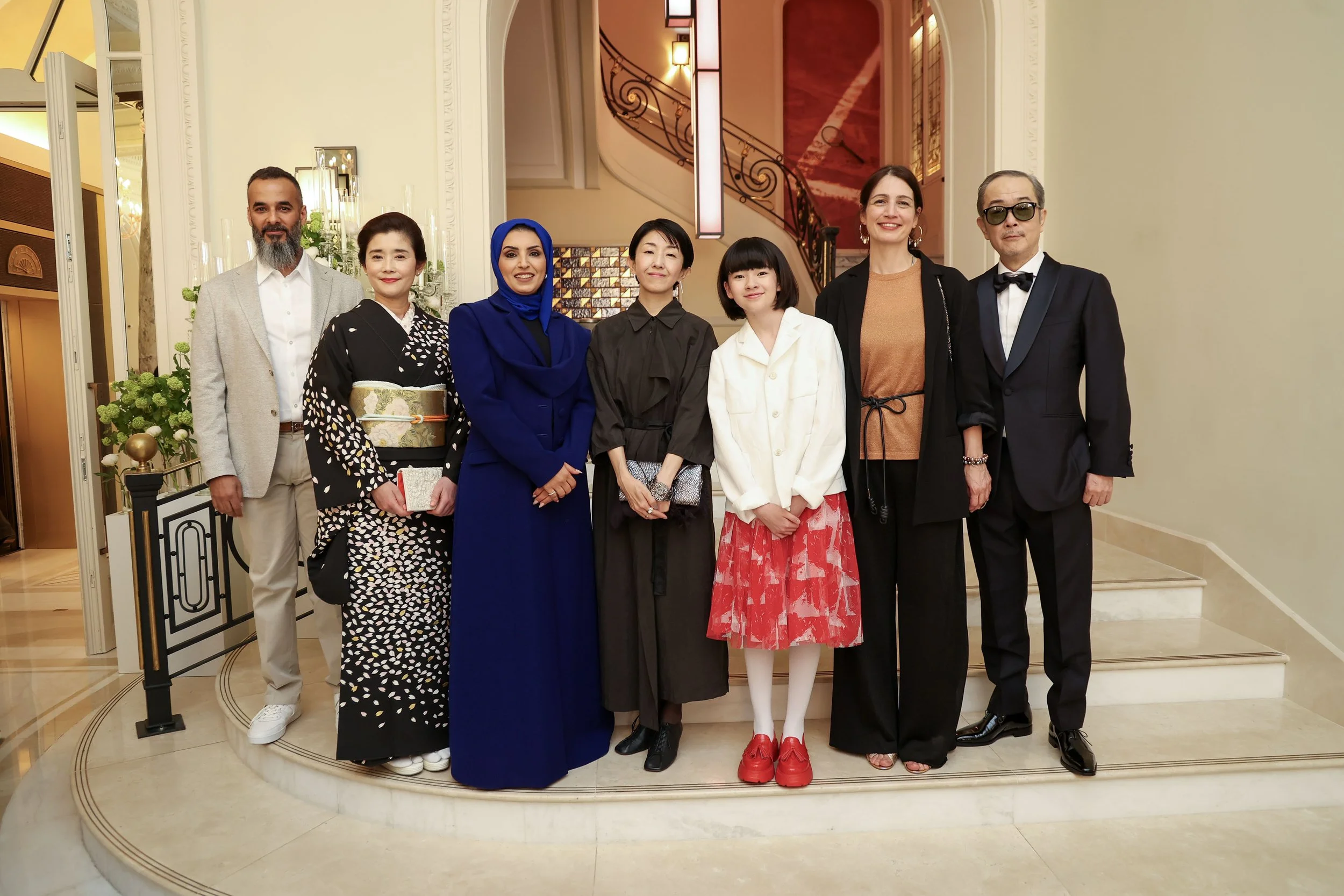
The delegation of ‘Renoir’ and Hanaa Issa and Fatma Hasan Alremaihi, at the Carlton hotel
With DFI, I’ve always felt like slow and steady wins the race. They have proven their lasting commitment and actually, the country of Qatar has used the momentum created by DFI to form more and more cinematic organizations. Among the cinematic infrastructures created in Doha are studios like Media City Qatar and Katara, both supporting filmmakers in every stage of production. Of course, their influence now, through this upcoming event, will create a bouquet of cinematic opportunities that will finally prove to the world what those of us who have been supporting DFI throughout the years already know.
Another reason for the festival to exist is that, throughout the last ten years, DFI has welcomed nearly fifty Qumra masters to Doha, including Mexican helmer Alejandro González Iñárritu, British actress Tilda Swinton, Mexican actor Gael García Bernal, Academy Award winning designer Sandy Powell, American director Bennett Miller, Italian filmmaker Alice Rohrwacher and more recently, Brazilian history making Oscar-winning director Walter Salles.
When I asked Alremaihi if the new DFF will have an emphasis on red carpets, the way most world festivals do, she answered “we need a premiere carpet for the films — we’ll have galas, special screenings and networking opportunity, creating important conversations between the guests and the entities in Doha,” then added smiling, “we say it’s a carpet, but it might not be red…” The color of the carpet is still undisclosed and Suleiman jumped in, saying “I want to be involved in this discussion, and I would like maybe even to limit my involved on the carpet,” bringing the room to laughter.
On the other and more serious side of the spectrum, DFI was present for a special remembrance day of the Nakba at the Palestinian Pavilion in Cannes — during a festival where very few, if any, mentioned the ongoing tragedy and travesty happening in Gaza. I asked Suleiman and the team how they felt about this hypocritical “no political statements” rule in Cannes, clearly directed at Palestinians since there were three films about Ukraine as “special screenings” and people mentioned President Trump during the opening ceremony.
“You should write that in your own voice,” Suleiman said to me, somberly. “So few write about it, they turn their eyes just like everybody else.” He then continued, “the problem is eternal, since the days of cinema began, all these kinds of films like Antonioni talking about pollution, all the filmmakers who talked about the coming of regression of the state of the world — the problem is that art cannot keep up with the pace of destruction.”
Suleiman reflected that maybe these filmmakers were, at their times, more utopian than us today. They believed that cinema could help destroy the evils. “Maybe these days we are aware,” he continued, “that cinema and art are much slower than the pace of bombs and destruction, and this is maybe not a very good conclusion.”
Thank goodness that DFI exists to even out those wrongs and I look forward to the mystery-colored carpet in Doha later this year, for the premiere edition of the Doha Film Festival. Inshallah.
Images courtesy of Doha Film Institute.