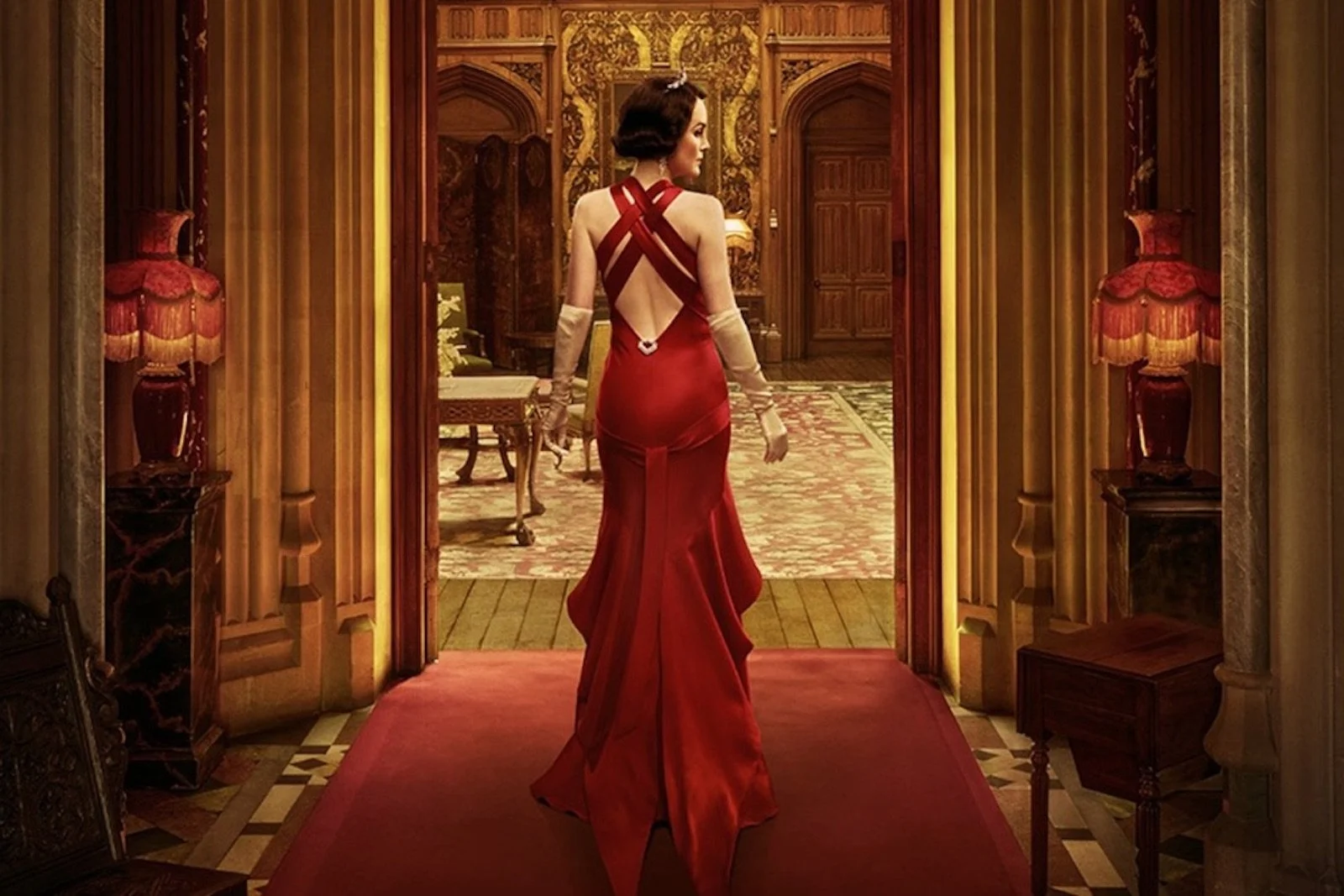
I’ve been thinking a lot lately about what makes a perfect “franchise” film and this Simon Curtis-directed 2025 gem, in theaters on Friday, September 12th, may just end up winning the prize.
I’ll admit it. Before watching the world premiere screening in London of Downton Abbey: The Grand Finale, I’d never watched an entire episode of the series, or any of the previous films. In preparation for last week’s watch, I did read up on all but couldn’t make head or tail of the all the different names, both upstairs and downstairs — meaning the blue bloods, the rich and the help.
Yet once I sat down in the plush and reclinable seats at the Odeon Luxe in Leicester Square, popcorn in hand, but also hiding a bag of the custom chips made by Tyrrell’s in honor of the final installment of the beloved series, I was pleasantly surprised.
You see, I didn’t really need to know too much, because the casting, the extraordinary writing and the direction of the gorgeous looking film were there, to hold my hand and assure me, that I would know all. And by the end of the film I did. So much so that I can’t wait for the next chapter, a story perhaps pivoting on the new person in charge of the glorious English estate.
Much of that clearness, that ability to tell a story to a complete novice like me, is thanks to Julian Fellowes, a Baron in his own right and a former actor who is a scriptwriter and novelist but also a director and producer. Fellowes won an Oscar in 2002 for Best Screenplay Written Directly for the Screen, for Gosford Park directed by Robert Altman. One could say the idea for Downton Abbey was born out of that glorious story, which also crossed the lives of the upper class with those of their servants.
Fellowes has a way with words but also captures the nuances of the world he wishes to portray and an argument could me made here for one person writing it all, in TV or streaming series. There is a consistency and a lack of show-off-ingness — yes I made that word up all by myself — in his work because he doesn’t have to keep writing to continue working. Downton Abbey, in all its incarnations is his baby, he’s doing the work and without him, the series would have simply stopped. What a great privilege that must be for a writer, as the profession is often just a game of keeping one’s head above water. Afraid of drowning as we are trampled and pushed under by other writers trying to get to what we got.
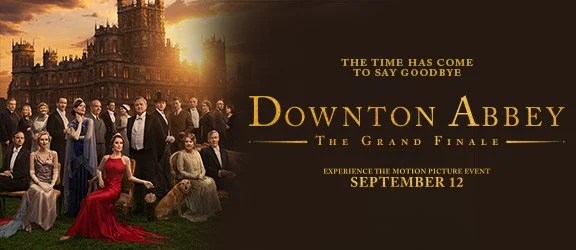
The plot of this film could also quite easily stand alone and the story doesn’t need much previous knowledge of the characters. I mean, I had briefed myself in who was who in the family and no, I have not been living under a rock so I knew a bit about their background and the various people — perhaps not by name but definitely by their look. This latest installment follows the Crawley family, headed by Robert Crawley, the 7th Earl of Grantham (played by one of the most underrated English actors, as my seat mate perfectly summed it up, Hugh Bonneville) and his American wife, Cora Crawley, played by Elizabeth McGovern — who is married to director Curtis in real life, as the family and their staff step into the 1930s.
Focus is on their daughters, Mary and Edith, played phenomenally by Michelle Dockery and Laura Charmichael respectively. Mary has divorced her husband because he cared more about cars than her, we learn as the film kicks off, and English society of that time treats her as a pariah.
In one of the most charming and funny cameos in the film, Joely Richardson plays Lady Petersfield, a new character and the hostess of a party the Crawleys attend in London, where she makes the family hide under the stairs as a princess arrive, too scandalous would it be for her to meet a divorced woman.
Mary also meets a sketchy American fellow, played by Alessandro Nivola, who is accompanying Paul Giamatti, reprising his role as Harold Levinson, an American businessman and brother of Lady Grantham, or Cora to those who go by first names. Arty Froushan also shows up at Noel Coward and Dominic West returns as Guy Dexter, an actor and secret lover of Thomas Barrow, a former butler at Downton Abbey, who is currently, officially the housekeeper, dresser of Dexter. There, now you have it all, and I need a hot cup of tea. With some nice watercress sandwiches please.
Full of colorful clothes and shiny jewelry, the work of Downton Abbey regular, costume designer Anna Robbins, and stunning settings courtesy of art directors Naomi Bailey and Philippa Mumford, with production design by Donal Woods, the film is two hours of lavish beauty, fun conversations and leave the viewer, well this viewer anyway, teary eyed at the end, when the characters (and actors) who have left us are displayed in a kind of hologram dance, a waltz of remembrance which tugs at the heart.
Of course, one of the characters who made Downton Abbey iconic is the quick witted and pungent Violet Crawley, Dowager Countess of Grantham, played the late Maggie Smith. While her presence is missed, even to one viewer who only watched her wit and listened to her banter on excerpts of the series and in trailers, there is a real sense of renewal in Downton Abbey: The Grand Finale and for that reason alone, I recommend the film wholeheartedly.
Images courtesy of Focus Features, used with permission