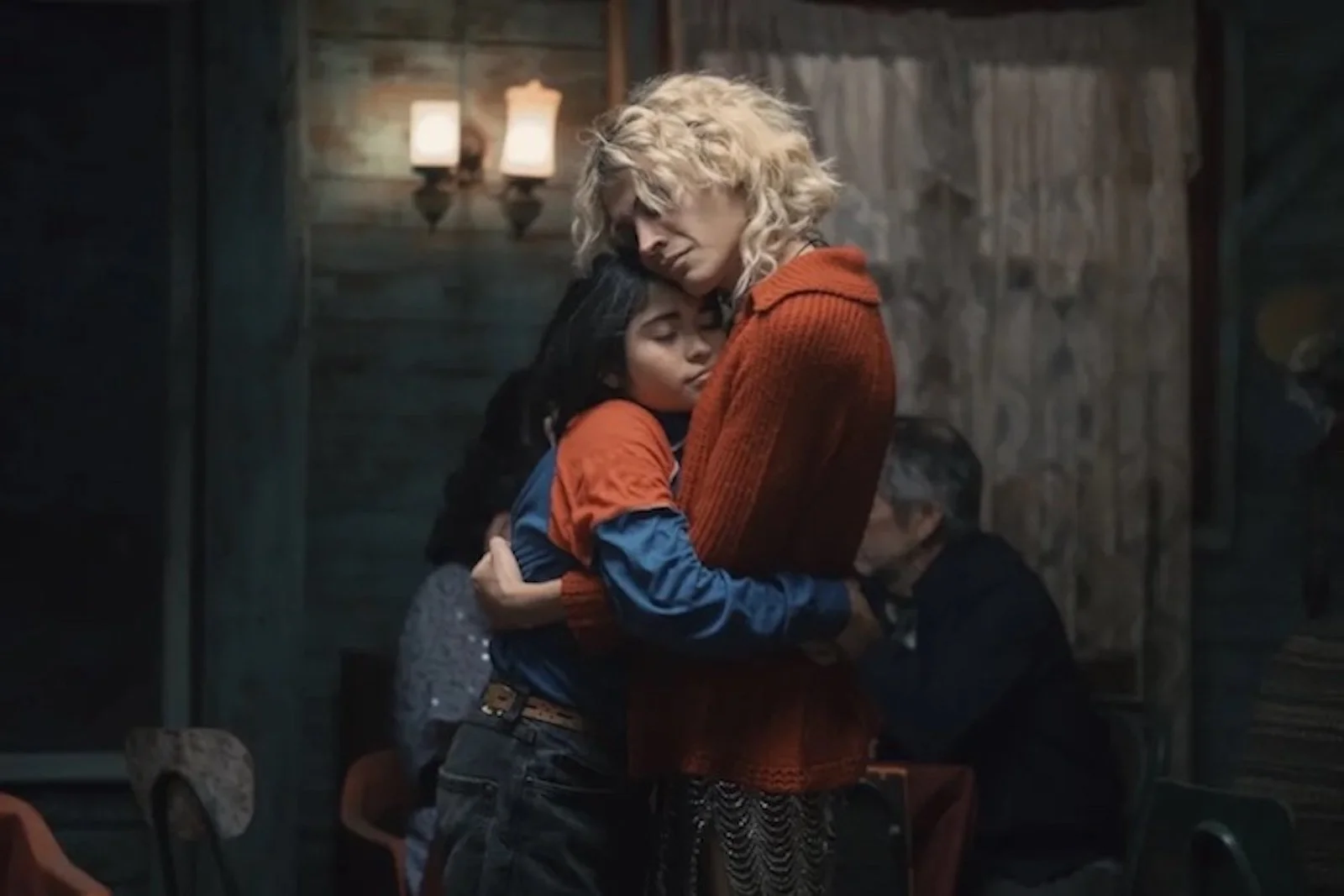
Coining a new term, in what could be called the genre of ‘Travesti-Western’, the Chilean filmmaker pays homage to the men, and women of his past. And in the process, manages a triumphant film about a child growing up in a loving trans community, one which deservedly won top prize in Un Certain Regard in Cannes.
Diego Céspedes is a wonder. In person, he exudes supermodel vibes and, while he discloses to me that the jacket/top he’s wearing for our interview is from Zara, he’s luxuriant. And his filmmaking is luxuriously beautiful, like one of those gems you discover and feel happier just for having witnessed its shine.
Speaking with him about a film that a fellow journalist, sight unseen and bafflingly referred to as “woke” in disapproval, was refreshingly easy. The Mysterious Gaze of the Flamingo is of course, anything but woke, in that it takes place in Northern Chile in 1982, at a time and in a place where the word hadn’t been coined yet. It is a half-fairytale-half-Western-half-mining-film — I know, that makes it 150% and that’s just how great it is! — which, at its heart, is a love story. A love story between men, between a little girl and the only mother she’s ever known, who is also a man (by day) and between a group of women who may not have been born so biologically, but who certainly make up a community of beautiful wonder women. If that’s woke, OK, then the film is woke. Whatever that small-box-of-a-word means.
The Mysterious Gaze of the Flamingo takes place, chronologically at the start of the AIDS epidemic, which I experienced in the US, as a pre-teen living and going to school in NYC. I remember vividly how the media highlighted the hysteria of school children born with HIV being removed from attending class and of parents shouting in panic, thinking that even a gaze from the infected child would transfer the illness to their offsprings. In his film, Céspedes creates a more poetic version of that hysteria, in that men who fall in love with the trans in the film, all sensual-looking women, are condemned to catch a mysterious illness, one that is starting to spread and ultimately, leads to death.
Lidia, played by talented newcomer Tamara Cortés, is an 11-year old girl who has been brought up by a trans mother, Flamenco (played by the extraordinary Matías Catalán) within a loving trans community, led by Mama Boa — the mesmerizing Paula Dinamarca. One night, an ex lover of Flamenco, Yovani (the unsettlingly great Pedro Muñoz) comes to beg for his life, quite literally, as he believes that Flamenco has infected him, with her gaze. We know, watching from the backseat/fast-forward of this world pandemic, that the illness is AIDS and that the man did not catch it through his eyes. But by giving into his demands one more time, Flamenco unwittingly throws Lidia into a quest, an adventure that a child should never experience. And yet, Céspedes makes it magical, with a healthy touch of realism, humor and more than a handful of Travesti-Western (“travesti” is the Spanish word for transvestites, in case you were wondering). The film is shot by Colombian DoP Angello Faccini in a mix of dystopian exteriors and almost homey interior lights and darks.
I caught up with the lovely Céspedes in Cannes for an interview which preceded his win. Yet I somehow thought to ask him if he’d prepared a winning speech… Read on to find out his answer.
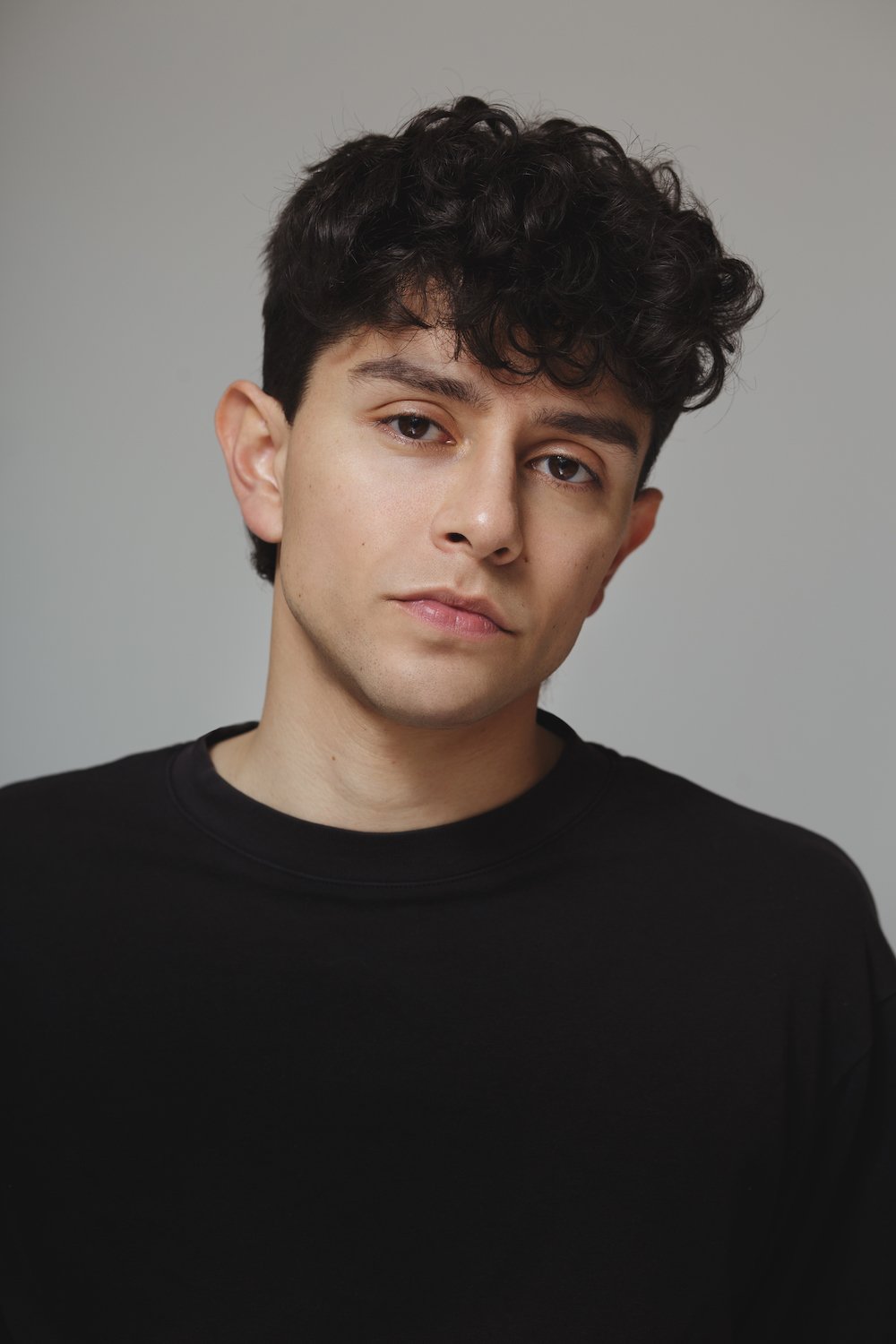
Diego Céspedes photographed by © Tom Chenette
How did you come up with this story?
I really believe that when I was writing this script the ideas came from different places. For example, the AIDS part comes from a familiar story. My family and I, we come from the suburbs of Santiago, the capital of Chile, and my parents built a hairdressers’ business. They hired gay men to work there and my mother was very close to all of them and they all died of AIDS. When I was growing up, I had this terrifying idea of what AIDS was. Then when I grew up, I discovered these luminous people behind this terrible disease and I thought there was a really beautiful story behind, that was never told.
But you’re younger than someone who grew up in 1982, which is when the story takes place — at the onset of the AIDS epidemic, when people were still speculating what brought it on. So why did you decide to set your film in that crucial time?
I didn’t grow up with the story myself, but my mother was kind of obsessed with it and when I was growing up she told us what this disease was about. So we were really aware, me and my brother, of that, and we are both gay and we had this relationship with this historical moment even if we didn’t grow up during it.
This was a really interesting topic to talk about, in a different way.
These incredible characters you have written are also interpreted by mesmerizing thespians — a combination of gay men, transvestites and a transgender woman. I wanted to know how you found them?
It was a very long process but it was really for me, a comfortable place to do that casting. When I was writing the script I always imagined the characters to be authentic, with authentic taste and an authentic way of talking. In Chile, like in any other country we have our famous people who work in everything. The goal was of looking for and working with these new talents and I’m very happy with the result. There are a lot of talented actors and actresses in Chile and we just need to give them the space. For me, every character, when I was writing them, was very special. And so we had to look for all these special things in everyone.
How did you find them?
We worked with a casting director in Santiago and in the closest cities and for example, for the character of Mama Boa, who is played by Paula Dinamarca, Paula is a friend of mine and she taught me a lot. There is a lot of her in the movie.
The house, I always said, is like a small example of the Queer community, with every identity. Not with the same names we have now, because as Paula said to me once, in that time we didn’t have too many tags, it was just two names: maricones and travestis. So if we needed to tell that story, we needed to tell it as it was.
For me, coming back to the question, we tried to settle on a very different kind of Queer community. Boa is transgender, Estrella, Leona are trans women. For Flamenco, is what we would call “more fluid” in our times. In the film, when Boa introduces Flamenco in the showcase, she says “a beautiful man in the day and a more beautiful woman by night!”

From left: Paula Dinamarca, Tamara Cortés, Matías Catalán, Diego Céspedes, Pedro Muñoz and Francisco Díaz
I love this community you’ve built in the film, because by the end of it you feel like you’ve been there and they are your friends.
Thank you for saying that!
How did you cast the role of Lidia, the young actress is a powerhouse?
We did one year of casting, with all of them, and Tamara is such a talent. We just found her and we were surprised because she was very similar to Lidia, her character. She never acted before. And she’s completely aware of everything and she has a very adult sense of humor, which is very very funny. And also what impressed me the most is that she was very comfortable with the Queer community even if she doesn’t belong, doesn’t have any relation with them, but all through the casting she never had questions. She was super close to them and didn’t possess the prejudices that society has. That was a very important thing, to choose her as Lidia.
Your film, for the scenes shot outside, has an almost sci-fi feel to the landscape. Where did you film? And how difficult was it to film there?
The exteriors in the North of Chile and the interiors we shot in Santiago. We didn’t have enough money to build in a studio so we rebuilt a farm and we did it up like the house. The art director [Bernardita Baeza] is super talented.
I’d also point out that your costume designer is very talented. You recognize the characters by the identity of what they are wearing.
Yes, you are completely right! With Pau Aulí, we worked on every detail in the movie, on the colors too.
We shot all the interiors first and when we went to the North, it was a very calm moment. We came from very difficult days of shooting. I had a very specific kind of town in mind, it’s a ghost town because it doesn’t really exist and the art director rebuilt everything in the place. And when I saw it I was like “this is the town!”
How much help do filmmakers in Chile get in making a film like this?
There is not much support, like in other countries. Even though we have one call to some public funds. They supported us, it’s not that much but that pushed us to do co-productions — we are a five countries co-production. We just shot in Chile, everything else was done in France.
Last year Anora, won the top prize in Cannes and ended up sweeping the Oscars and yet Sean Baker, and also fellow indie filmmaker Brody Corbet complained that they are not making money as filmmakers. How do you see this changing or are you feeling already like it’s going to be a long struggle for you?
I think it will be a long struggle but I’m not that worried. I don’t need too much money to live. If I have the money to survive, I don’t come from a rich family, but if I have enough to make films, which is my passion, I’m OK with that. It’s not my intention to make money with films, which usually makes everything less honest anyway. I think, I will try to keep it this way.
How exciting is it to be in Cannes with this film? Did you always know? Have you written your winning speech already?
Not at all! I don’t look like it but I’m very shy. I try to put a cover up… It’s amazing to be here and I was actually a big fan of this particular section in Cannes because it’s where they bring in new talents. I was always a fan, when I came here with my shorts, I always came to watch this section’s films.
All images courtesy of the Festival de Cannes, used with permission.