
While another Cannes title may be a heavy contender for Brazil’s submission to the Best International Feature Film category for the Oscars this year, I would argue that the reason the previous Brazilian film fared so well in last year’s award season race is one: an extraordinary woman at the center of its story.
Think about it. Many of today’s most beloved films feature a phenomenal woman at their core. From comedies to drama, and all the way through to action and horror, audiences are drawn to great, strong, cool women on the big screen. In Cannes this year, nearly all the movies I watched, apart from a tiny handful, featured heroines of all shapes, sizes, ages and even non-biologically born ones that keep haunting my thoughts — in a good way of course. Even when they were absent on the screen, they were present in the story, or behind the camera.
As a bit of background, for Westerners “blue zones” are geographical areas where older adults enjoy outstanding longevity rates, with low rates of chronic diseases. They include areas like Okinawa in Japan and Sardinia in Italy, but also the community of Seventh-day Adventists in Loma Linda, California where seniors enjoy longer lives, lived with a purpose and due to a combination of physical activity, diet and low stress. As a woman, who is facing the second half of her life, those numbers seem like those on the winning lottery ticket of a hundred million dollars jackpot!
In his Berlinale Silver Bear winning title The Blue Trail, Brazilian filmmaker Gabriel Mascaro features as his leading lady an actress, the divine Denise Weinberg, who is 69 years old. Why is this important, you may be asking yourself, and how is it related to the previous statement about the blue zones? Well, having an older leading character in films is something like finding a unicorn in modern cinema, where women over fifty are often relegated to secondary roles, often as someone’s mother, gasp — grandmother even, or a quirky afterthought. Yes, in the US we have June Squibb who, at 95, just walked the red carpet in Cannes for Scarlett Johansson’s directorial debut Eleanor the Great. In which, you guessed it, she played the titular role, just as she did in the 2024 American film Thelma, directed by another actor, Josh Margolin. But beyond that, most of our leading ladies are under sixty.
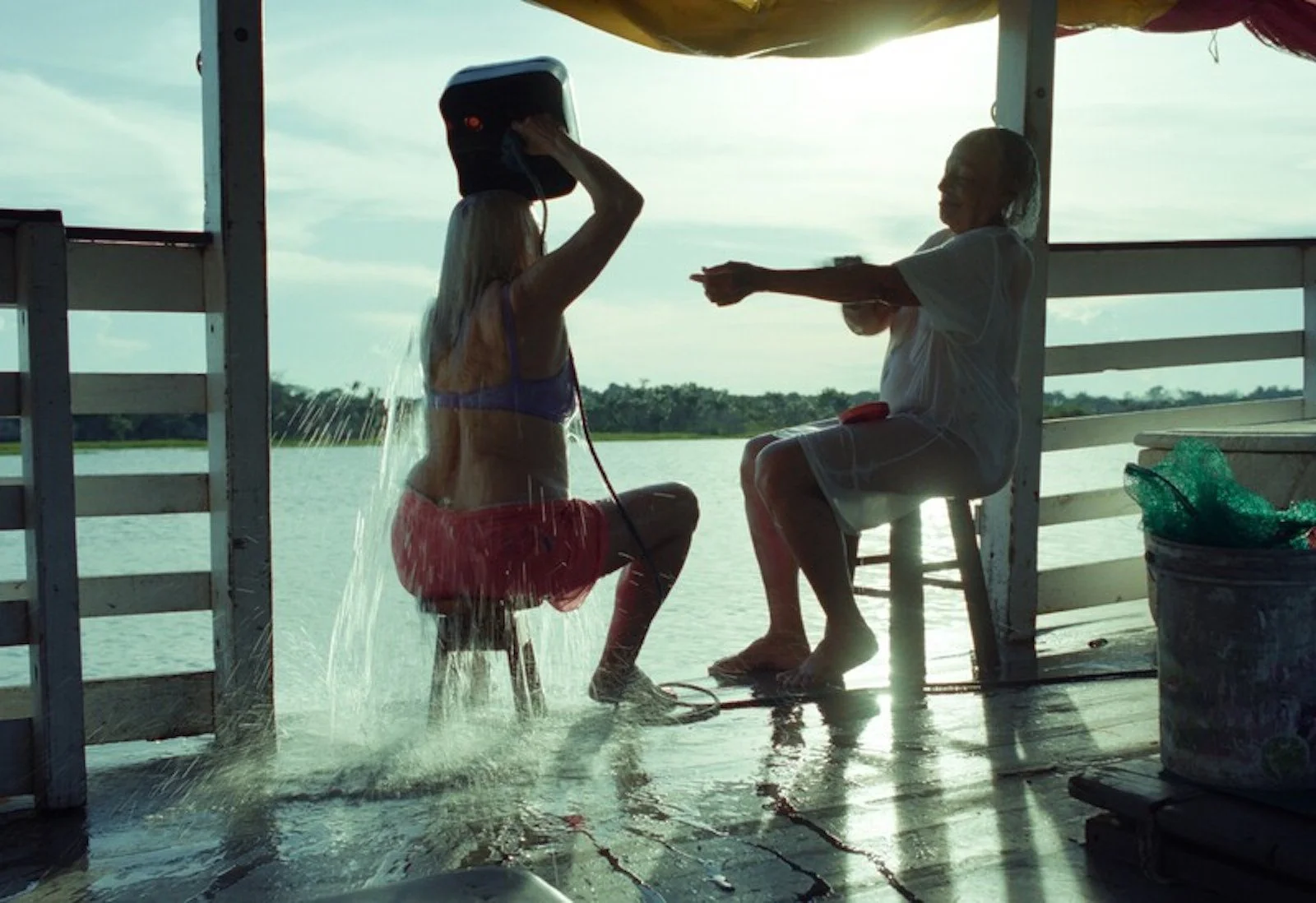
Weinberg with Miriam Socarrás in ‘The Blue Trail’
But the main reason why I’m deeply and madly in love with The Blue Trail goes beyond its sexagenarian leading lady and the concepts above. Mascaro’s film is a sort of contemporary Brazilian Thelma and Louise, with a pivotal scene towards the end of the film that reminded me of the feeling I had when I first read Gabriel García Márquez’s profoundly moving Love in the Time of Cholera. At the core of it, The Blue Trail is a story of extraordinary women, wrapped in an extraordinary woman’s story.
It also doesn’t hurt that the film benefited from my favorite film editor in the world — Sebastían Sepúlveda. His work on Pablo Larraín’s Jackie, I’ve told anyone who will listen so you may have heard this from me before, made me fall in love with Larraín’s understanding of women. The trend continued in Spencer and Ema, but stopped abruptly at Maria. The duo no longer collaborate these days and that je-ne-sais-quoi which is missing in the Angelina Jolie starrer is the feminine touch that, Sepúlveda himself would agree, he brings to everything he touches as an editor.
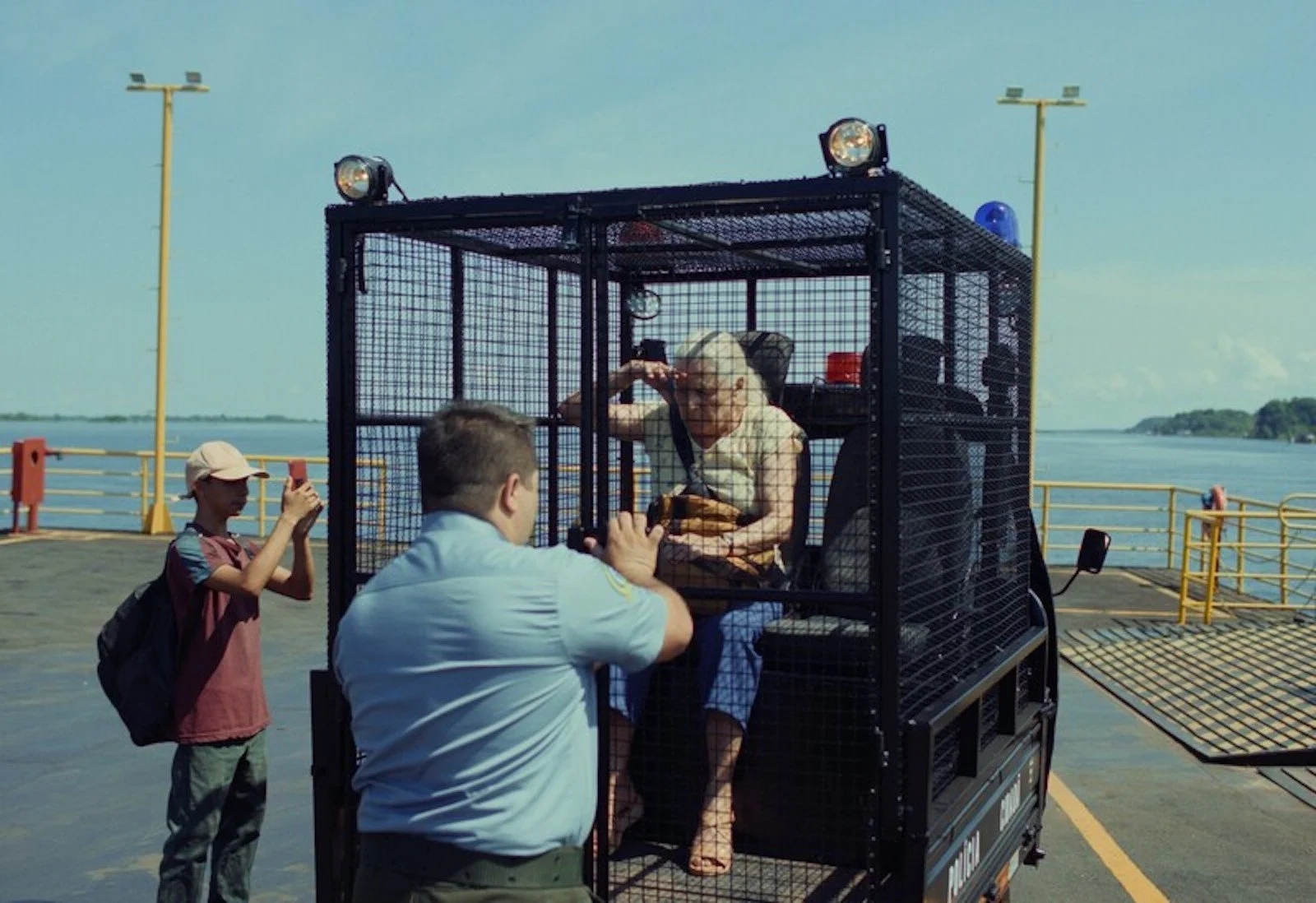
The story of The Blue Trail is simple, yet rooted in magical realism, mixed with a dystopian set up. Teresa (Weinberg), an older woman who works at an alligator processing plant — yes, you read that right — is told by the Brazilian government, a condition reinforced by her own daughter who now has custody of senior mom, that she needs to retire. This forced retirement at age 77 is something instituted to boost the local economy in a strange dystopian future, and “uncomfortable” seniors are sent away to a colony from where they never return. If they plan on evading the law, a “wrinkle wagon” is sent to pick them up, and they are then shamefully paraded around in a cage fitted on top of a Piaggio Ape for everyone to see.
But Teresa is not ready to go yet. For once, she has never flown in an airplane and her attempts to tick that wish off her bucket list become a journey of a lifetime for her, as obstacles — human and physical — pop up in her path.
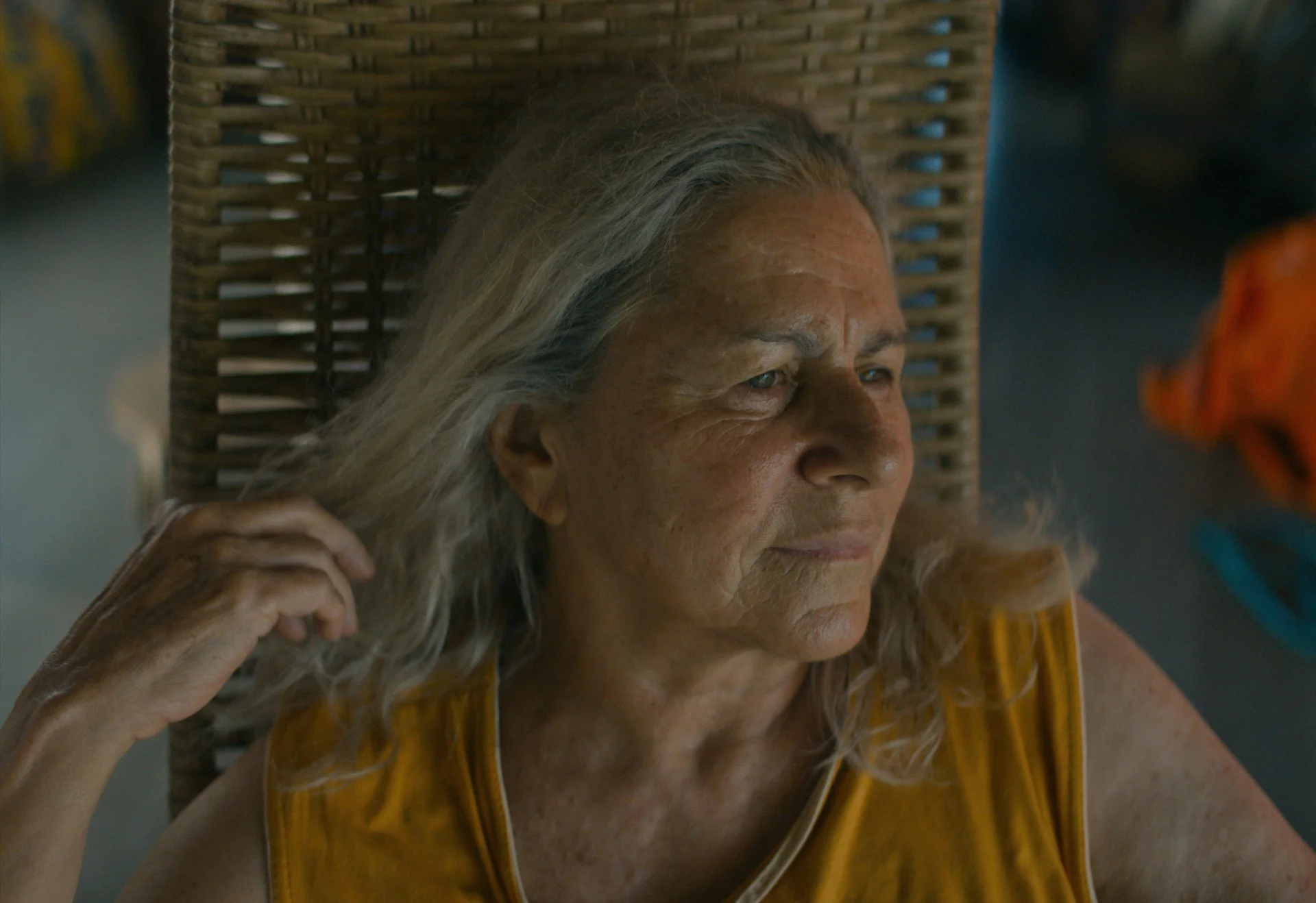
There are also strangers — one is reminded of the iconic line from A Streetcar Named Desire "I have always depended on the kindness of strangers" which Blanche DuBois utters — who cross Teresa’s path and create a groove for her to tread through on her way to her dream. They include Cadu (Rodrigo Santoro, nearly unrecognizable in the role), a sort of Charon, the boatman on the River Styx, who carries Teresa to the heart of the Amazon. But also Roberta (Miriam Socarrás, another divine woman of a certain age), an atheist preacher who sells digital bibles and has bought herself a boat, and freedom, through her hard earned cash. Because money, even in a dystopian, futuristic, anti-ageing society, talks.
The title, by the way, refers to a blue secretion, a trail left by a magical snail, which, if used in a certain way, gives humans a psychedelic trip, but also bestows them with a special power — the power to dream the unthinkable. And what a great power that is, one we could all use at times in our lives.
Once Teresa and Roberta come together, the film takes on a magical turn, which involves a kind of James Bond 007 turn — there is a casino involved and fish fighting, a-la From Russia with Love — and the above mentioned idea from Love in the Time of Cholera, which I cannot disclose or I’ll ruin your movie-watching experience. The result is a film that hasn’t left my thoughts for weeks and probably won’t anytime soon.
So yes, there are other Brazilian films in the running for this year’s awards season but I think the nomination should go to a woman-driven narrative. Call me biased…
The Blue Trail is co-written by Mascaro with Tibério Azul, with collaborating writers Murilo Hauser and Heitor Lorega. The music is composed by Memo Guerra and the film is shot by Guillermo Garza, who will next be working on Desert Warrior, with Anthony Mackie and Ben Kingsley. Sales are handled by Lucky Number and the film is screening next at the Sydney Film Festival.