
As this intimate masterpiece prepares to be released in the UK, I sat down with its elegant director inside the Curzon offices, for a chat which will always remain a personal highlight.
Upon first viewing, Nino proves an undeniable gem. Featuring a spellbinding actor, Théodore Pellerin in the titular role, pulling the kind of understated performance which makes you believe the character is someone you actually know or wish to know, the film proved a favorite for me last year in Cannes. This debut feature screened in the Critics’ Week line-up and walked away with both the Rising Star Award for Pellerin, as well as the coveted Valbonne Audience Award. Following Cannes, the film also won big at the César Awards, the French “Oscars” if you like, where Nino took home the trophies for Best First Film and Best Male Revelation.
Now that the film will be distributed in the UK and Ireland by Curzon, opening in cinemas on June 19th following a few special advance screenings around London, I got to watch Nino a second time. And upon second viewing, more of Loquès’ brilliance shines through, also highlighting a story that feels deeply personal to the French journalist turned filmmaker. When I mention to Loquès reading about the story coming from personal loss, she tells me candidly, “I felt very alone sitting with this grief,” and confirms that writing the film for her “started as a therapeutic process — I did want to see, like, how can I reinvent this story?” The loss she experienced was very close, and tragic, as she tells me, “someone in my family, a young man, ill at 34 but a very serious cancer, and then he died two years after that and I told my producer, okay, this is the only thing I can write about.” The result is an unorthodox film about cancer, and friendship.
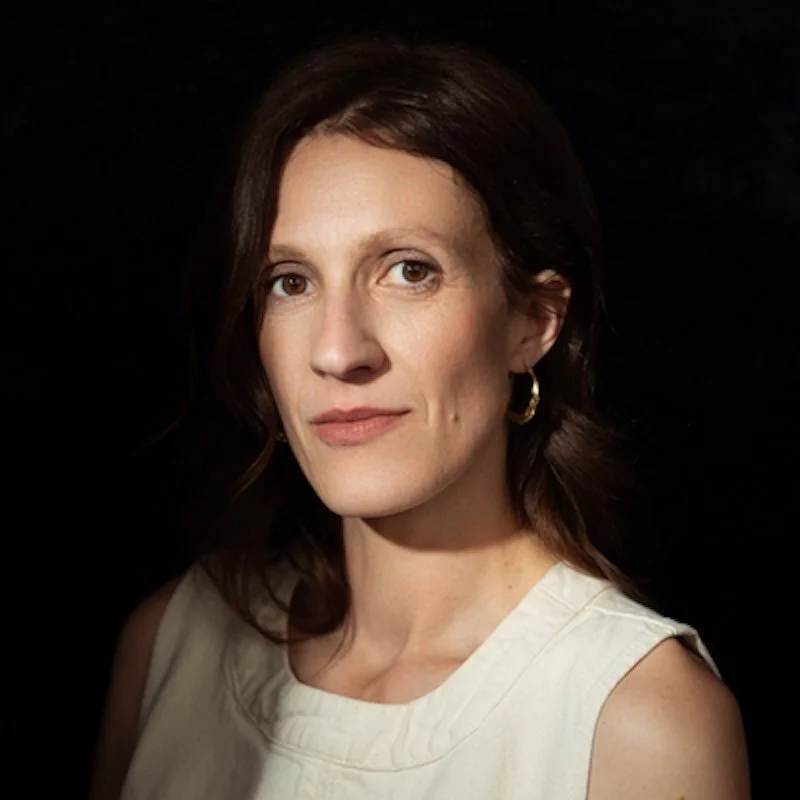
Filmmaker Pauline Loquès, photo courtesy of Critics’ Week Cannes, used with permission.
When the audience first meets Nino he’s in a clinic, being told quite matter of factly by an oncologist that the tests he took for a chronic sore throat have come back indicating he has cancer. “It’s from a sexually transmitted disease,” the female doctor tells him, and Nino’s knee jerk reply is to say he’s not in a relationship at the moment. There, at the very start of what could be a downer of a film which could have taken itself way too seriously, Loquès begins to show her genius. We find ourselves smiling at Nino’s charmingly naive reply, discovering a bit of our own goofiness within him as well. How would we react to a diagnosis like that? Probably with the same misdirected answers, and questions. “I know this is not the greatest topic to make a first feature,” Loquès admits, “but this was the only thing I was getting worked up about,” and that’s what she proposed to her producer Sandra da Fonseca (As I Open my Eyes, A Tale of Love and Desire) who clearly gave the go-ahead for the film. Written with the collaboration of Maud Ameline (Sidonie in Japan, Amanda) the film manages the impossible — “how to make a story light, give it hope because I personally wasn’t in that state as I started to write it,” Loquès confesses.
In the film, we follow Nino over a weekend where he is given tasks, from the unaffected doctor. He must turn in a cup of his sperm, to be preserved if he decides to have children after the treatment — which will likely leave him sterile. He must also find someone, a friend or a family member, to accompany him to his first chemotherapy session, on Monday morning. Because of his young age, Nino’s character is in his mid-30s, the treatment must start as soon as possible, but finding the right persons to help him complete the tasks proves like an obstacle course for the young protagonist. Unable to stop even for a moment and feel sorry for himself, Nino wanders around Paris, doe-eyed and disoriented and within that journey, finds the secret to his survival. And we find a character and a film we can really connect with emotionally, in every way, a beautifully poetic story that doesn't feel pathetic at any moment. “I think this is how I see life,” Loquès admits, “in everyday life there is always drama and humor everywhere — and even in this very dire situation, very dramatic situation I find that it isn’t completely sad and tragic.” Life continues, the filmmakers says, “and there are always other people around, who keep going, I wasn’t trying to find humor or be funny,” rather Loquès wrote Nino this way to be accurate “to hit a realistic note, because that's how it is.” While writing the film this way felt risky, because, she says “I didn't want people to just say, oh, she makes jokes about cancer, but to be fair, for me, in every situation, even the most dramatic one, I see funny things.”
Surrounded by a wonderful supporting cast that includes William Lebghil as Nino’s best friend Sofian, Jeanne Balibar as Nino’s mom and Salomé Dewaels as Zoé, an old schoolmate who proves an anchor during Nino’s chaotic weekend, Nino’s journey feels familiar, even if we’ve never had to deal with the issues he faces. Just when we think the film can’t get any more wonderful, along comes an unforgettable cameo by Mathieu Amalric as an eccentric man Nino meets in the public baths, where our protagonis is planning to wash up for his appointment at the hospital, after having locked himself out of his apartment for the entire weekend. Yes, because the challenges keep growing around Nino, as the film goes on, drawing us deeper and deeper into his journey.
On how she came to cast Amalric, Loquès tells me, “he’s an actor I love enormously, and I told my casting director, I’d love to cast Mathieu Amalric for the part, I love him as an actor and a director — he’s someone who, in Paris, you see around in bars and walking around on the street, talking to people, and you don’t know if he’s a homeless person or a movie star.” As someone who saw him in NYC once on the street, I can vouch for that impression as being 100 percent accurate. “We’d heard he didn’t want to act anymore but then he’s so lovely and said yes, read the two scenes [he’s in]” and told the filmmakers that he didn’t want to know what happens to the young guy. “He was so charming, he didn’t even want to get paid,” Loquès gushes. Much as with Pellerin, Amalric proves childlike in his wonder view of the world, “it’s like he’s just discovering cinema.” Loquès confesses that he brought to the set a bag of accessories to wear and use in the scenes — “it’s always about fiction and reality with him, and the pleasure of making movies.” It’s hard to hear Loquès point out that Amalric still struggles in the industry, finding it often difficult to secure a budget for the films he plans to direct. But then indie cinema is slowly being pushed aside in this landscape and thank goodness for those distributors and sales agents that still promote films like Nino and give it ample voice.
The most challenging scene for Loquès to film proved the very “last scene at the hospital, because I wanted to do this master shot where Nino is about to have chemotherapy [and something beautiful happens, which this writer doesn’t want to give away as a spoiler]. And then I thought, chemotherapy is really hard, but I did want a sense of relief, this sense of lightness, but I thought how will I do it, because I don’t want to be lying…” And then, the words of wisdom came from her star, Théodore Pellerin, who said to her “it’s your film, you do what you want to do, it doesn’t happen like that in reality but if you want it to happen like that, it’s OK, this is your movie.”
While on the subject of the actor who so brilliantly plays her protagonist, I ask Loquès about Pellerin, an actor best known to international audiences for his turn as the sociopath Matthew in the 2025 film Lurker. What made her cast him, an actor who is not French but rather French Canadian! “I was looking for a very good actor to play a thirty year old,” the filmmaker answers, “and the thing is, in France, there aren't that many and a lot of them are really famous and I didn't want people to watch this famous actor play this character — I really wanted people to get into Nino, because the part of someone with cancer is like a performance for many actors, something you can pin on your career,” as an achievement. “My casting director was desperate, with a list of about 30 actors that I was like ‘hum, I don’t know…’ about and she told me about this guy in Quebec, very tall, very pale and very mysterious, but he’s 25.” And Loquès’ knee jerk reaction was to tell her casting director “this is not what I want,” but thankfully Youna De Peretti insisted, and by the time the financing for the film was in place, Pellerin was actually 27 years old, closer to the age of his on-screen persona. “When I started looking at his previous work, I couldn’t stop,” the filmmaker admits, and when she met him in person for the first time? “You have to imagine this tall, very handsome, man who showed up ten minutes late because he was looking for a blue door — our production company is called ‘Blue Monday Production’ and I was like, oh my God, he’s so lovely and so cute and so, you know, awkward.” Tick one for perfect casting, as one can’t imagine watching Nino with any other actor playing the titular role.
So now that the spellbinding and elegant filmmaker has released this “baby” of hers to the world, including at the moment in UK and Irish markets by Curzon, where does Pauline Loquès go next, I ask? “It’s difficult, because I started writing Nino in 2019 so it’s seven years that I’ve lived with this personal story — and I didn’t really want to be a filmmaker, I just wanted to tell that story,” she confesses. So much so that when finding the financing for the film was proving a challenge Loquès thought of writing a book or perhaps turning it into a podcast. “It is such a long journey and so much effort, so much energy to put on a movie, you have to believe it is useful for you and it is useful for people out there,” she continues, “so I’m wondering what story to tell and I don’t want to get too professional but keep that intimacy — I would rather talk about the characters and the stories than the craft.” Loquès also struggles with what she senses in the business, which is that the “industry wants to make you exist in some places, and not in others,” so she’s concentrating on surrounding herself with the right people, to continue to find pleasure in directing and not focusing on targeting the festivals and finding financing, and all that other technical stuff.
“I met Richard Linklater, when I was in LA, whom I love,” she says, matter of factly, “and the way he stays radical,” as radical as he was twenty years ago in his work “he told me, just one advice: keep your budget low — this is your freedom.” The humble Loquès gushes that on set, everyday, “I was happy, thinking they gave me the money to do this, wow!”
I end the interview by asking a token question, one I would never ask a male filmmaker but which obviously is often posed to women in the business. What does Loquès think are the qualities that women filmmakers bring to a project, the basic differences, particularly in making a film I could never imagine being made by her male counterparts. “I think it's not only a woman filmmaker, but a whole crew of women, because my DoP is a woman, my editor is a woman, I mean, costumes, production design, make-up they are all women, everywhere, and this strong collective permitted a flow of ideas — and I don’t know if it’s women or these women.” Loquès points out the “sex scene” in the bathroom, towards the end of the film, and how it was filmed and “the fact that it was, you know, a female director, DOP, and editor, the way we shot it, staged it and the way it was edited, it felt like there was more depth and intelligence in the scene.”
Nino will be in cinemas in the UK & Ireland starting 19 June, distributed by Curzon — check out the link to find where it is playing near you.
All images used with permission.