Before the film received one more award, this time at the Cairo International Film Festival, I sat down with the Polish filmmaker to talk cinema, inspiration and what constitutes the best soundtrack of all to him in a film.
As he introduced his film to the audience in Cairo, Damian Kotzur said “everyone is my friend in the film or who I would meet on the street.” It set the tone for a stunningly self assured film to come, a very mature, haunting feature debut from a filmmaker whose previous shorts have also shown a wisdom well beyond his years.
At once Kocur seems both pleased and overwhelmed by his sudden success. After winning the Orizzonti Special Jury Prize in Venice, where the film world premiered, the Polish filmmaker stopped over in Cairo to show Egyptian audiences the film. The Cairo Opera House Grand Hall was filled with cinema fans and they welcomed Bread and Salt. That’s not meant as a pun, as the film is all about traditional Polish hospitality gone badly astray.
Further proving how much Bread and Salt is becoming the best known secret, the darling shall we say of the fall film festivals, the film also secured the Bronze Pyramid Award for Best First/Second Work at the Cairo International Film Festival, awarded by a jury headed by Japanese filmmaker Naomi Kawase.
"I'm very surprised that the film, which is made in a very local community, with very local problems, with my personal message is being understood by people all over the world -- in the countries where we've screened the film." Kocur admits he was "kind of afraid of the audience here," in Cairo, "Arab people, I was curious what would be their thoughts and emotions, but they really liked it -- in the Q&A after the screening they were really touched."
"That's the beauty of cinema, I think, that you can make movies in different languages, about different cultures but the language of cinema is universal and international somehow," the filmmaker admits.
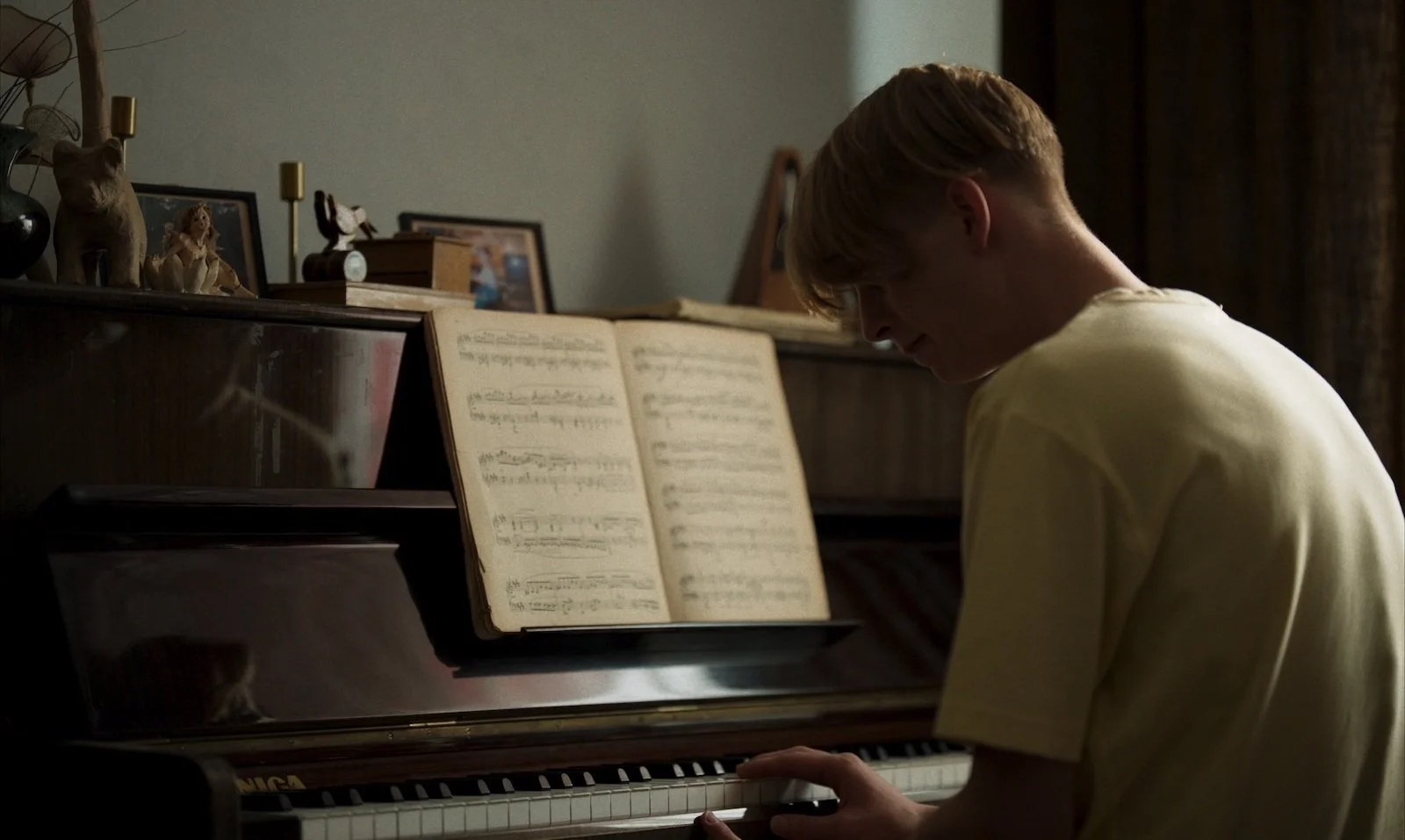
Bread and Salt is inspired by true events and the characters are played by non-professional actors. It tells the story of Tymek, a talented young pianist, student of the Warsaw Academy of Music who returns to his small hometown, a kind of sleepy place where time seems to have stood still. With his friends and younger brother Jacek, also the actor’s brother in real life, they hang out at the local Kebab shop, run by Arabic speaking immigrants. Through a series of events, this mix of Polish youths and young foreign restaurant workers turns into a tragic clashing of cultures, very different from the meaning of the title of the film — which is also relevant in Arab cultures. As the 17th-century Polish poet, Wespazjan Kochowski, wrote in 1674: "O good bread, when it is given to guests with salt and good will!"
Because of Tymek's inability to stand up for, well anything apart from his beloved music really, things take a fatal turn. And the film leaves its audience breathless and wondering how much of Tymek is in all of us.
Kocur's film betrays a deep knowledge of the communities of the diaspora and the Arab world, which is surprising once the filmmaker admits Cairo is the first city in the Region he's ever visited. Even when CIFF's Europe programmer Maggie Morgan introduced the film on a balmy Cairo afternoon, she seemed surprised this was his first time in an Arab country.

"Yesterday I read an article where the writer said my film has something of [Abbas] Kiarostami and something of Michael Haneke -- the observation of Kiarostami and the tension of Haneke and I was very happy because those are my two most favorite directors." I mention that I can see Kiarostami in his work, this soulful, slow gaze on the characters at their most raw, and Kocur does agree "I am very open in this film and so are my characters, and Haneke tends to be more cold, closed. He knows a lot about the people but he's not opening himself up, I think by watching his films."
The two brothers featured in the film, Tymoteusz and Jacek Bies, Kocur has known since they were children. "My method is I'm writing the script and at the same time, I have somewhere in the back of my mind, I have their character already -- using the unique skills of people I'm working with." Kocur admits he wouldn't make a film about a pianist if he had to work with a professional actor, "because I would have to teach him to play for a year or two." The film is very personal to him, but also "to a lot of people in front of the camera, we opened something very personal within all of us." Which is probably why the film resonates so deeply with worldwide audiences.
It's also fascinating to watch a film about modern, contemporary youths, drizzled with our current issues of immigration and integration, and yet mostly backed with a soundtrack of classical piano music. I mention this to Kocur and he says "that wasn't my aim -- the only thing I was thinking about when I was preparing the movie and writing the script was this is the obvious contrast between the place I'm showing in the film, the small town, the projects, and the classical music, which is not obvious as existing in that environment."
And yet, for a film about pianist brothers, music in Bread and Salt doesn't manipulate the audience into feeling what the filmmaker wishes, it acts instead as a character in the story itself. "In terms of music in films I really prefer silence," Kocur says, "I'm trying to not use the music as this kind of transcendental part of film -- many filmmakers make their job very easy by suggesting what the scene is about by giving you the music."
In the crucial climax of Bread and Salt, most of the action is shown on CCTV and there is sound, not music to accompany what is going on. I mention this to Kocur who admits using music would have been "cheap," even if some will walk away from the film not knowing if they've watched a narrative or a documentary -- which is just fine by the filmmaker. "The only country where the jury didn't understand my film was in Poland," he chimes, to which I reply "Nemo propheta in patria" the Latin phrase meaning "no man is a prophet in his own land." In fact, Bread and Salt has found success all over the world after its award-winning world premiere in Venice, including in Cairo where Kocur received one more award to add to his growing collection.
Kocur admits he lives by a David Bowie credo, who made music he liked instead of catering to what audiences may have wanted, which worked out beautifully for Bowie. So I ask Kocur, does he like his film? "I do, I really love my film!" he answers without hesitation. "It was a huge risk, we did no rehearsals at all, just went on the set without rehearsing, but after one day, I knew everything would be fine."
Famous last words? "People are forgetting that cinema is an art, to many it's just a piece of entertainment," Kocur asserts, "but I've found a great text by Cesare Zavattini [a frequent screenwriter on Neorealism classics like Vittorio De Sica's Umberto D. and Bicycle Thieves] and for me, it confirms that it's OK to make people disturbed in the cinema -- it's totally OK."
Photos courtesy of the Cairo International Film Festival, used with permission