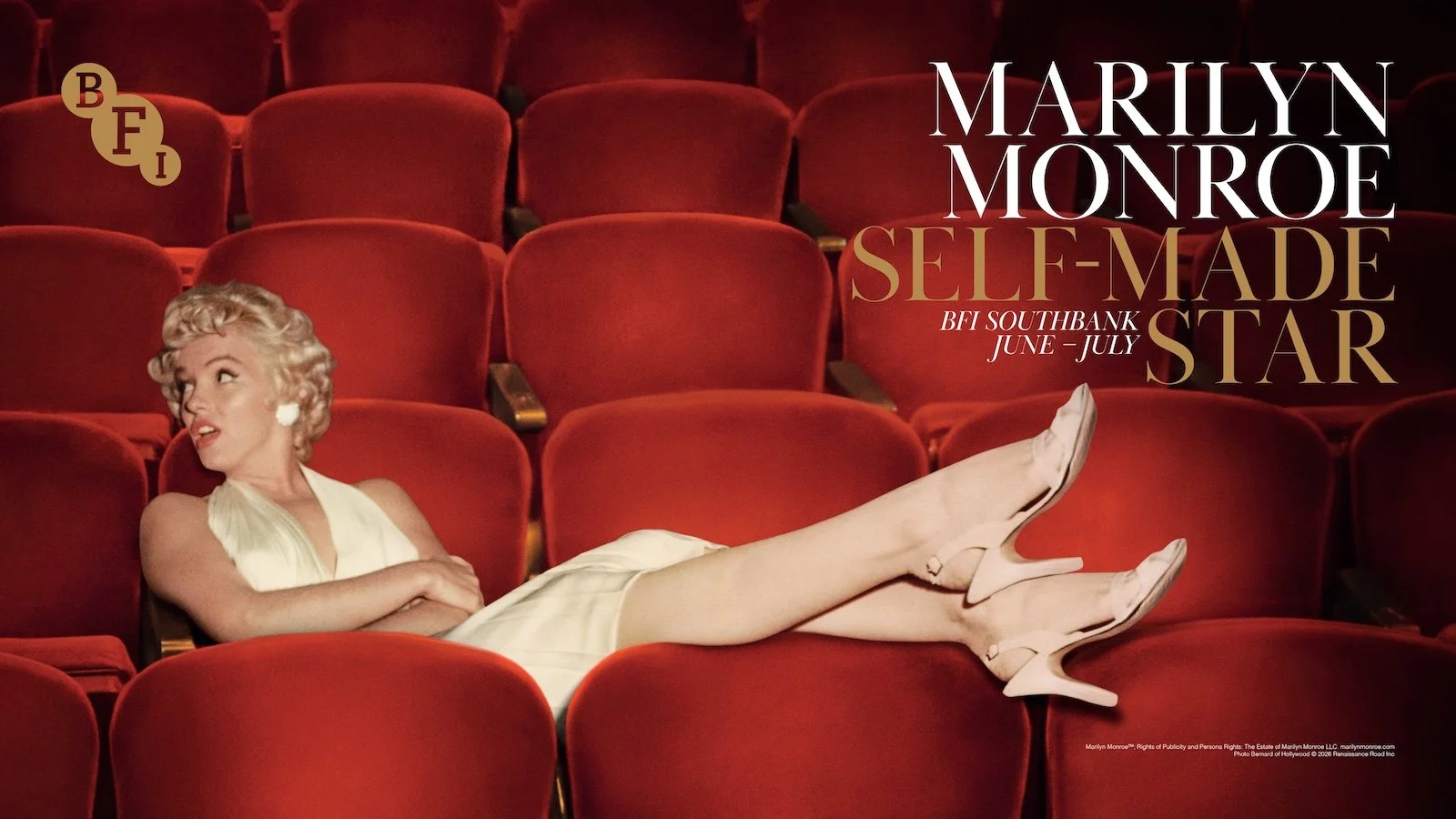
Celebrating the 100th anniversary of Monroe’s birth, the series will feature popular films and lesser known gems along with talks, an exhibition of portraits, a special study day dedicated to the superstar and a rerelease of John Huston’s ‘The Misfits’ by BFI Distribution.
Songs, clothing lines and whole careers have been dedicated to the woman who was born Norma Jeane Mortenson, in 1926. But beneath the obvious sex symbol there lived a complete and complex human being, one both savvy and intuitive about her career, who singlehandedly created an icon for the ages.
A hundred years after her birth, the legend that is Marilyn, who only really needs a first name for us to know who she is, lives on. Partly because, as is often the case, she died young. “Only the good die young,” goes the American anthem, and Marilyn was both great and too young, when at age 36 she succumbed to a mixture of pills and slipped away, naked, in her bed. Even her ending was tragically cinematic, right?
Curated by the BFI’s Lead Programmer, the phenomenal Kim Sheehan, ‘Marilyn Monroe: Self-Made Star’ will take over the BFI Southbank (and our collective consciousness, no doubt!) from June 1st — Marilyn’s birthday — and throughout the months of June and July, 2026. On June 5th, The Misfits, John Huston’s elegiac anti-Western, and Monroe’s poignant final completed film, will be released in cinemas in the UK and Ireland.
The Misfits
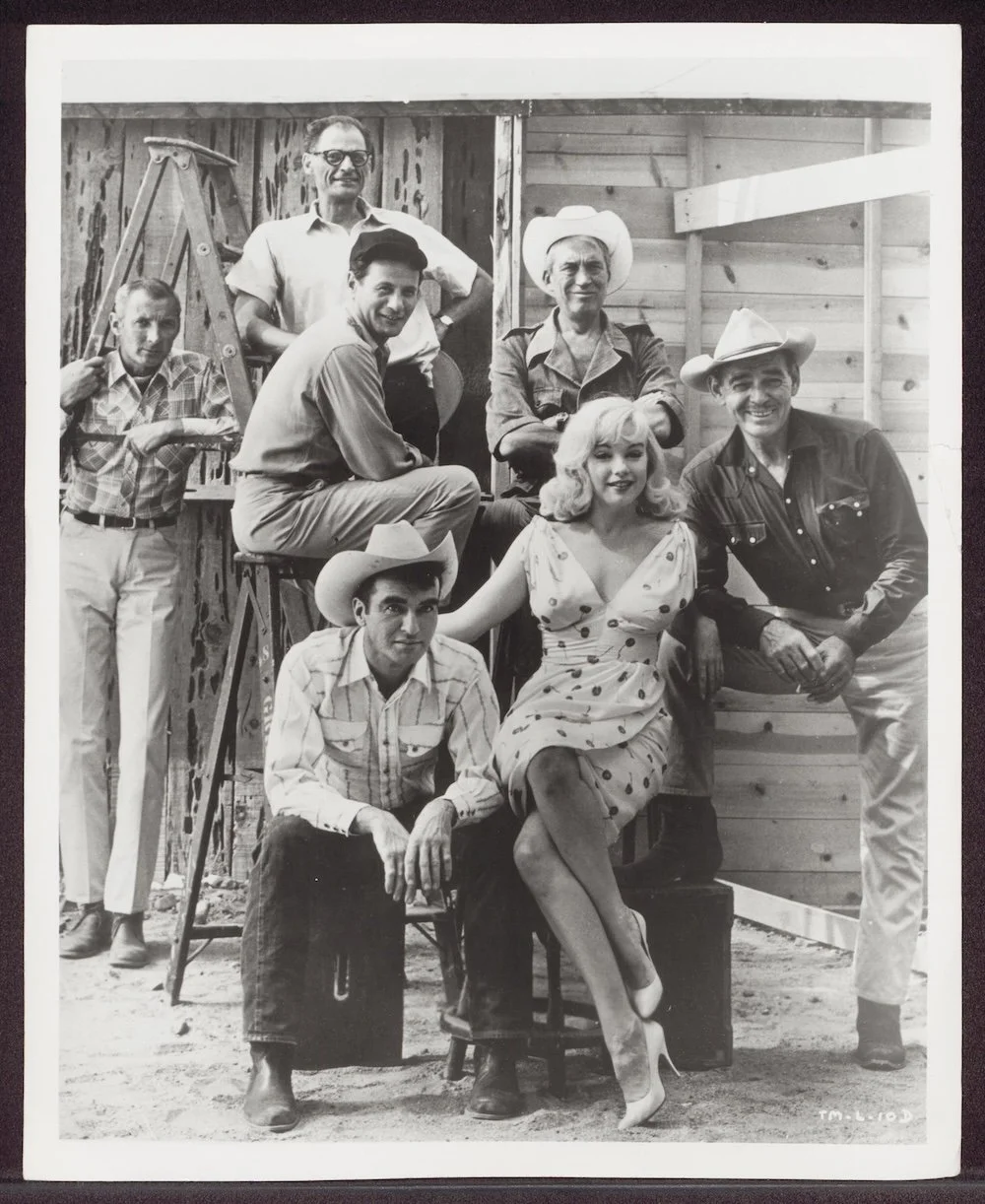
Since we were just mentioning the film, let’s start this list with last one first. John Huston’s epic 1961 masterpiece also starred Clark Gable, Montgomery Clift, Eli Wallach and featured the wonderful Thelma Ritter. The script was written by Marilyn’s then husband, writer and playwright Arthur Miller who called it a “gift” to his wife. In the role of Roslyn, a delicate divorcee who moves out to the Nevada desert, Marilyn holds the threads of the film, an anti-western to end all westerns, together. Today she would be called an animal activist, but Roslyn is actually a tender, human, vulnerable woman who sees the beauty in all living creature and understands the completely uselessness of the cowboy life in a changing world. It was magnificent to be treated to a big screen press look at the film at the BFI Southbank, as I ever only had watched it on a TV screen. The cinematography by Russell Metty is simply phenomenal and drew me into the story even more than ever before.
Gentlemen Prefer Blondes
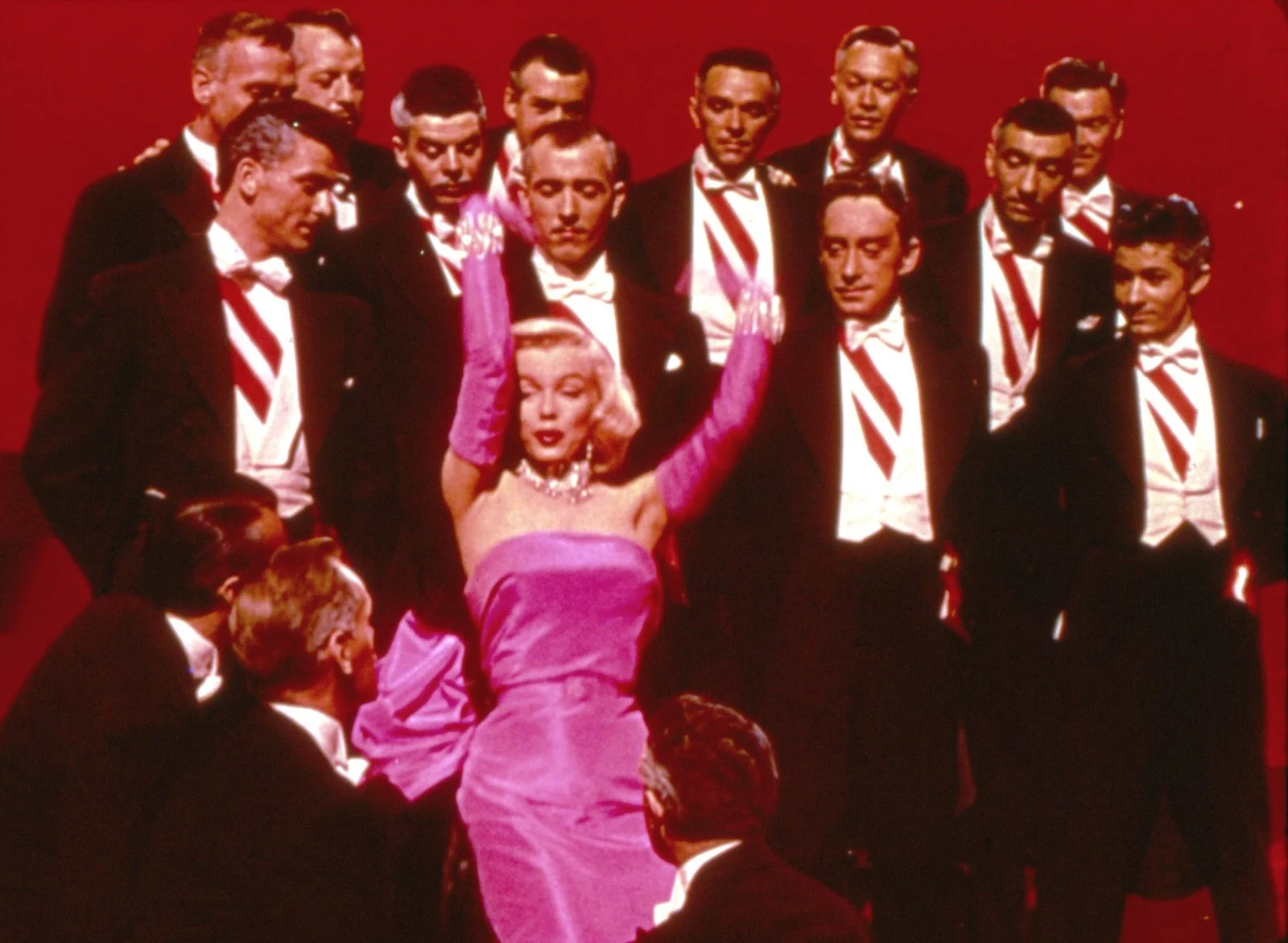
Programmer Sheehan proved a wealth of information during a press meet last week. She screened a short excerpt from Ladies of the Chorus, Monroe’s first role in a long forgotten B movie musical, where the 22 year old performs in her natural voice and sporting longer hair, making still a standout among the beauties of the era, but less iconoclastically so. She then invited the journalists there to watch Marilyn’s evolution to full blown screen bombshell in Howard Hawks’ Gentlemen Prefer Blondes, filmed just five years later and co-starring Jane Russell. Again the film, which features her starry and iconic performance of Diamonds Are a Girl’s Best Friend proves one for the big screen, as watching her in all her bright costumed beauty on a TV screen doesn’t do it justice.
“Marilyn Monroe was quite possibly the biggest star cinema ever saw and will ever see. She was the original triple threat and deserves much credit for crafting her own image and stardom. In so many ways she was a woman ahead of her time.”
The Prince and the Showgirl
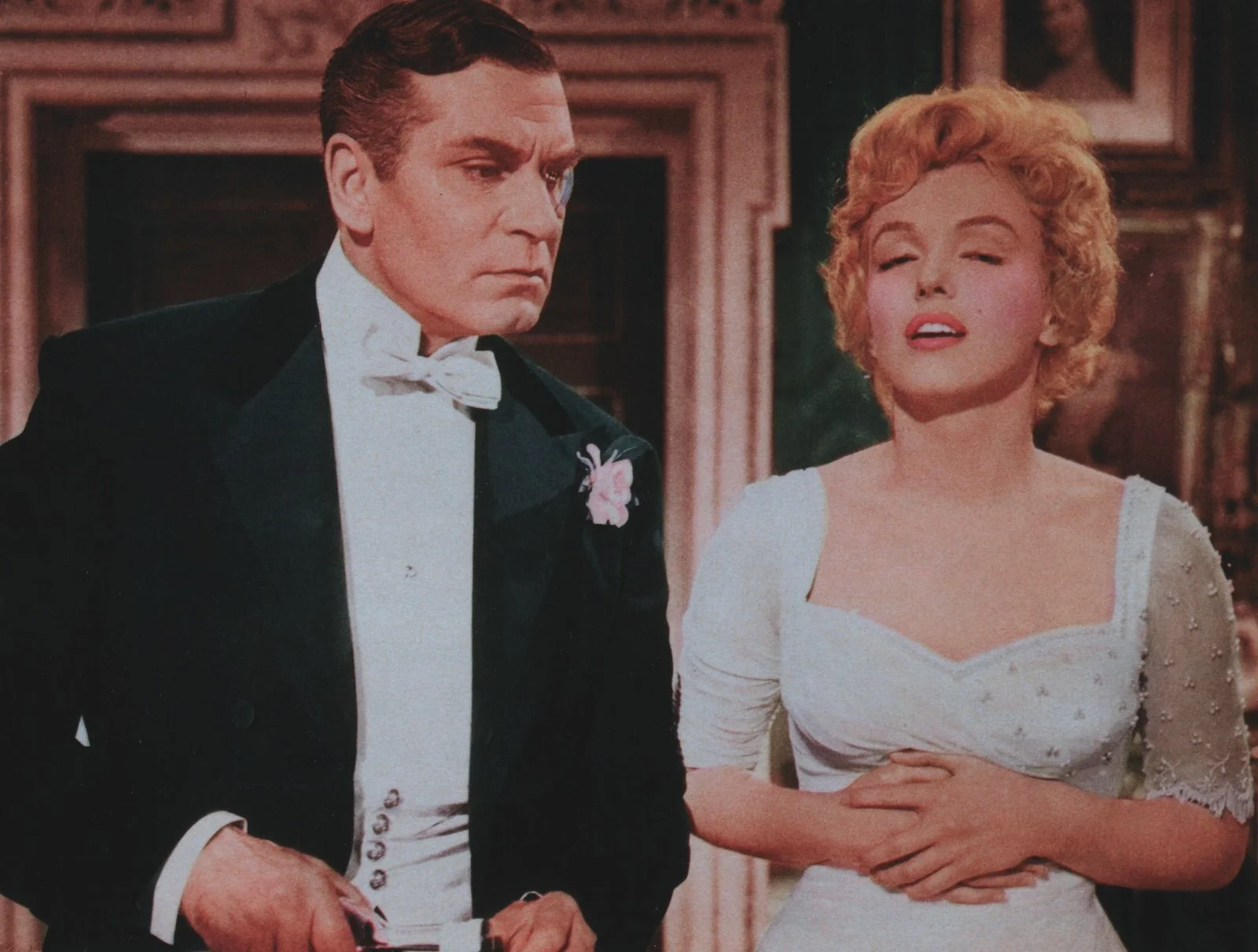
A product of Monroe’s business savvy, the film came to be after Marilyn Monroe Productions purchased the rights to Terence Rattigan's play The Sleeping Prince. The 1957 film was a collaboration between producer Monroe and British star Laurence Olivier who had made the Prince Regent’s role in the stage version very much his own. In the film however, Olivier, who also serves at the director of the project, is outshined by his co-star’s natural charm and ease as the vivacious chorus girl Elsie Marina. Of the 17 and a half films shown — see the last title to understand this number — during the BFI retrospective, this one is one of the hardest to watch, as I’ve often read that Monroe came away from the experience wanting to delve deeper into the technique of acting and perhaps allowed for the entrance of a toxic acting coach into her world. I won’t name names, but if you followed her career, you know of whom I speak…
Some Like It Hot
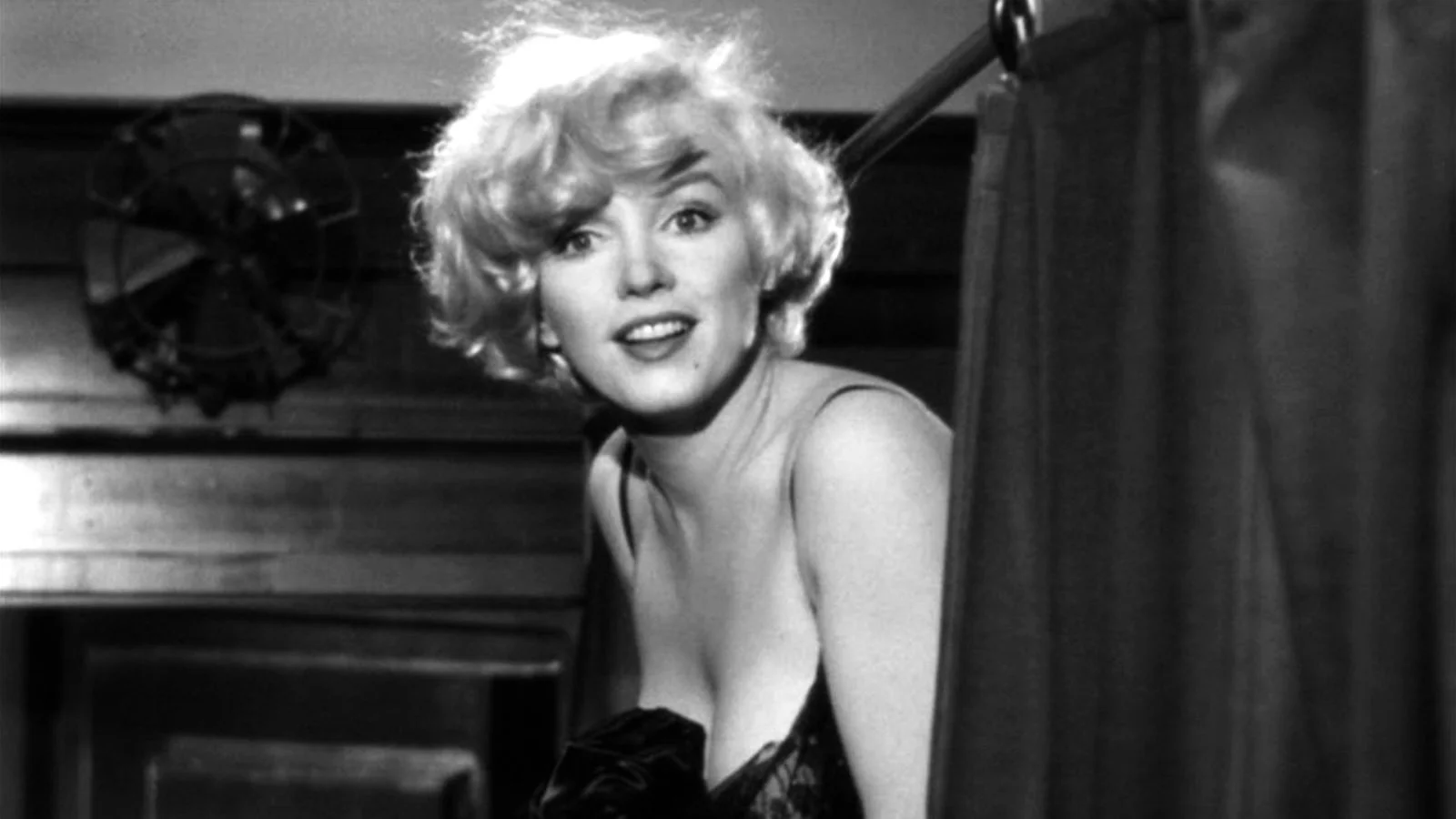
This is probably one of my all-time favorite Marilyn Monroe films. I love Jack Lemon and Tony Curtis gender bending performance and the last line of the film “well, nobody’s perfect!” is one I quote often, even to those who have no idea where I got it from or what I mean exactly. One of Billy Wilder’s masterpieces, the filmmaker here really tapped into Marilyn’s sexy persona and her talent as a singer. But what I imagine is most memorable in watching the film on the big screen — and I plan to do that! — is just how much of it she fills with her grand joie de vivre and her incandescent beauty. As a young woman, Marilyn looked up to Jean Harlow because she also possessed “white blond hair” like hers and in SLIH her sultry, platinum beauty is absolutely on display, along with her spellbinding talent.
“As a child, cinema provided Monroe with much needed escapism, but it also nurtured those big dreams for her to become one of the stars she aspired to on the silver screen. Monroe once described being enthralled by Claudette Colbert’s Cleopatra and famously modelled herself on Jean Harlow. Our Marilynspirations Double Bill: ‘Hold Your Man’ (1933) and ‘Cleopatra’ (1934) celebrates the stars who influenced her, inviting the audience to view these classic screen icons through the eyes of a young Norma Jeane and experience how they transported her and shaped her own stardom.
”
Something’s Got to Give
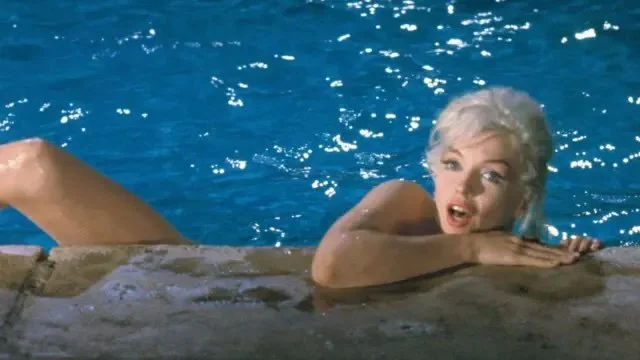
This is Marilyn’s last film, directed by George Cukor and considered the “half” I mentioned above and features the infamous naked pool scene, which was the first ever by a movie star in talkies. Yes, there had been ones before the advent of sound in pictures, but Marilyn once again proved a groundbreaker and a risk taker. Perhaps that was the cause of her demise, some might argue. The shooting of the film was delayed on several occasions due to Monroe’s health and Monroe upset studio executives when she left the production to sing at President John F. Kennedy’s birthday gala. In a talk, also part of the BFI Southbank program, titled ‘What Could have been: Something's Got to Give’, the curator and guests will dive into the different stories behind the film that never came to be and look at the footage that survives from the unfinished project.
For all tickets and information on the complete list of titles screening this summer at the BFI Southbank, check out their website.
Oh, by the way, coinciding with ‘Marilyn Monroe: Self Made Star’, as part of the centenary celebrations, the National Portrait Gallery are presenting an exhibition ‘Marilyn Monroe: A Portrait’, running from June 4th to September 6th. Book your tickets here.
All images courtesy of the BFI, used with permission.