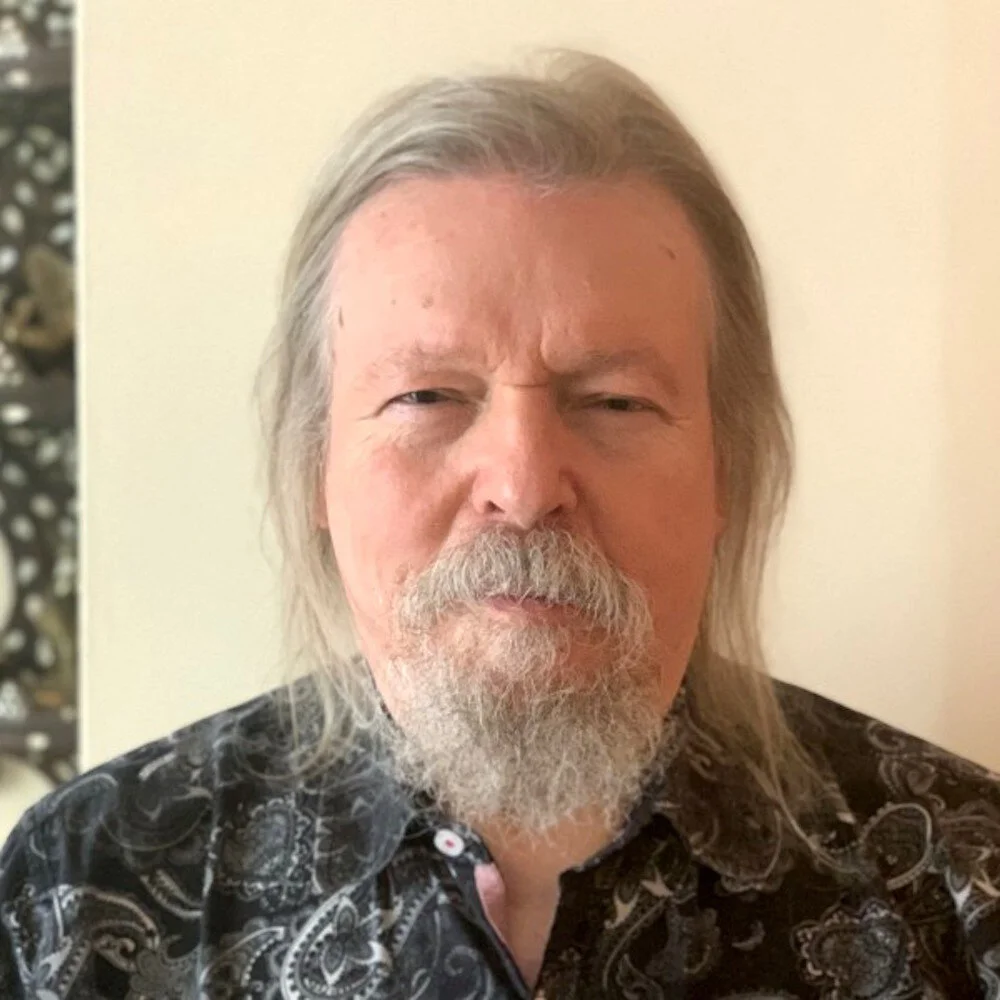
Oscar-winning writer Sir Christopher Hampton has the wonderfully modest aura about him. Despite being an awardee of one of the most coveted prizes in the world, a celebrated screenwriter and playwright, the perfect translator of the works of two of the most notable French authors of contemporary times, Hampton is humble. When we catch up over Zoom, just before he’s about to set off on a journey from the UK to Cairo to receive a Lifetime Achievement Award from the festival there, he speaks softly and doesn’t fluff his answers up with self promotion. It is so refreshing, yet personally I feel doubly aware of how I should then transcribe our talk since he uses his words so perfectly.
I say this because if there are a couple of awkward prepositions, or a syntax faux pas, please blame me and only me. Sir Hampton speaks perfectly and hearing about his work and upbringing turned out to be a personal highlight.
Most of us became aware of his talent with ‘Dangerous Liaisons’, the 1988 film starring Glenn Close, John Malkovich and Michelle Pfeiffer directed by Stephen Frears. That’s also the work that got Hampton the Oscar for Best Adapted Screenplay — a category he was then again nominated in with ‘Atonement’ in 2008. Born in Portugal and brought up a bit all over the world, thanks to his father’s job, Hampton then stayed on our collective cinematic radars with works that include ‘The Quiet American’, ‘Cheri’ and ‘A Dangerous Method’, the latter directed by David Cronenberg.
His latest work on ‘The Father’, which he translated from the French as well as helped to turn into a film, from the original play, reunites him with Florian Zeller, with whom he’s collaborated on seven plays. ‘The Father’ was the opening night film at this year’s Cairo Film Fest and judging from the vibrant red carpet, it was a hit there just as much as when it world premiered pre-pandemic at this year’s Sundance.
Following is a quick Q & A with Hampton, about growing up cosmopolitan, how his Egypt years provided him with the best tool any writer could possess and how winning an Oscar changes the game — the answer will surprise you.
Oh, and we call him “Sir” now because he was awarded the Knight Bachelor of the Order of the British Empire in 2020, for his services to Drama. So I present to you the wonderful Sir Christopher Hampton.
Is it true that you spent some of your formative years in Alexandria, Egypt?
Sir Christopher Hampton: Yes, my formative years between the ages of five and ten. My father worked for a company called Cable & Wireless and we lived in Alexandria which was an absolutely glorious city in those days. It’s still pretty nice. It was really a beautiful place to be brought up.
Does the fact that you’ll be receiving this lifetime achievement award, does it become doubly sweet?
Hampton: Absolutely! I sort of love Egypt. I love going back and haven’t been there in ten years. I jumped at the chance really, to be able to go and I’m taking my daughter. It’s just a real treat.
Growing up in another country, did it offer a different perspective?
Hampton: That period of my life — though I had no idea of it at the time — was kind of the perfect upbringing for a writer. For one thing, the reason we left Egypt in 1956 was the Suez crisis. When I was in Egypt of course, at my school the kids were starting to get very angry at the British, not surprisingly. One felt one was sort of threatened in some way. But when we got back and I went to school in England, and said the things that I’d heard my father say — i.e. this was an absolutely terrible thing that the British had done, this was irresponsible, and indefensible kind of thing — I got into trouble in England! And I was told by the headmaster of the school that our boys were out there dying and I should keep my mouth shut.
So I thought this is very interesting. I felt persecuted for being English in Egypt and then persecuted for being anti-English in England was a real lesson in the kinds of things you need to be aware of if you want to be a writer.
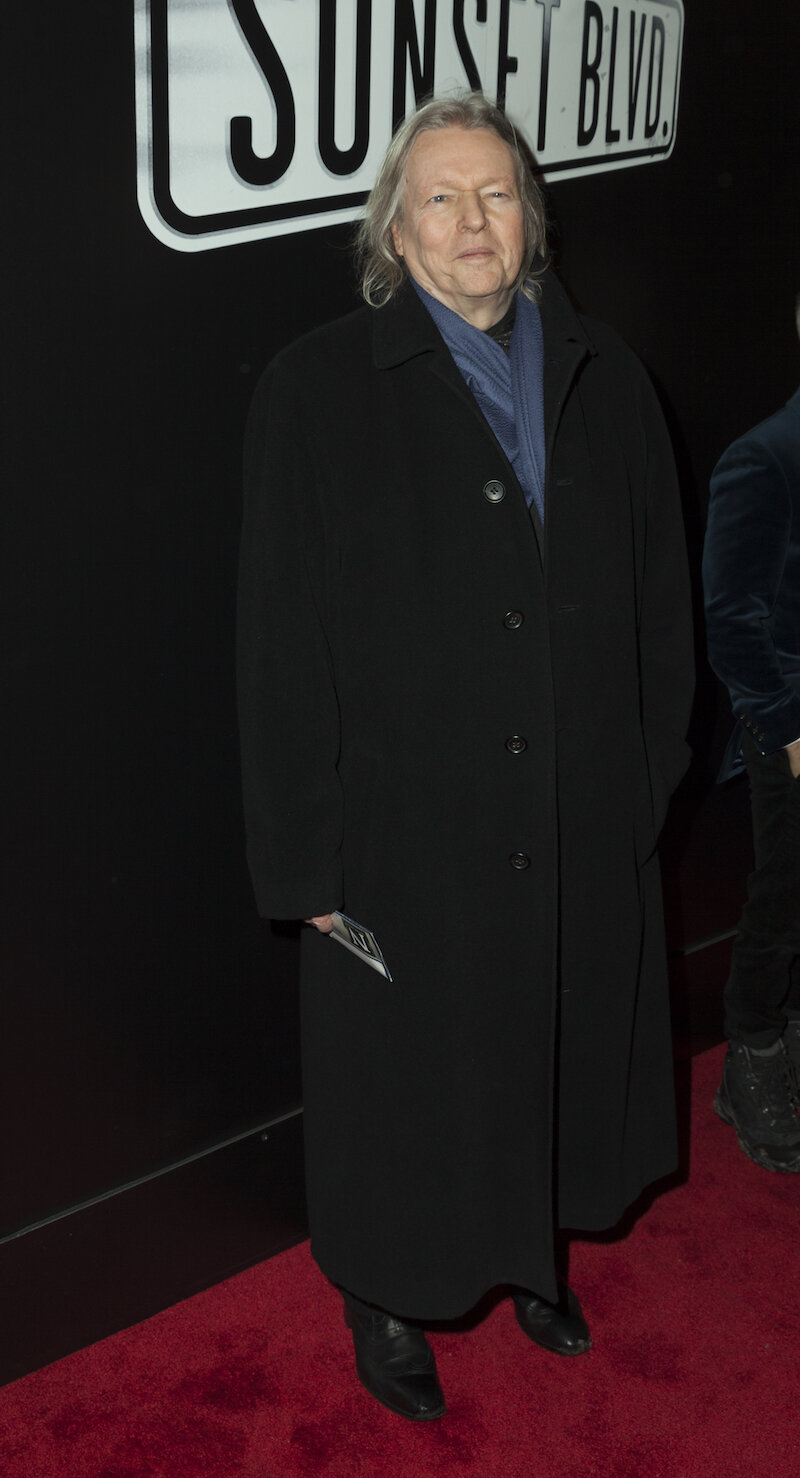
What is most satisfying for you, diving into a classic and making it your own or coming up with a story that comes strictly from your own creativity?
Hampton: Where I’m slightly unusual I think, I really like doing something completely different from what I did last time. I think a lot of writers forge a style and plough a furrow and decide that is what they want to say — and say it in increasingly different ways. But I always liked the idea of being completely eclectic. That’s why I enjoy writing plays and movies, and musicals and librettos for opera and directing stuff. You know, whatever comes along as long as it’s different from what it was last year. Obviously there are certain pieces of work I’ve done that I think of very fondly. But I don’t favor one area above any other. What I need to be is emotionally engaged. I can’t quite predict when that’s going to happen but when I become emotionally engaged with something then I’m happy working on it, whether it’s an adaptation or whatever.
How challenging was it to adapt Florian Zeller’s ‘The Father’ from a stage play to the big screen?
Hampton: When it came time to do the film we kind of discussed it and talked about what we should do with the play and how it worked is that Florian wrote a screenplay in French, which I translated and rewrote and sent it back to him. He did a third draft in French and I did a fourth draft in English. And then we met for a week or so, not more probably less, and worked through it in detail and at the end of the week we had what was effectively the shooting script.
Its hermetic nature is one of its premium qualities. On stage there is a technical device in that the furniture slowly disappears until there is a bare stage. So we had to find a kind of equivalent of that. But we didn’t want to do it too obviously. We really concentrated on the concision — making the film more concise than the play and a sort of simplicity which is counterpoint to the fact that for a long section we don’t know what the hell is going on. And the strategy of both the play and the film is to present this awful condition as it might be to a victim of the condition.
Being a writer as a solitary art, while directing is a joint effort. What have you learned as a director and have those lessons come in handy as a writer?
Hampton: I always thought of my job as writing for actors. I’ve always enjoyed working with actors. There is no greater pleasure than watching a great actor take something you’ve written and infusing it with immense humanity. As far as directing is concerned, all it really taught me was getting closer still with actors. I’ve always been very hands-on as a writer, been to all the rehearsals, you know, had friendships with the actors and engaged with them. A lot of writers don’t really get on with actors and are somehow alarmed by them. When I was an adolescent I really wanted to be an actor and when I started writing, I read my first play and acted in it as a student.
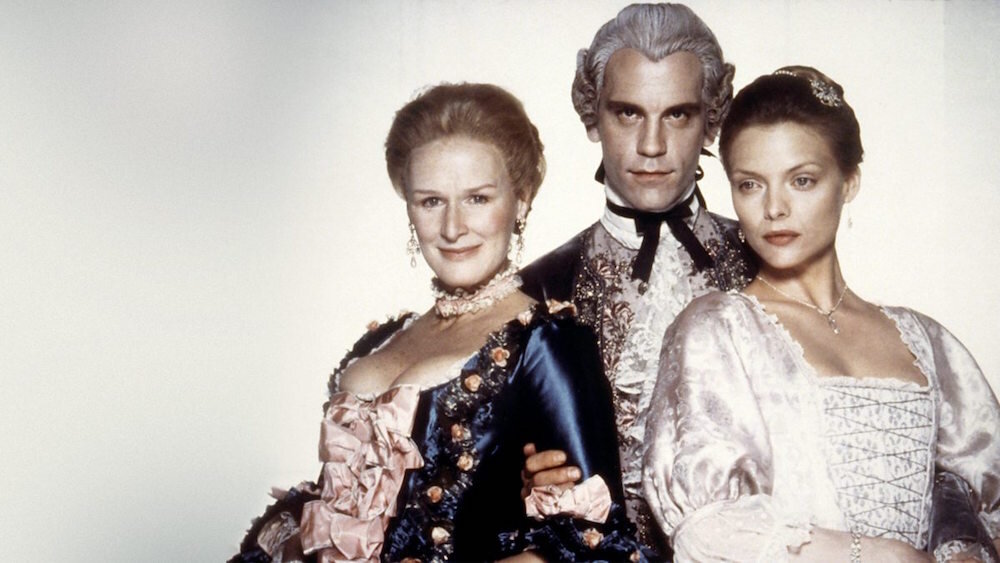
A still from ‘Dangerous Liaisons’ which garnered Hampton an Academy Award in 1989
Does receiving an Oscar change the game?
Hampton: They pay you more! Actually no, it doesn’t. After the Oscar, I went six years without a screenplay being made. When it finally happened, that the screenplay did end up being made I was obliged to direct it myself. Listen, it’s a fantastic thing, I enjoyed it all very much at the time but there are — I don’t quite know why but people slightly back off when you arrive in that position.
You hear so often “this is a really good script but it’s not the thing we want to do right now.” And you get to point where what you want to hear is “I’m afraid this script is absolutely crap but we’re going to start shooting next month!”
We’ve been streaming so much content lately. Netflix used to be the cinephile’s common enemy, now do you think the pandemic has changed that?
Hampton: It’s been a great godsend for people in the situation they’ve found themselves in. They can get their teeth into some six, or eight or twelve — or fifty-hour series. The good ones are great. For me as a writer I did one myself a couple of years ago that’s just been on, called ‘The Singapore Grip’ — it’s enjoyable to write over a span of six hours as opposed to the relentless concisions you are obliged to observe when you write a screenplay or a play. It’s a different discipline and some people are good at it and some aren’t. I just watched ‘The Queen’s Gambit’ and there is a series of films by Steve McQueen on TV.
There are lots of great things but I hope that isn’t going to be something that is going to diminish our chances having good films or good theater.